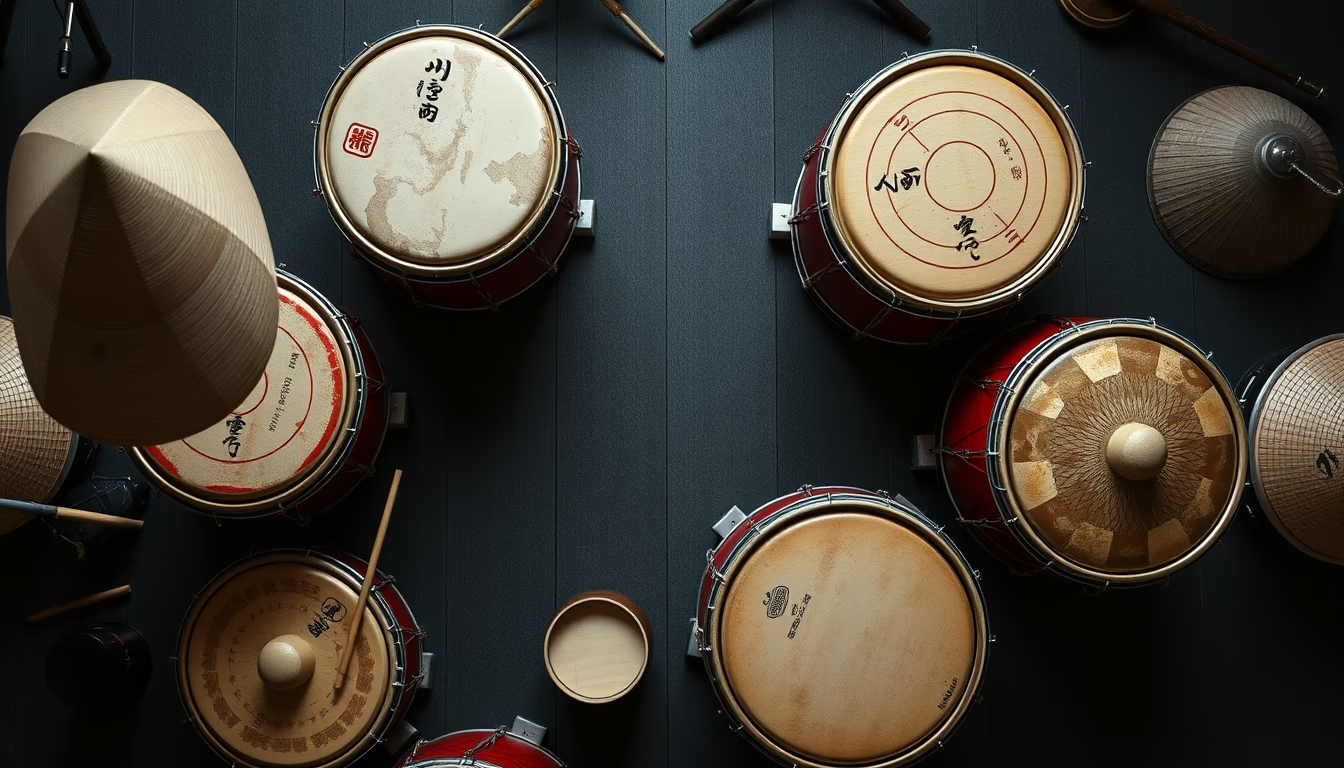
Pan flute andean
1344×768 · AVIF · CC BY 4.0

A flauta de pan andina, conhecida como zampoña ou sikus, é um instrumento ancestral dos povos dos Andes, feito de canos de bambu ou junco.
Sobre o tema
A flauta de pan andina é um dos instrumentos mais emblemáticos da música tradicional dos Andes. Sua origem remonta a civilizações pré-colombianas, como os Incas, e é utilizada até hoje por comunidades quechuas e aimarás em países como Peru, Bolívia, Equador, Chile e Argentina. O instrumento é composto por um conjunto de tubos de diferentes comprimentos, geralmente feitos de bambu, junco ou madeira, que são amarrados em fileira para produzir notas musicais quando o músico sopra sobre as aberturas.
Existem diversas variações regionais e nomes para a flauta de pan andina. O termo 'sikus' é comum na Bolívia e Peru, enquanto 'zampoña' é mais usado no Equador e Chile. Já 'antara' é outro nome associado a versões menores do instrumento. Os tubos podem ser afinados em escalas pentatônicas ou diatônicas, e os conjuntos de sikus são frequentemente tocados em pares: um músico executa metade das notas (ira) e o outro completa a melodia (arka), técnica conhecida como 'hocket'.
Culturalmente, a flauta de pan tem um papel central em festivais e rituais andinos. Durante a Festa da Virgem da Candelária na Bolívia, por exemplo, grupos de sikus animam as procissões. O instrumento também ganhou projeção internacional com grupos como Los Kjarkas, Inti-Illimani e Simon & Garfunkel (em 'El Cóndor Pasa'). A sonoridade melancólica e aérea da zampoña tornou-se um símbolo da identidade musical andina.
A construção artesanal requer habilidade: os tubos são cortados em comprimentos específicos, lixados e amarrados com barbante ou tiras de couro. Cada tubo produz uma nota, e a escala depende do tamanho total do instrumento. Sikus grandes podem ter mais de 30 tubos e alcançar graves profundos, enquanto zampoñas pequenas são agudas e portáteis. A manutenção é simples, mas a madeira pode rachar com a seca, exigindo cuidados.
Perguntas frequentes
Qual a diferença entre sikus e zampoña?
Embora ambos se refiram à flauta de pan andina, 'sikus' é o termo mais usado na Bolívia e Peru, enquanto 'zampoña' predomina no Equador e Chile. Em alguns contextos, sikus designa instrumentos maiores e zampoña versões menores, mas não há uma regra fixa.
Como a flauta de pan andina produz som?
O músico sopra horizontalmente sobre a abertura dos tubos. O ar vibra dentro do tubo, gerando uma nota cuja altura depende do comprimento: tubos mais longos produzem sons graves, e tubos mais curtos, sons agudos.
Em quais celebrações a zampoña é mais tocada?
A zampoña é essencial em festas religiosas andinas, como a Festa da Virgem da Candelária (Bolívia) e o Inti Raymi (Peru). Também aparece em apresentações folclóricas e grupos de música andina contemporânea.
URL direta
https://pub-c7d6a6ea828543ac903a74a341ccb2e1.r2.dev/imagens/pan-flute-andean-magazine-editorial-p1.avifComo creditar
Inclua um link visível de volta pro UtilizAí. Copie um dos snippets abaixo:
<a href="https://xn--utiliza-eza.com/midia/imagens/pan-flute-andean-magazine-editorial-p1">Pan flute andean</a> by <a href="https://xn--utiliza-eza.com">UtilizAí</a>, licensed under <a href="https://creativecommons.org/licenses/by/4.0/">CC BY 4.0</a>.
[Pan flute andean](https://xn--utiliza-eza.com/midia/imagens/pan-flute-andean-magazine-editorial-p1) by [UtilizAí](https://xn--utiliza-eza.com), CC BY 4.0
Licença: CC-BY-4.0