Pamukkale terraces turkey
1344×768 · AVIF · CC BY 4.0
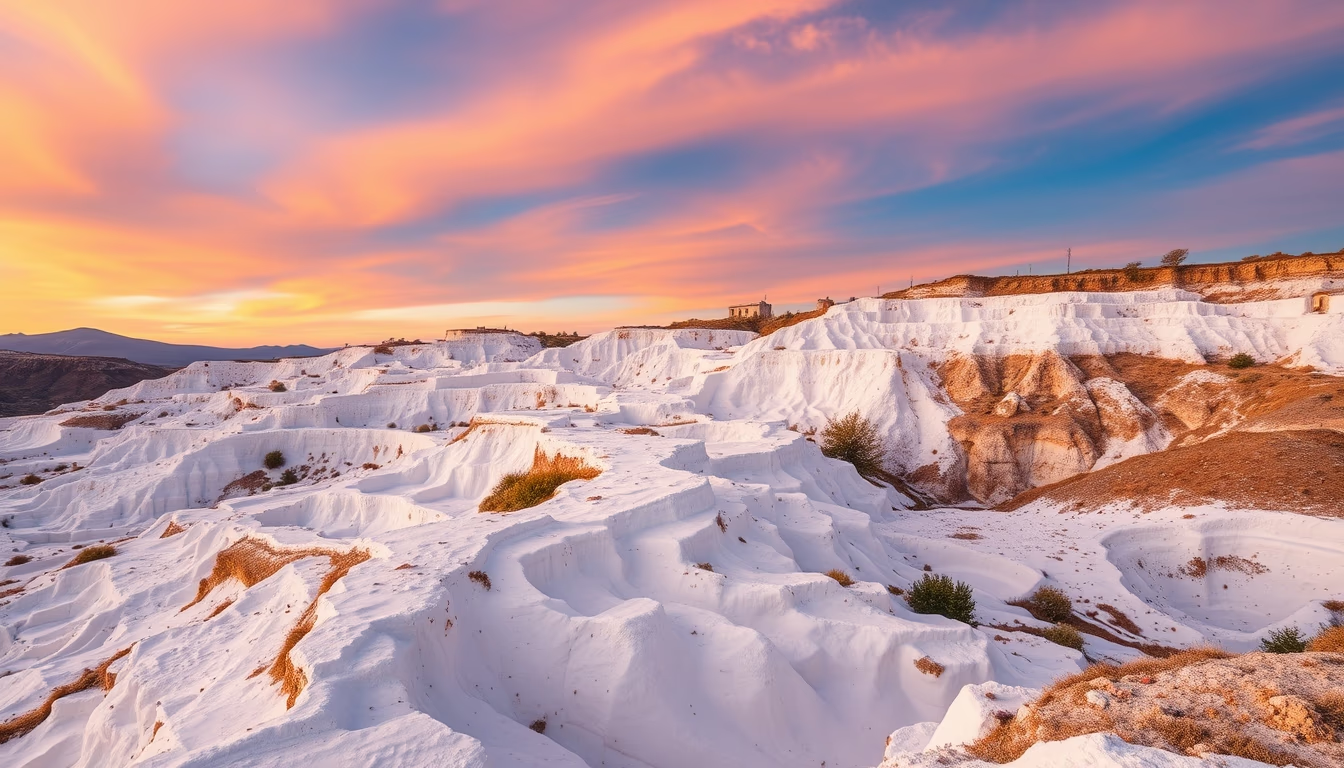
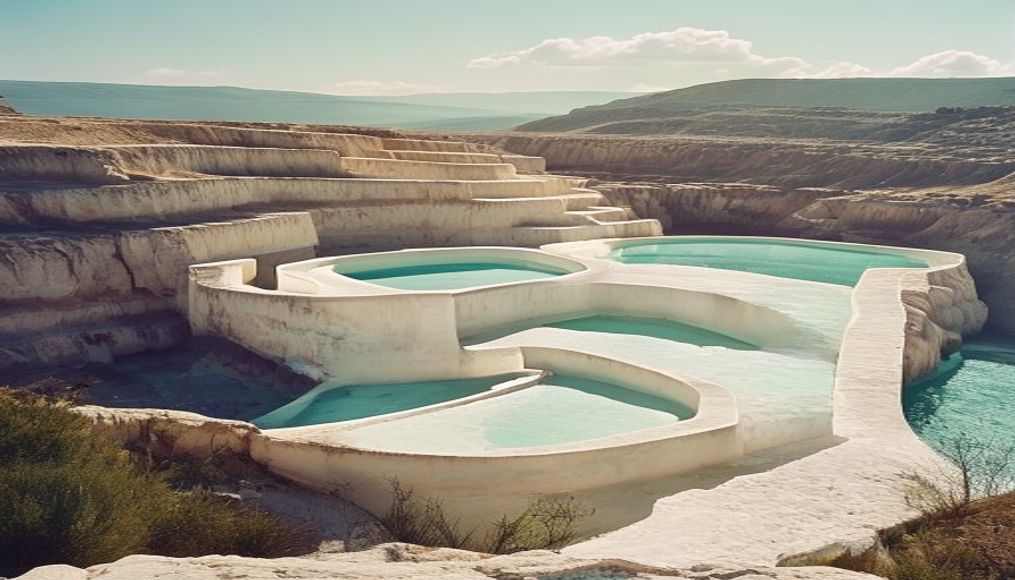
As deslumbrantes piscinas naturais de Pamukkale, na Turquia, formadas por depósitos de carbonato de cálcio ao longo de milênios.
Sobre o tema
Pamukkale, que significa "castelo de algodão" em turco, é um sítio natural localizado na província de Denizli, no sudoeste da Turquia. Suas icônicas terraces brancas foram esculpidas por fontes termais ricas em minerais, que, ao escoarem pela encosta, depositaram carbonato de cálcio. Esse processo, contínuo há milhares de anos, criou travertinos que se destacam na paisagem árida da região.
A área abriga também a antiga cidade de Hierápolis, fundada por volta de 190 a.C. pelos reis de Pérgamo. Suas ruínas bem preservadas, incluindo um teatro romano, uma necrópole e uma piscina antiga (a Piscina de Cleópatra), integram o conjunto arqueológico declarado Patrimônio Mundial da UNESCO em 1988. Acredita-se que as águas termais já eram usadas por civilizações anteriores para fins terapêuticos.
Atualmente, Pamukkale recebe milhões de visitantes por ano. Para proteger as formações frágeis, o acesso às terraces é controlado: é obrigatório andar descalço e em áreas delimitadas. A longa exposição retratada na fotografia realça o fluxo suave da água sobre os travertinos, evidenciando a textura ondulada e os tons branco-azulados que fascinam fotógrafos do mundo todo.
A melhor época para visitação é na primavera ou outono, quando o clima é ameno e a luz solar destaca os contrastes. Além disso, as fontes termais mantêm temperatura média de 36 °C, proporcionando banhos relaxantes mesmo em dias frios. Pamukkale não é apenas um fenômeno geológico, mas um testemunho da interação entre natureza e história humana.
Perguntas frequentes
Como as formações de travertino em Pamukkale são criadas?
As formações são resultado da precipitação de carbonato de cálcio das águas termais ricas em minerais que emergem de fontes na região. Ao escoar pelas encostas, a água libera dióxido de carbono e o carbonato de cálcio se solidifica, formando as camadas brancas.
O que é Hierápolis e por que é importante?
Hierápolis é uma antiga cidade greco-romana fundada no século II a.C., localizada sobre Pamukkale. Ela foi um centro termal e religioso, com ruínas impressionantes como um teatro, uma necrópole e uma piscina antiga. Em 1988, foi declarada Patrimônio Mundial da UNESCO junto com Pamukkale.
Quais cuidados são necessários ao visitar Pamukkale?
É proibido usar calçados nas terraces para não danificar os travertinos. Os visitantes devem seguir as trilhas demarcadas e não tocar nas formações frágeis. Recomenda-se levar protetor solar e água, pois a área é aberta e ensolarada.
URL direta
https://pub-c7d6a6ea828543ac903a74a341ccb2e1.r2.dev/imagens/pamukkale-terraces-turkey-long-exposure-p0.avifComo creditar
Inclua um link visível de volta pro UtilizAí. Copie um dos snippets abaixo:
<a href="https://xn--utiliza-eza.com/midia/imagens/pamukkale-terraces-turkey-long-exposure-p0">Pamukkale terraces turkey</a> by <a href="https://xn--utiliza-eza.com">UtilizAí</a>, licensed under <a href="https://creativecommons.org/licenses/by/4.0/">CC BY 4.0</a>.
[Pamukkale terraces turkey](https://xn--utiliza-eza.com/midia/imagens/pamukkale-terraces-turkey-long-exposure-p0) by [UtilizAí](https://xn--utiliza-eza.com), CC BY 4.0
Licença: CC-BY-4.0