Pamukkale terraces turkey
1344×768 · AVIF · CC BY 4.0
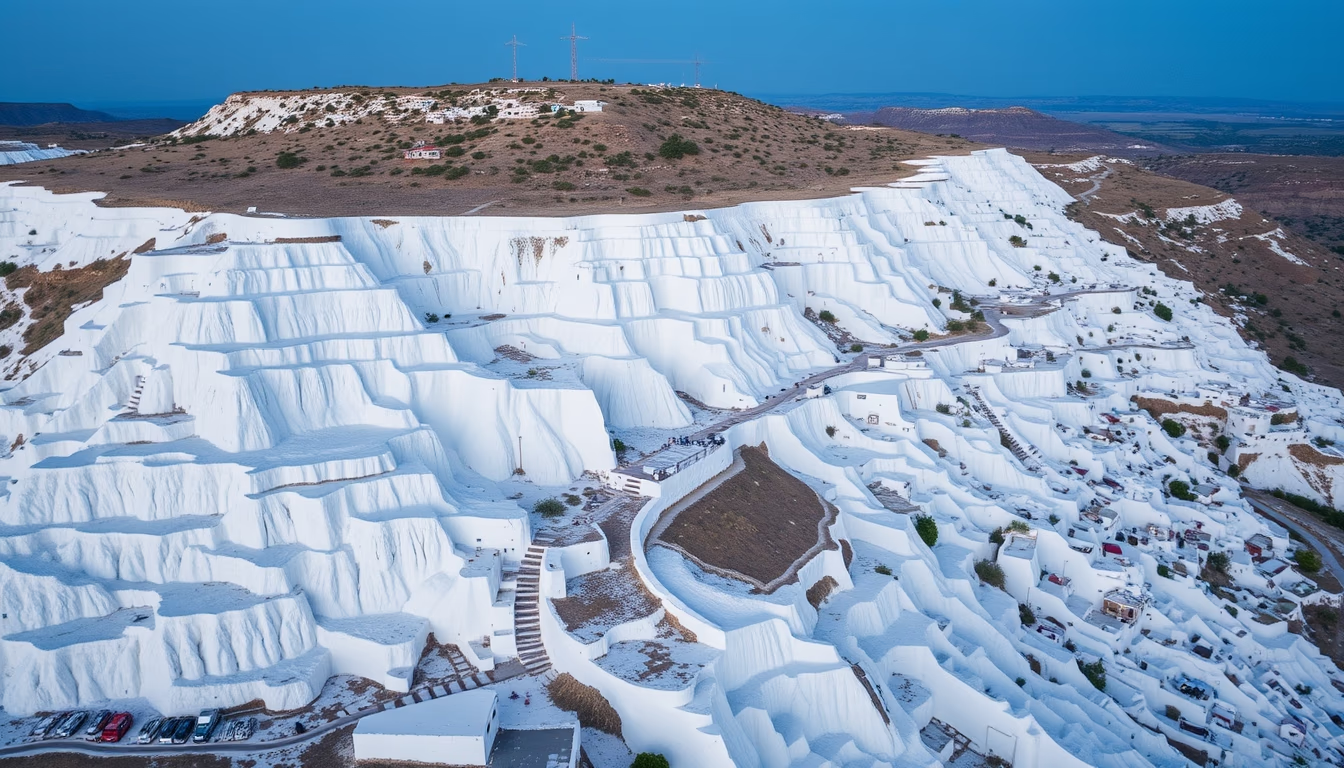
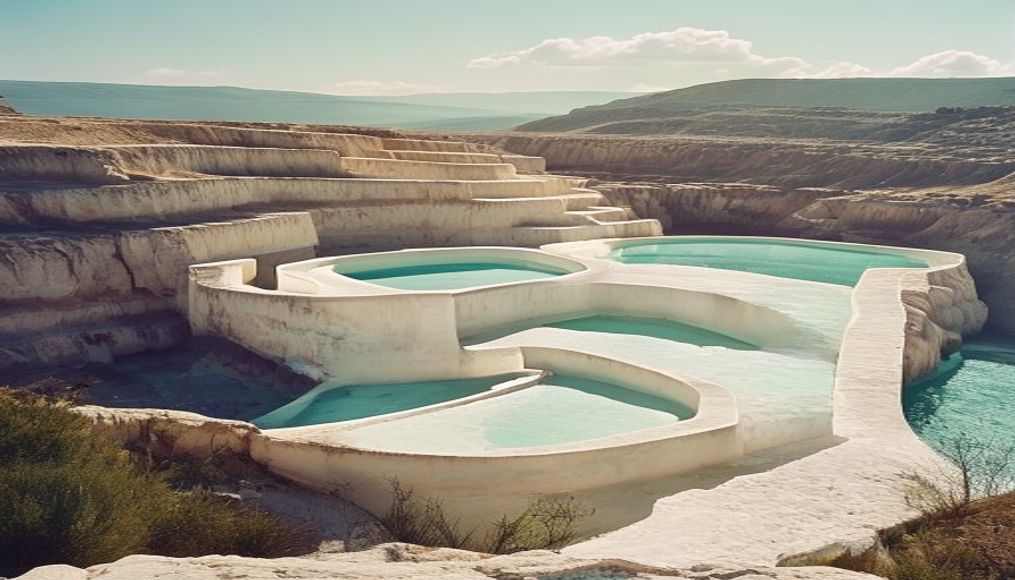
The stunning travertine terraces of Pamukkale in Turkey, formed by mineral-rich thermal waters over millennia.
About this subject
Pamukkale, meaning "cotton castle" in Turkish, is a series of white travertine terraces located in Denizli Province, southwestern Turkey. These unique geological formations were created by the precipitation of calcium carbonate from thermal waters that emerge from a local fault line. The mineral-rich water flows down the slopes and, as it cools, deposits calcium carbonate, forming natural pools and petrified waterfalls that shimmer in the sunlight.
In addition to the terraces, the site contains the ruins of the ancient city of Hierapolis, founded in the 2nd century BC by the kings of Pergamon. Hierapolis was an important thermal center in antiquity, with well-preserved ruins including a Roman theater, an extensive necropolis, and the Frontinus Gate. The combination of natural and archaeological heritage led UNESCO to declare Pamukkale and Hierapolis a World Heritage Site in 1988.
The thermal waters of Pamukkale have an average temperature of 36°C and are known for their therapeutic properties, attracting visitors since Roman times. Today, the site is one of Turkey's most popular tourist destinations, but conservation measures have been implemented to protect the fragile terraces, such as prohibiting walking on the travertine without proper footwear and controlling visitor flow to the natural pools.
An interesting fact: the terraces change color throughout the day. In the morning and late afternoon, sunlight creates a bright white effect, while at noon, with the sun higher, the pools reflect bluish and greenish tones due to the algae and minerals in the water.
Frequently Asked Questions
How were the Pamukkale terraces formed?
The terraces were formed over thousands of years by the precipitation of calcium carbonate from thermal waters emerging from a geological fault. The mineral-rich water flows down the slope and, as it cools, deposits calcium carbonate, creating the pools and petrified waterfalls.
Can I swim in the pools of Pamukkale?
Yes, swimming is allowed in some specific areas, such as the ancient pool of Hierapolis (also called Cleopatra's Pool). However, to protect the fragile terraces, access is controlled, and visitors must wear appropriate footwear and follow local regulations.
What is Hierapolis and its relationship to Pamukkale?
Hierapolis is an ancient Greco-Roman thermal city located atop the Pamukkale terraces. Founded in the 2nd century BC, it was an important healing center thanks to the hot springs. Its ruins, including a theater and a necropolis, are a UNESCO World Heritage Site together with the travertine formations.
Direct URL
https://pub-c7d6a6ea828543ac903a74a341ccb2e1.r2.dev/imagens/pamukkale-terraces-turkey-aerial-drone-shot-p7.avifHow to credit
Include a visible link back to UtilizAí. Copy one of the snippets below:
<a href="https://xn--utiliza-eza.com/en/midia/imagens/pamukkale-terraces-turkey-aerial-drone-shot-p7">Pamukkale terraces turkey</a> by <a href="https://xn--utiliza-eza.com">UtilizAí</a>, licensed under <a href="https://creativecommons.org/licenses/by/4.0/">CC BY 4.0</a>.
[Pamukkale terraces turkey](https://xn--utiliza-eza.com/en/midia/imagens/pamukkale-terraces-turkey-aerial-drone-shot-p7) by [UtilizAí](https://xn--utiliza-eza.com), CC BY 4.0
License: CC-BY-4.0