Palm house botanical kew
1344×768 · AVIF · CC BY 4.0
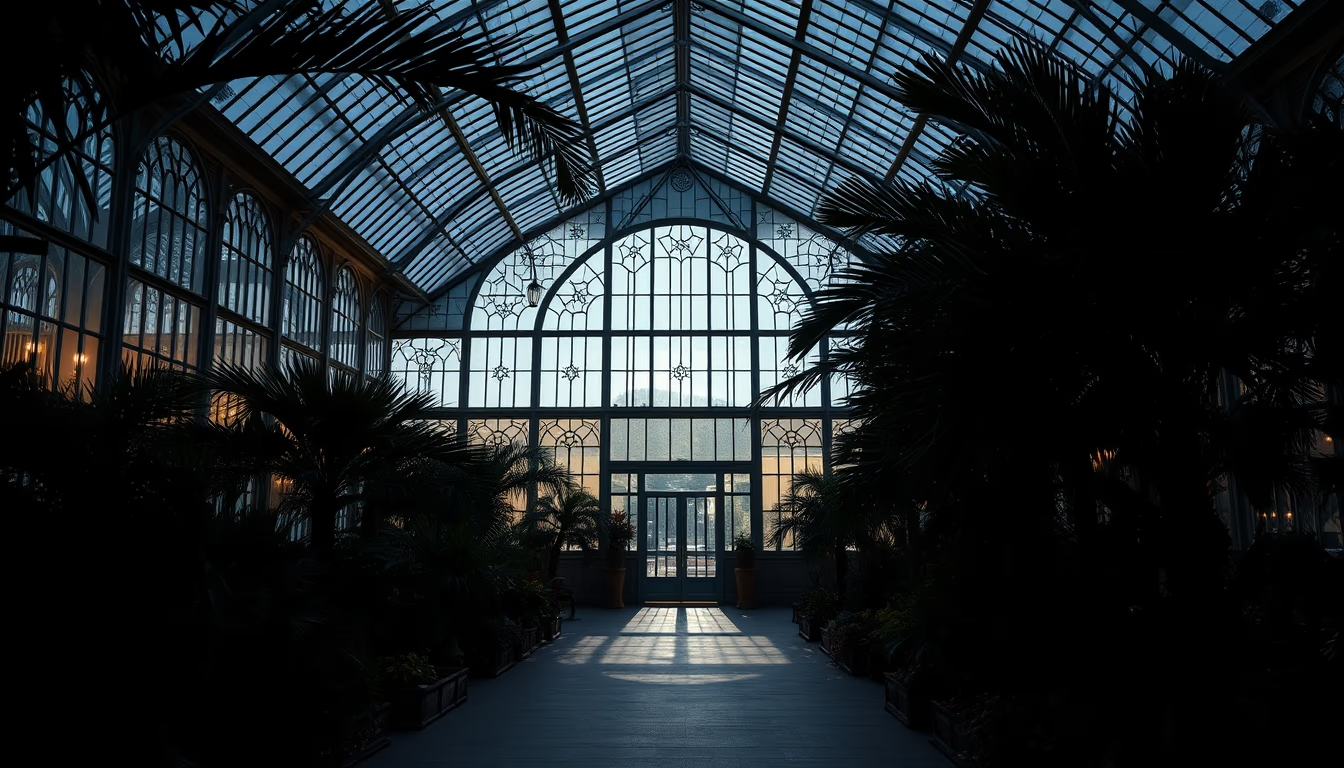
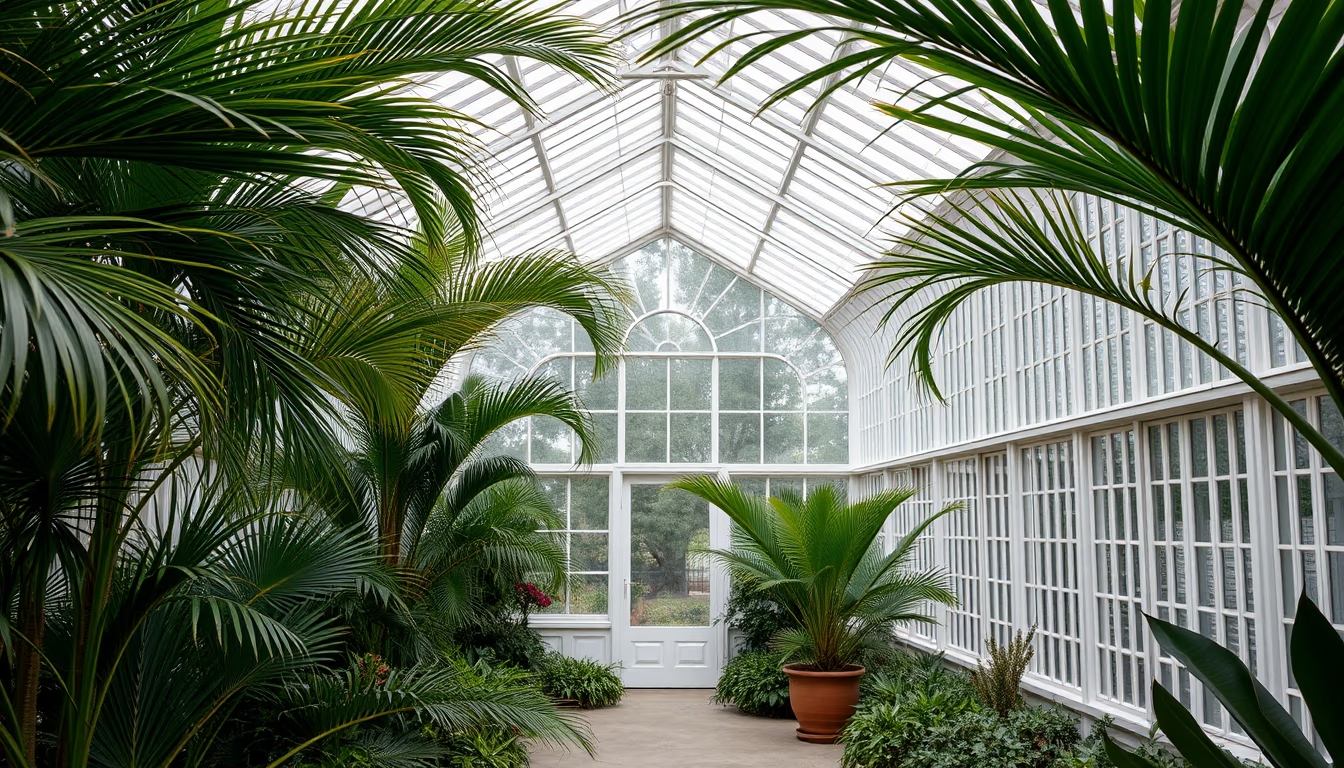
The Palm House at Kew Gardens in London is a Victorian iron and glass architectural icon, housing a vast collection of tropical palms since 1848.
About this subject
The Palm House is one of the most iconic greenhouses in the world, located at the Royal Botanic Gardens, Kew, in London, United Kingdom. Designed by architect Decimus Burton and engineer Richard Turner, it was built between 1844 and 1848, during the Victorian era, when iron and glass became revolutionary materials for architecture. Its elongated, curvilinear structure, 110 meters long, was inspired by the tropical plant conservatories emerging in Europe, but surpassed them all in scale and elegance. The building was designed to house the palms and other tropical plants constantly arriving from British colonies, becoming a symbol of imperial power and scientific advancement.
The interior of the Palm House maintains a controlled tropical climate with ideal temperature and humidity for cultivating over 200 species of palms, as well as cycads, ferns, and other exotic plants. Notable species include the African oil palm (Elaeis guineensis), coconut palm (Cocos nucifera), and Cuban royal palm (Roystonea regia). The greenhouse also houses historic specimens, such as a Chilean wine palm (Jubaea chilensis) planted in 1848. The upper level, accessible by spiral staircases, offers a panoramic view of the palm canopy and the surrounding gardens.
Beyond its botanical value, the Palm House is a landmark of 19th-century architecture and engineering. In 1987, it underwent a complete restoration that lasted six years, replacing thousands of glass panes and reinforcing the metal structure. In 2013, it was inscribed as a UNESCO World Heritage site as part of the Royal Botanic Gardens, Kew. Today, it receives about two million visitors annually, who can explore not only the plants but also temporary exhibitions and cultural events held on site.
Interestingly, the Palm House served as inspiration for other famous greenhouses, such as the Conservatory of Flowers in San Francisco, United States. Its elongated silhouette and soft roof curves influenced the design of botanical conservatories worldwide. Despite its delicate appearance, the structure was engineered to withstand strong winds and thermal changes, thanks to its system of flexible joints and the combination of wrought and cast iron.
Frequently Asked Questions
When was the Palm House at Kew Gardens built?
The Palm House was built between 1844 and 1848, during the Victorian era, and opened in 1848.
How many species of palms are in the Palm House?
The interior houses over 200 species of palms, as well as cycads, ferns, and other tropical plants.
Is the Palm House a UNESCO World Heritage site?
Yes, since 2013 the Royal Botanic Gardens, Kew, including the Palm House, have been a UNESCO World Heritage site.
Direct URL
https://pub-c7d6a6ea828543ac903a74a341ccb2e1.r2.dev/imagens/palm-house-botanical-kew-rembrandt-lighting-dramatic-shadows-fresh8.avifHow to credit
Include a visible link back to UtilizAí. Copy one of the snippets below:
<a href="https://xn--utiliza-eza.com/en/midia/imagens/palm-house-botanical-kew-rembrandt-lighting-dramatic-shadows-fresh8">Palm house botanical kew</a> by <a href="https://xn--utiliza-eza.com">UtilizAí</a>, licensed under <a href="https://creativecommons.org/licenses/by/4.0/">CC BY 4.0</a>.
[Palm house botanical kew](https://xn--utiliza-eza.com/en/midia/imagens/palm-house-botanical-kew-rembrandt-lighting-dramatic-shadows-fresh8) by [UtilizAí](https://xn--utiliza-eza.com), CC BY 4.0
License: CC-BY-4.0