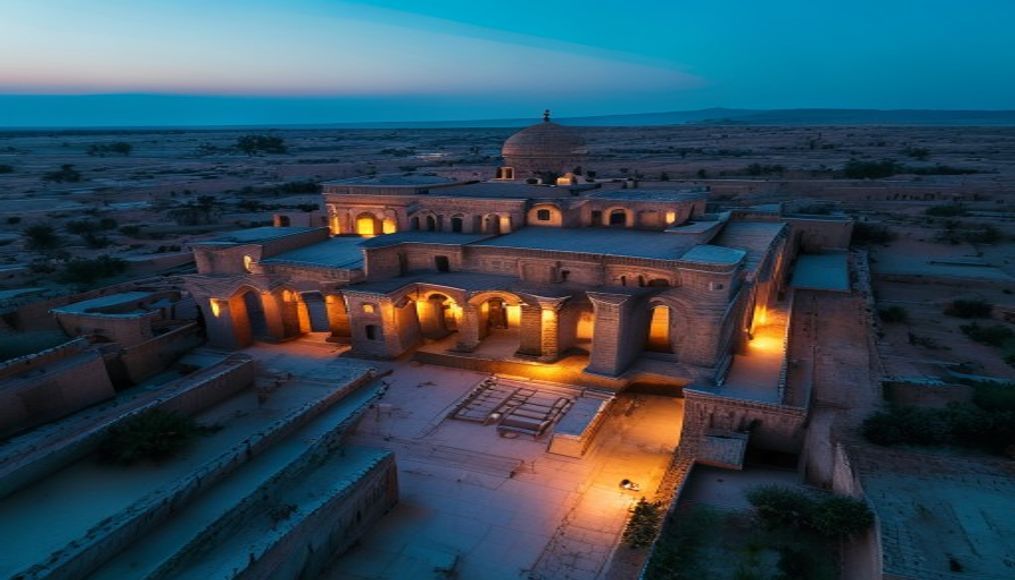
Orthodox church onion
1344×768 · AVIF · CC BY 4.0

An Orthodox church with an onion-shaped dome, a distinctive architectural feature of Eastern Europe.
About this subject
The onion-shaped dome is one of the most recognizable elements of Orthodox church architecture, especially in Russia, Ukraine, and Slavic countries. Its origin dates back to the medieval period, possibly influenced by Byzantine architecture and Tatar tents. The bulbous shape is not merely aesthetic: it symbolizes a candle flame rising toward heaven, representing prayer and divine light. In some traditions, the dome also evokes Mount Tabor or Christ's crown.
Historically, the first onion domes appeared in Russia in the 12th century, with notable examples like the Church of the Ascension in Kolomenskoye (16th century) and the iconic Saint Basil's Cathedral in Moscow, with its multiple colorful domes. Construction techniques vary: initially in wood, later covered in metal (iron or tin) and often gilded. The number of domes has theological meaning: one represents Christ, three the Trinity, five Christ and the four evangelists, and thirteen Christ and the apostles.
Fish-eye wide-angle photography, as suggested by the title, is often used to capture the dramatic curvature of the domes, distorting perspective and emphasizing the spherical form. This visual approach enhances the sense of spirituality and grandeur, common in images of religious architecture. Worldwide, Orthodox churches with these domes are found in diaspora communities, such as in the United States, Canada, and even in Brazil, where the Orthodox Cathedral of São Paulo (Holy Trinity Church) features bulbous domes.
Interestingly, the onion dome is distinct from other Orthodox styles, such as the helmet dome or the low Byzantine dome. While the Byzantine dome is wider and shallower, the onion dome is more elongated and narrow. This shape also influenced secular architecture, like metro stations and public buildings in Russia. Finally, maintaining these domes is challenging, as the gilded coating needs periodic restoration, especially in harsh winter regions.
Frequently Asked Questions
Why do Orthodox churches have onion-shaped domes?
The onion shape symbolizes a candle flame rising to heaven, representing prayer and divine light. Historically, it emerged in medieval Russia, combining Byzantine and Tatar influences, and became an icon of Orthodox architecture.
What is the difference between onion domes and Byzantine domes?
Byzantine domes are wider and shallower, usually hemispherical, while onion domes are elongated and narrow with a pronounced bulbous shape. Onion domes are typical in Russia and Ukraine; Byzantine domes prevail in Greece and Turkey.
Where can I find churches with these domes in Brazil?
In Brazil, Orthodox communities have built temples with onion domes, such as the Orthodox Cathedral of São Paulo (Holy Trinity Church) and the Russian Orthodox Church in Rio de Janeiro. They are important religious and tourist landmarks.
Direct URL
https://pub-c7d6a6ea828543ac903a74a341ccb2e1.r2.dev/imagens/orthodox-church-onion-fish-eye-wide-angle-p1.avifHow to credit
Include a visible link back to UtilizAí. Copy one of the snippets below:
<a href="https://xn--utiliza-eza.com/en/midia/imagens/orthodox-church-onion-fish-eye-wide-angle-p1">Orthodox church onion</a> by <a href="https://xn--utiliza-eza.com">UtilizAí</a>, licensed under <a href="https://creativecommons.org/licenses/by/4.0/">CC BY 4.0</a>.
[Orthodox church onion](https://xn--utiliza-eza.com/en/midia/imagens/orthodox-church-onion-fish-eye-wide-angle-p1) by [UtilizAí](https://xn--utiliza-eza.com), CC BY 4.0
License: CC-BY-4.0