Shinto shrine torii red
1344×768 · JPG · CC BY 4.0
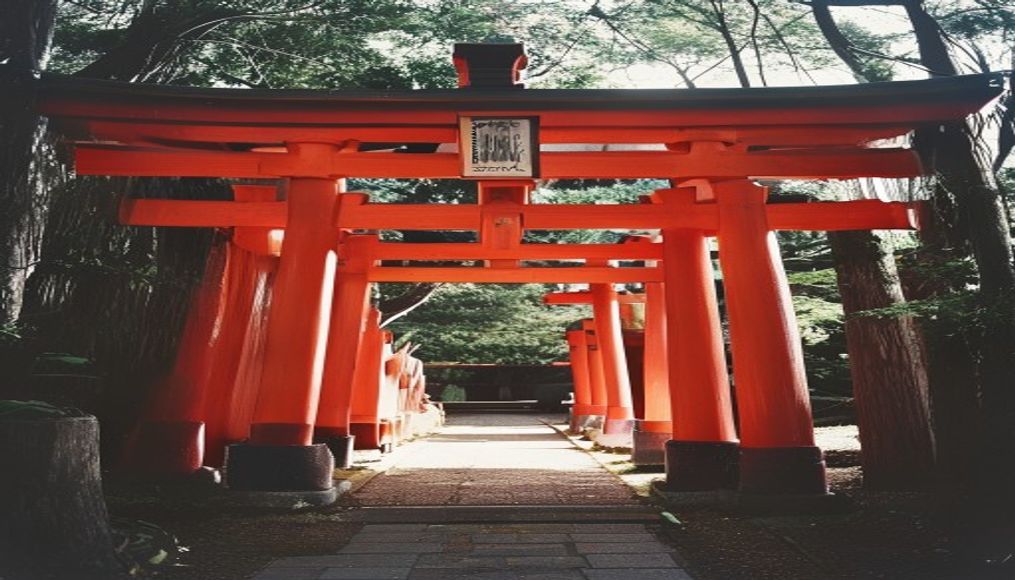
The red torii is the traditional gateway marking the entrance to Shinto shrines in Japan, symbolizing the transition from the profane to the sacred.
About this subject
Torii gates are iconic architectural elements of Shinto, the indigenous religion of Japan. Their primary function is to mark the boundary between the ordinary world and the sacred space of the kami, the spirits or deities. The red color, prevalent in many torii, is not merely aesthetic: it is believed to have protective properties against evil forces and natural disasters. This chromatic tradition is especially associated with Fushimi Inari Taisha in Kyoto, where thousands of red torii form tunnels along mountain trails.
The typical structure of a torii consists of two vertical pillars supporting two horizontal beams: the upper one called kasagi and the lower one nuki. Many torii also have a central plaque (shingi) or an additional pair of beams. Traditionally made of wood, modern torii can be built from stone, concrete, or metal. The most famous wooden torii is at Itsukushima Shrine on Miyajima Island, which appears to float on water at high tide. Interestingly, the origin of torii is uncertain; one theory suggests it evolved from Indian or Chinese gates, while another points to rudimentary structures used as perches for roosters (torii literally means 'bird perch').
Passing through a torii requires etiquette: visitors should bow slightly before crossing, as a sign of respect to the kami. The torii is not a door, as it has no doors; it is a symbolic invitation to enter a purified space. In Japan, torii come in various sizes and colors, but red remains the most emblematic, especially at shrines dedicated to Inari, the deity of agriculture and rice. They also appear in contemporary contexts, such as decoration in parks or cultural celebrations outside Japan, keeping alive the connection with Shinto spirituality.
Frequently Asked Questions
Why are torii gates painted red?
The red color is traditionally used to ward off evil spirits and negative energy. In Shinto, red is believed to have protective properties and also symbolizes life and the sun.
What is the meaning of passing through a torii?
Passing through a torii symbolizes the transition from the ordinary world to the sacred. Before crossing, it is customary to bow slightly as a sign of respect to the kami dwelling in the shrine.
Where is the largest torii in Japan?
The largest torii in Japan is at Heian Jingu Shrine in Kyoto, standing about 24 meters tall. It is made of reinforced concrete and painted in the traditional red color.
Direct URL
https://pub-c7d6a6ea828543ac903a74a341ccb2e1.r2.dev/imagens/shinto-shrine-torii-red-lo-fi-disposable-camera-p4.jpgHow to credit
Include a visible link back to UtilizAí. Copy one of the snippets below:
<a href="https://xn--utiliza-eza.com/en/midia/imagens/shinto-shrine-torii-red-lo-fi-disposable-camera-p4">Shinto shrine torii red</a> by <a href="https://xn--utiliza-eza.com">UtilizAí</a>, licensed under <a href="https://creativecommons.org/licenses/by/4.0/">CC BY 4.0</a>.
[Shinto shrine torii red](https://xn--utiliza-eza.com/en/midia/imagens/shinto-shrine-torii-red-lo-fi-disposable-camera-p4) by [UtilizAí](https://xn--utiliza-eza.com), CC BY 4.0
License: CC-BY-4.0