Organ pipes cathedral
1344×768 · AVIF · CC BY 4.0
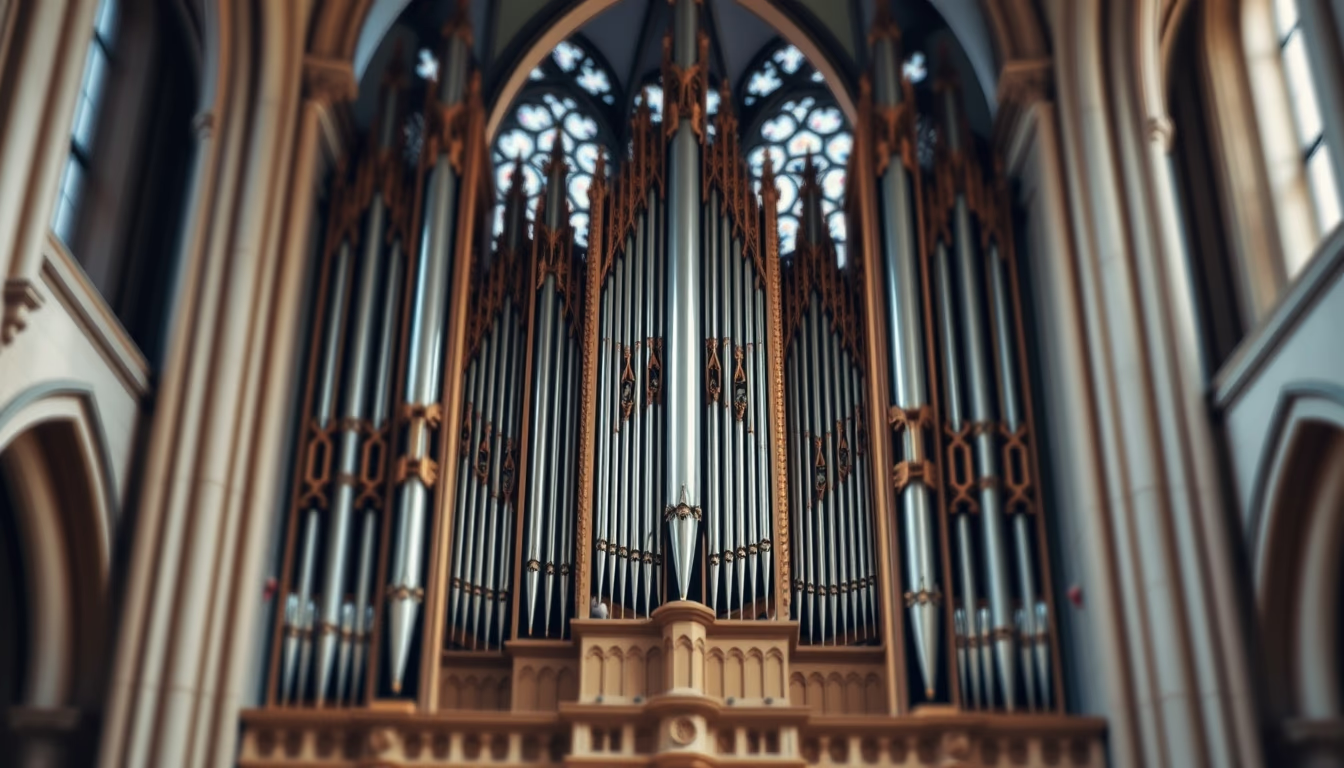
Cathedral organ pipes blend acoustic engineering and sacred art, with centuries of technical and musical evolution.
About this subject
Pipe organs in cathedrals are complex musical instruments dating back to the Middle Ages. In Europe, especially during the Gothic period, grand cathedrals like Notre-Dame de Paris and Cologne Cathedral incorporated monumental organs to accompany liturgies and concerts. Each pipe produces a specific note, ranging from a few centimeters to over 10 meters in length. Building a cathedral organ can take years and involves master organ builders, such as the Aristide Cavaillé-Coll family in France, who perfected the Romantic sound in the 19th century.
The pipes are primarily made of tin-lead alloys or wood for bass notes. The arrangement in richly decorated facades or hidden chambers behind carved panels is an art in itself. The acoustics of cathedrals, with their long reverberation times, require specific registration and voicing for musical clarity. The organ of St. Paul's Cathedral in London, for example, has over 7,000 pipes and is used both in religious services and secular performances.
Interestingly, the largest organ pipes in the world are in Passau Cathedral, Germany, with the longest pipe measuring 11 meters. Maintenance of these instruments is continuous: tuning, cleaning, and repairs require specialized professionals. The organ tradition also influenced composers like Bach, Messiaen, and Widor, whose Toccata from Symphony for Organ No. 5 is a wedding and concert classic. In Brazil, the Cathedral of Sé in São Paulo houses a restored 1913 organ with 120 stops and about 6,000 pipes.
The tilt-shift effect in images of cathedral organs, as in this photograph, highlights the human scale against the instrument's magnitude, but the focus remains on the sonic engineering and cultural role of these musical monuments that transcend religions and continents.
Frequently Asked Questions
Why do organ pipes vary so much in size?
Each pipe produces a specific pitch: longer and wider pipes produce low sounds, while short and narrow pipes produce high sounds. The size scale allows the organ to cover the full musical spectrum.
How are cathedral organs tuned?
Tuning is done by adjusting the effective length of the pipe (via caps or slots) or by altering its temperature. The process is delicate and performed by specialized organ builders, usually before each liturgical season.
What is the largest cathedral organ in the world?
The organ of Passau Cathedral in Germany has about 17,774 pipes and is considered the largest cathedral organ in the world. Its longest pipe measures 11 meters in length.
Direct URL
https://pub-c7d6a6ea828543ac903a74a341ccb2e1.r2.dev/imagens/organ-pipes-cathedral-tilt-shift-miniature-p10.avifHow to credit
Include a visible link back to UtilizAí. Copy one of the snippets below:
<a href="https://xn--utiliza-eza.com/en/midia/imagens/organ-pipes-cathedral-tilt-shift-miniature-p10">Organ pipes cathedral</a> by <a href="https://xn--utiliza-eza.com">UtilizAí</a>, licensed under <a href="https://creativecommons.org/licenses/by/4.0/">CC BY 4.0</a>.
[Organ pipes cathedral](https://xn--utiliza-eza.com/en/midia/imagens/organ-pipes-cathedral-tilt-shift-miniature-p10) by [UtilizAí](https://xn--utiliza-eza.com), CC BY 4.0
License: CC-BY-4.0