Organ pipes cathedral
1344×768 · AVIF · CC BY 4.0
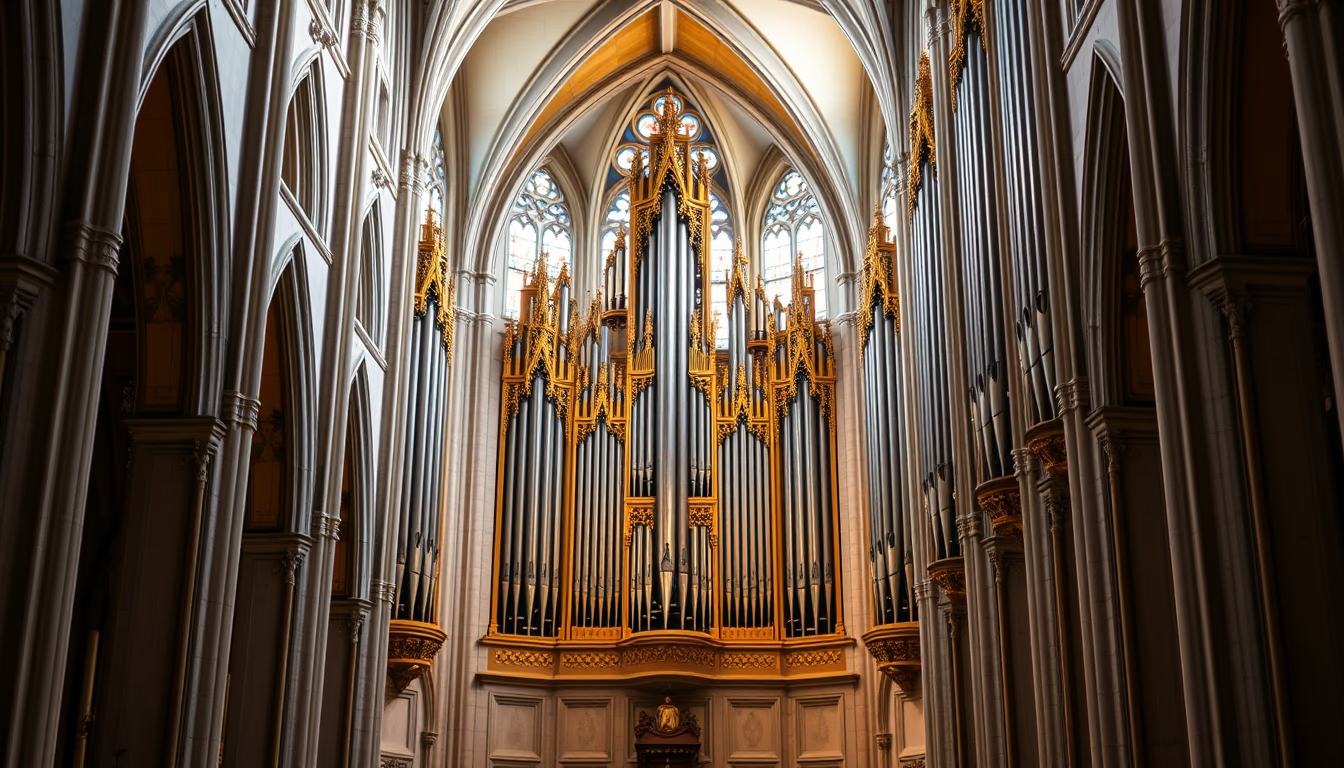
The organ pipes of a cathedral embody centuries of musical engineering and sacred acoustics, blending art and faith in every note.
About this subject
The pipe organ is one of the most complex and magnificent instruments ever built. In cathedrals, its presence is not merely decorative: it was designed to fill vast spaces with sound, taking advantage of the natural acoustics. Building an organ can take years, involving craftsmen skilled in woodworking, metalworking, and precision mechanics. The earliest organs appeared in ancient Greece (hydraulis), but they became permanent fixtures in European churches during the Middle Ages, evolving into Baroque masterpieces with builders like Arp Schnitger and later the Romantic era with Aristide Cavaillé-Coll.
The instrument operates with a bellows system that blows air through pipes made of tin, lead, wood, or other materials. Each pipe produces a specific pitch, and the variety of timbres is achieved through stops that select groups of pipes. The organist controls the instrument via manuals (keyboards for the hands) and a pedalboard (for the feet). In large cathedrals, the organ may have thousands of pipes arranged in ornate facades that are architectural works of art.
Famous organs include those at Notre-Dame Cathedral (Paris), St. Peter's Basilica (Vatican), and Milan's Duomo. In Latin America, the organ at Maringá Cathedral (Paraná, Brazil) features over 6,000 pipes, and the Metropolitan Cathedral of Rio de Janeiro also boasts a magnificent instrument, both built by European artisans. Beyond liturgical use, these organs are central to concerts and festivals, attracting musicians and tourists worldwide.
A curious fact: the largest pipe in an organ can measure 9.75 meters (32 feet) long, producing subsonic tones felt as vibrations. The smallest pipes are just a few centimeters and produce high notes. The organ is often called the “king of instruments” due to its complexity and sonic power. Maintenance is constant: temperature and humidity changes can detune the instrument, requiring specialized tuners for each visit.
Frequently Asked Questions
How does a pipe organ work?
A pipe organ uses a bellows system to blow air through pipes of various sizes and materials. Each pipe produces a specific note, and the organist selects groups of pipes (stops) via manuals and pedals to control timbre and volume.
Which cathedral has the largest pipe organ in the world?
The world's largest pipe organ is at Boardwalk Hall in Atlantic City (USA), but among cathedrals, notable large organs include those at St. Bavo's Cathedral in Haarlem (Netherlands) and Liverpool Cathedral (England), each with thousands of pipes.
Why are pipe organs common in cathedrals?
Pipe organs have historically been associated with Christian liturgy, especially in Western sacred music. Their powerful sound fills large spaces, and cathedral acoustics enhance harmonic richness, making them ideal for ceremonies and concerts.
Direct URL
https://pub-c7d6a6ea828543ac903a74a341ccb2e1.r2.dev/imagens/organ-pipes-cathedral-national-geographic-style-p1.avifHow to credit
Include a visible link back to UtilizAí. Copy one of the snippets below:
<a href="https://xn--utiliza-eza.com/en/midia/imagens/organ-pipes-cathedral-national-geographic-style-p1">Organ pipes cathedral</a> by <a href="https://xn--utiliza-eza.com">UtilizAí</a>, licensed under <a href="https://creativecommons.org/licenses/by/4.0/">CC BY 4.0</a>.
[Organ pipes cathedral](https://xn--utiliza-eza.com/en/midia/imagens/organ-pipes-cathedral-national-geographic-style-p1) by [UtilizAí](https://xn--utiliza-eza.com), CC BY 4.0
License: CC-BY-4.0