Organ pipes cathedral
1344×768 · AVIF · CC BY 4.0
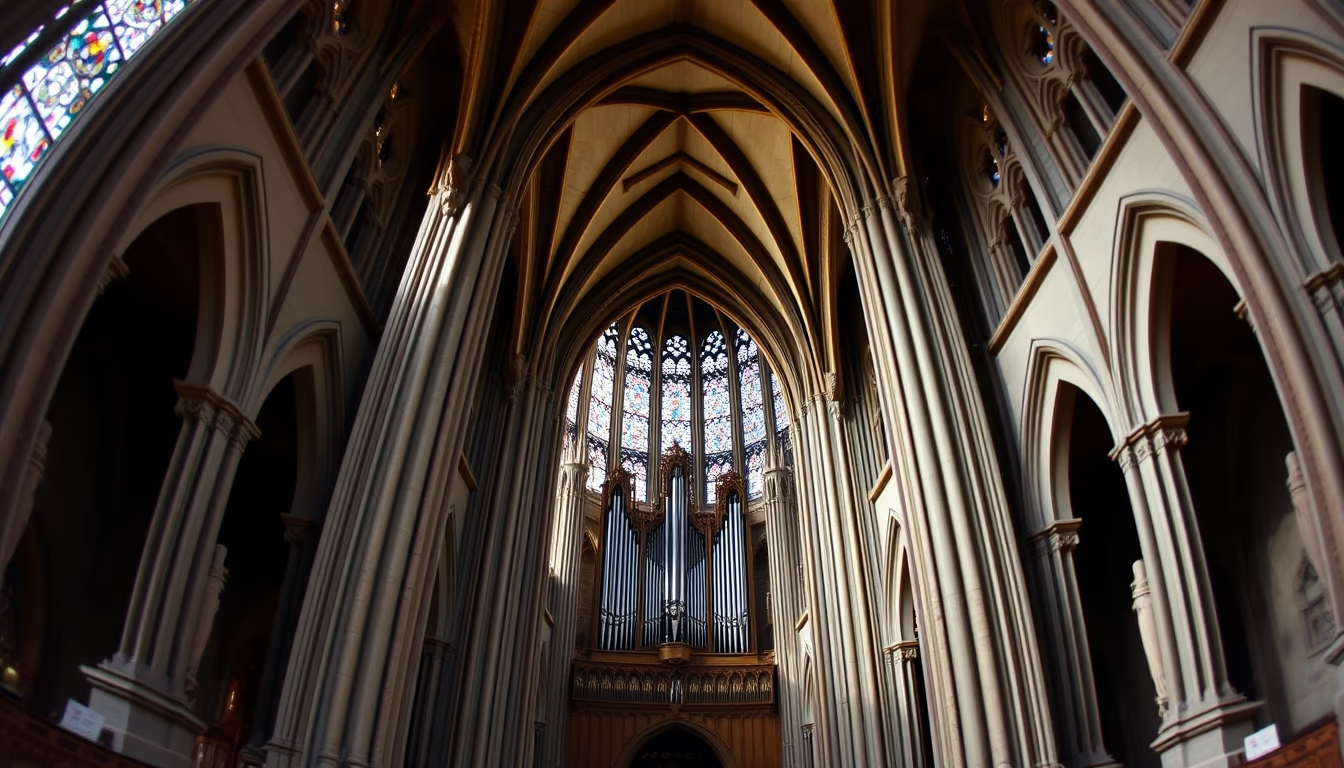
Os tubos de órgão de uma catedral são obras-primas de engenharia acústica e artesanato, capazes de produzir sons que ecoam por séculos.
Sobre o tema
O órgão de tubos é um dos instrumentos musicais mais complexos já construídos, combinando mecânica de precisão com acústica monumental. Em catedrais góticas e barrocas, esses instrumentos frequentemente possuem milhares de tubos, organizados em divisões chamadas "famílias" (como flautados, diapasão e palhetas). Cada tubo é afinado individualmente e fabricado à mão, muitas vezes em ligas de estanho e chumbo, para produzir uma gama completa de timbres e dinâmicas.
A maior parte dos órgãos históricos foi construída entre os séculos XV e XIX, com destaque para o órgão da Catedral de Notre-Dame (Paris), que possui mais de 7.800 tubos, e o da Catedral de St. Bavo (Haarlem, Países Baixos), um dos mais famosos do mundo. A manutenção desses instrumentos é uma arte em si: cada tubo precisa ser limpo, ajustado e, ocasionalmente, reconstruído para preservar o som original.
A disposição dos tubos em fachada, como visto em imagens com grande angular, não é apenas estética. A localização de cada tubo afeta a projeção sonora e a interação com a acústica do edifício. Muitos órgãos possuem tubos que ultrapassam 10 metros de comprimento, responsáveis pelas notas mais graves, e minúsculos tubos de poucos centímetros para as agudas. A ação do órgão pode ser mecânica (conexão direta por hastes), pneumática ou elétrica, sendo a mecânica a mais valorizada por organistas puristas.
Além do uso litúrgico, os órgãos de catedrais frequentemente são palco de concertos e gravações, atraindo turistas e músicos do mundo todo. A acústica desses espaços, combinada com a potência do instrumento, cria uma experiência sonora única, considerada por muitos como a mais próxima da "música divina".
Perguntas frequentes
Quantos tubos um órgão de catedral típico possui?
Um órgão de catedral médio grande pode ter entre 2.000 e 10.000 tubos. O órgão da Catedral de Notre-Dame em Paris possui cerca de 7.800 tubos, enquanto o da Catedral de St. Bavo em Haarlem tem aproximadamente 5.000.
Por que os tubos são feitos de estanho e chumbo?
Essas ligas oferecem maleabilidade para moldar tubos com precisão, além de proporcionar ressonância e durabilidade. O estanho confere um som brilhante, enquanto o chumbo adiciona suavidade. A proporção varia conforme o timbre desejado.
Como funciona um órgão de tubos?
O organista pressiona teclas ou pedais que abrem válvulas, permitindo que o ar sopre pelos tubos. Cada tubo produz uma nota específica. O ar é fornecido por foles, movidos eletricamente ou manualmente. A combinação de tubos (registros) controla timbre e volume.
URL direta
https://pub-c7d6a6ea828543ac903a74a341ccb2e1.r2.dev/imagens/organ-pipes-cathedral-fish-eye-wide-angle-p9.avifComo creditar
Inclua um link visível de volta pro UtilizAí. Copie um dos snippets abaixo:
<a href="https://xn--utiliza-eza.com/midia/imagens/organ-pipes-cathedral-fish-eye-wide-angle-p9">Organ pipes cathedral</a> by <a href="https://xn--utiliza-eza.com">UtilizAí</a>, licensed under <a href="https://creativecommons.org/licenses/by/4.0/">CC BY 4.0</a>.
[Organ pipes cathedral](https://xn--utiliza-eza.com/midia/imagens/organ-pipes-cathedral-fish-eye-wide-angle-p9) by [UtilizAí](https://xn--utiliza-eza.com), CC BY 4.0
Licença: CC-BY-4.0