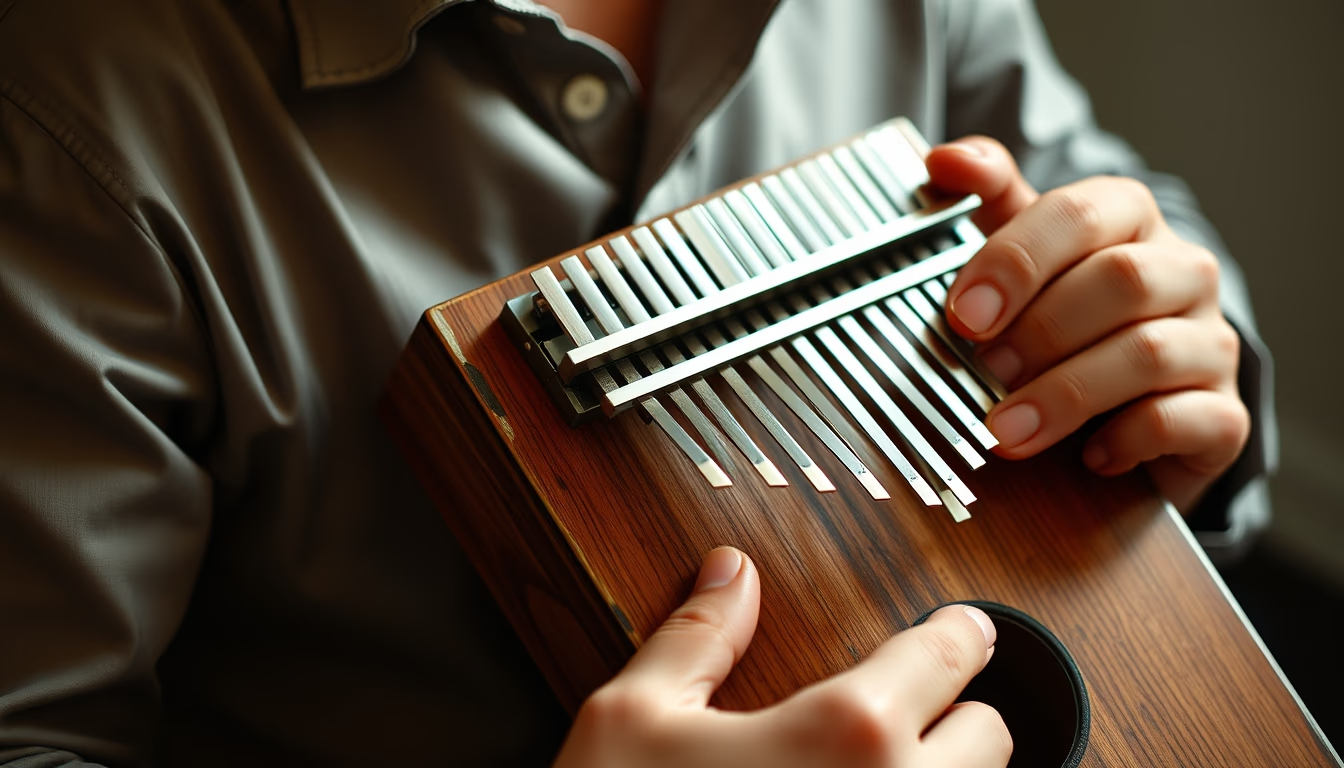
Oboe wooden detail
1344×768 · AVIF · CC BY 4.0

The oboe is a double-reed woodwind instrument, known for its penetrating and expressive sound. Wooden details reveal its handcrafted construction.
About this subject
The oboe is a double-reed woodwind instrument, distinguished by a penetrating and expressive sound. Its traditional construction uses dense, resonant hardwoods such as grenadilla (Dalbergia melanoxylon, also known as African blackwood) or Brazilian rosewood. The instrument consists of three sections, the bell, upper joint, and lower joint, each precisely turned and drilled to maintain accurate intonation.
Historically, the oboe evolved from the shawm, a medieval double-reed instrument. In the 17th century, French musicians in the court of Louis XIV refined its design, creating the hautbois, which led to the modern oboe. Since then, it has become a staple of symphony orchestras, where it provides the tuning A (440 Hz) for the entire ensemble. Its timbre is often associated with lyrical and pastoral passages in classical music, though it also appears in jazz, folk music, and film scores.
Despite its beauty, the oboe is considered one of the most challenging instruments to learn due to the precise control of embouchure and breath required for a stable sound. The double reed, made from cane (Arundo donax), is hand-carved by the musician or a specialist, and its shape directly affects tonal quality. Renowned oboists like Heinz Holliger and Albrecht Mayer have pushed the instrument's technical and expressive boundaries, expanding its repertoire beyond the classical canon.
Interestingly, the oboe's wood reacts to temperature and humidity changes, requiring constant care to prevent cracking. Many musicians use humidity-controlled cases and apply specific oils during maintenance. Despite these challenges, the oboe continues to captivate audiences with its unique voice, capable of conveying both melancholy and vibrant joy.
Frequently Asked Questions
What is the difference between an oboe and a clarinet?
The oboe uses a double reed (two cane blades), while the clarinet uses a single reed. This results in distinct timbres: the oboe is more penetrating and nasal, the clarinet is smoother and rounder. Also, the oboe has a conical bore, whereas the clarinet has a cylindrical bore.
Why is the oboe considered a difficult instrument?
The difficulty comes from controlling the embouchure and breath to make the double reed vibrate steadily. Intonation is sensitive to subtle changes in lip pressure, and the reed must be handcrafted, requiring skill and patience from the musician.
What type of wood is used to make an oboe?
Traditionally, grenadilla (African blackwood) or rosewood are used. These woods are dense, hard, and resonant, ideal for the instrument's acoustics. Nowadays, synthetic resin oboes are also available for greater resistance to climate changes.
Direct URL
https://pub-c7d6a6ea828543ac903a74a341ccb2e1.r2.dev/imagens/oboe-wooden-detail-studio-editorial-portrait-p9.avifHow to credit
Include a visible link back to UtilizAí. Copy one of the snippets below:
<a href="https://xn--utiliza-eza.com/en/midia/imagens/oboe-wooden-detail-studio-editorial-portrait-p9">Oboe wooden detail</a> by <a href="https://xn--utiliza-eza.com">UtilizAí</a>, licensed under <a href="https://creativecommons.org/licenses/by/4.0/">CC BY 4.0</a>.
[Oboe wooden detail](https://xn--utiliza-eza.com/en/midia/imagens/oboe-wooden-detail-studio-editorial-portrait-p9) by [UtilizAí](https://xn--utiliza-eza.com), CC BY 4.0
License: CC-BY-4.0