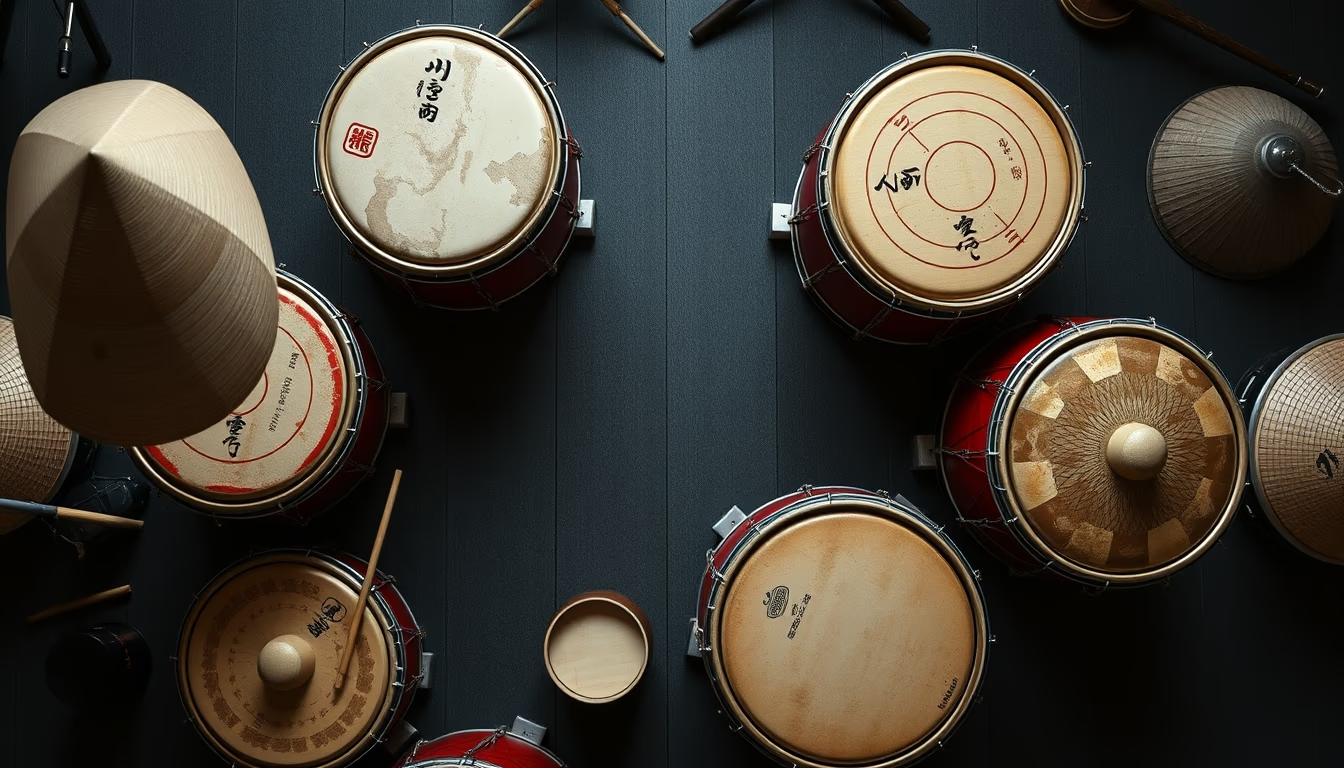
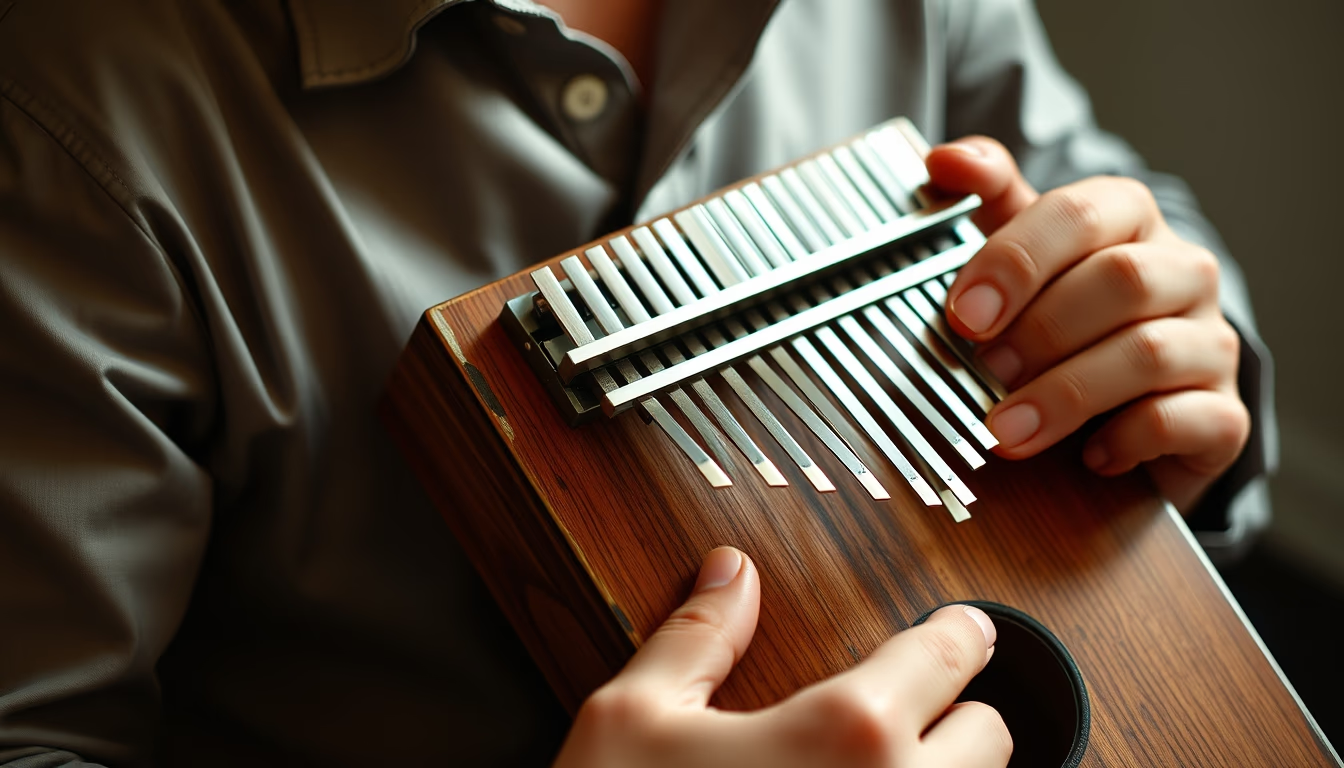
Oboe wooden detail
1344×768 · AVIF · CC BY 4.0

Wooden details of the oboe, a double-reed woodwind instrument with a rich history in classical and popular music.
About this subject
The oboe is a double-reed woodwind instrument known for its penetrating and expressive sound. Its wooden construction, typically made from grenadilla (Dalbergia melanoxylon), a dense, dark wood from Africa, gives the instrument its distinctive tonal characteristics. The double reed, made from cane (Arundo donax), produces sound by vibrating against itself when the musician blows.
Historically, the oboe evolved from ancient instruments like the Greek aulos and the medieval shawm. During the Baroque period, it gained prominence in orchestras, featured by composers such as Bach, Handel, and Vivaldi. In Brazil, the oboe appears both in classical music and popular genres like choro, where musicians like Pixinguinha and K-Ximbinho incorporated it into their compositions.
Crafting an oboe is a meticulous artisanal process. The wood is turned and drilled with precision to ensure correct tuning. The metal keys, usually nickel silver, allow the musician to cover holes and control pitch. Every wooden detail, from polishing to oiling, influences the instrument's response and timbre.
Interestingly, the oboe provides the tuning A for the orchestra due to its stable and penetrating sound. Oboists often make their own reeds, adjusting thickness and shape to achieve the desired sound. Careful maintenance and storage in humidity-controlled environments are essential to preserve the wood and prevent cracking.
Frequently Asked Questions
What is the difference between oboe and clarinet?
The oboe uses a double reed (two cane blades vibrating against each other), while the clarinet has a single reed that vibrates against the mouthpiece. The oboe sound is more penetrating and nasal, while the clarinet is warmer and rounder.
Why is the oboe used to tune the orchestra?
The oboe produces a very stable and penetrating A note (440 Hz), easy for all musicians to hear. Historically, its pitch was less affected by temperature changes than other wind instruments.
What wood is the oboe made from?
Traditionally grenadilla (African blackwood), also called African ebony. Other woods like cocobolo, rosewood, and boxwood are also used, but grenadilla is most common for its density and durability.
Direct URL
https://pub-c7d6a6ea828543ac903a74a341ccb2e1.r2.dev/imagens/oboe-wooden-detail-documentary-photography-p7.avifHow to credit
Include a visible link back to UtilizAí. Copy one of the snippets below:
<a href="https://xn--utiliza-eza.com/en/midia/imagens/oboe-wooden-detail-documentary-photography-p7">Oboe wooden detail</a> by <a href="https://xn--utiliza-eza.com">UtilizAí</a>, licensed under <a href="https://creativecommons.org/licenses/by/4.0/">CC BY 4.0</a>.
[Oboe wooden detail](https://xn--utiliza-eza.com/en/midia/imagens/oboe-wooden-detail-documentary-photography-p7) by [UtilizAí](https://xn--utiliza-eza.com), CC BY 4.0
License: CC-BY-4.0