Nucleus chromosomes microscope
1344×768 · AVIF · CC BY 4.0
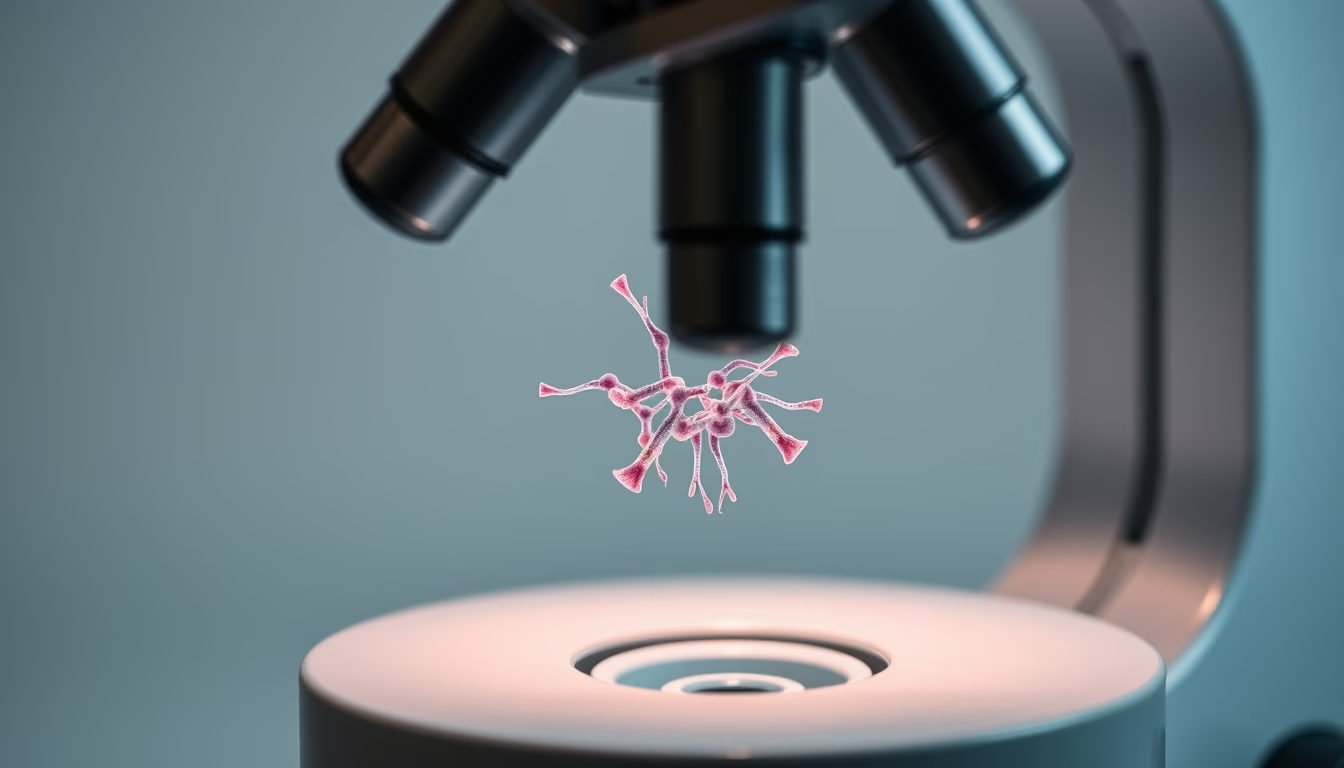
The cell nucleus houses chromosomes, structures that carry DNA and define the hereditary traits of all living organisms.
About this subject
The nucleus is a vital organelle in eukaryotic cells, housing most of the genetic material. Chromosomes are long DNA molecules wrapped around histone proteins, condensing into visible structures during cell division. They are essential for DNA replication and transcription, fundamental processes for life.
Each species has a characteristic number of chromosomes; humans have 46, arranged in 23 pairs. Genes are passed from generation to generation via chromosomes, carrying all hereditary information. Chromosomal mutations, such as changes in number or structure, can lead to genetic disorders like Down syndrome (trisomy 21).
Chromosomes were first observed in the late 19th century by German scientist Walther Flemming using staining techniques for microscopy. Today, methods like fluorescence in situ hybridization (FISH) and karyotyping allow visualization and analysis of specific chromosomes, aiding in the diagnosis of genetic diseases.
A notable curiosity: sex chromosomes determine biological sex, XX in females and XY in males. The human genome contains about 3 billion base pairs of DNA distributed across chromosomes, forming the instruction manual for organism development and function.
Frequently Asked Questions
What are chromosomes?
Chromosomes are structures made of DNA and proteins that contain genes. During cell division, they condense and become visible under a microscope.
How many chromosomes do humans have?
Humans have 46 chromosomes, arranged in 23 pairs. One pair is the sex chromosome (XX in females and XY in males).
How are chromosomes studied?
Chromosomes are studied using cytogenetic techniques such as karyotyping and banding, which help identify numerical or structural abnormalities.
Direct URL
https://pub-c7d6a6ea828543ac903a74a341ccb2e1.r2.dev/imagens/nucleus-chromosomes-microscope-studio-still-life-p12.avifHow to credit
Include a visible link back to UtilizAí. Copy one of the snippets below:
<a href="https://xn--utiliza-eza.com/en/midia/imagens/nucleus-chromosomes-microscope-studio-still-life-p12">Nucleus chromosomes microscope</a> by <a href="https://xn--utiliza-eza.com">UtilizAí</a>, licensed under <a href="https://creativecommons.org/licenses/by/4.0/">CC BY 4.0</a>.
[Nucleus chromosomes microscope](https://xn--utiliza-eza.com/en/midia/imagens/nucleus-chromosomes-microscope-studio-still-life-p12) by [UtilizAí](https://xn--utiliza-eza.com), CC BY 4.0
License: CC-BY-4.0