Nucleus chromosomes microscope
1344×768 · AVIF · CC BY 4.0
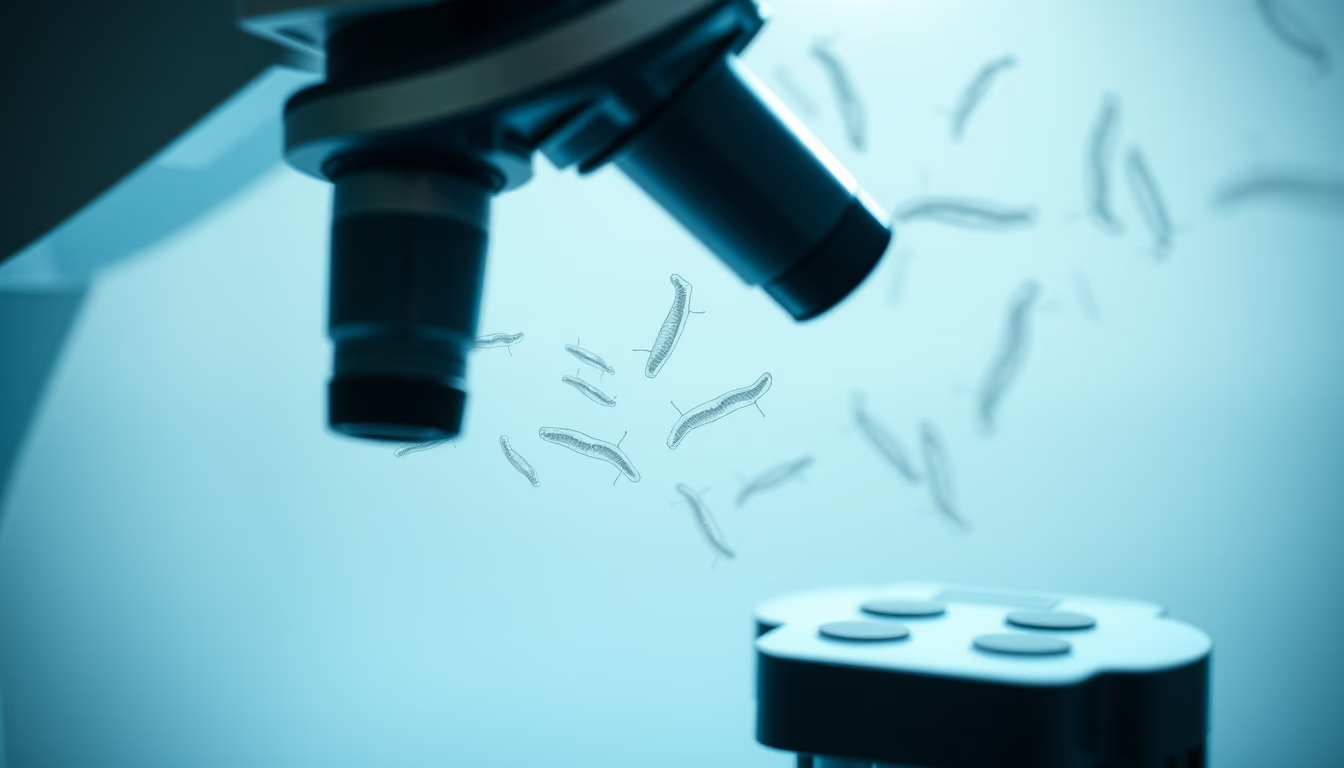
O núcleo celular abriga os cromossomos, estruturas de DNA que carregam a informação genética. Veja detalhes sobre sua função e observação ao microscópio.
Sobre o tema
O núcleo é uma organela presente em células eucarióticas, responsável por armazenar o DNA na forma de cromatina. Durante a divisão celular, a cromatina se condensa em cromossomos, estruturas visíveis ao microscópio óptico. Cada cromossomo é composto por uma longa molécula de DNA associada a proteínas histonas, formando o complexo chamado cromatina. Nos humanos, o número diploide de cromossomos é 46, organizados em 23 pares.
A observação de cromossomos ao microscópio requer técnicas específicas, como a fixação das células em metáfase e a coloração com corantes como o Giemsa. Essa técnica, chamada de cariotipagem, permite identificar anomalias cromossômicas, como trissomias (ex.: síndrome de Down) ou deleções. A microscopia de fluorescência com sondas de DNA também é usada para localizar genes específicos nos cromossomos.
O núcleo não apenas guarda o material genético, mas também regula a expressão gênica e a replicação do DNA. Sua membrana dupla, o envelope nuclear, possui poros que controlam a troca de moléculas entre núcleo e citoplasma. Alterações na estrutura nuclear estão associadas a doenças como câncer e envelhecimento precoce.
A descoberta dos cromossomos remonta ao século XIX, com estudos de Walther Flemming, que descreveu a mitose. Hoje, técnicas avançadas como a microscopia crioeletrônica revelam detalhes atômicos da cromatina, ampliando nossa compreensão da hereditariedade e da regulação celular.
Perguntas frequentes
O que são cromossomos e onde estão localizados?
Cromossomos são estruturas filamentosas compostas por DNA e proteínas, localizadas no núcleo das células eucarióticas. Eles contêm os genes que determinam características hereditárias.
Como se observam cromossomos ao microscópio?
Para observar cromossomos, as células são cultivadas, tratadas com colchicina para parar a divisão na metáfase, e então coradas com Giemsa ou outros corantes. A análise é feita em microscópio óptico.
Qual a importância do núcleo celular?
O núcleo abriga o DNA, controlando a expressão gênica, a replicação e a transcrição. É essencial para a divisão celular e para a manutenção da integridade genética.
URL direta
https://pub-c7d6a6ea828543ac903a74a341ccb2e1.r2.dev/imagens/nucleus-chromosomes-microscope-minimalist-composition-p2.avifComo creditar
Inclua um link visível de volta pro UtilizAí. Copie um dos snippets abaixo:
<a href="https://xn--utiliza-eza.com/midia/imagens/nucleus-chromosomes-microscope-minimalist-composition-p2">Nucleus chromosomes microscope</a> by <a href="https://xn--utiliza-eza.com">UtilizAí</a>, licensed under <a href="https://creativecommons.org/licenses/by/4.0/">CC BY 4.0</a>.
[Nucleus chromosomes microscope](https://xn--utiliza-eza.com/midia/imagens/nucleus-chromosomes-microscope-minimalist-composition-p2) by [UtilizAí](https://xn--utiliza-eza.com), CC BY 4.0
Licença: CC-BY-4.0