Music sheet handwritten antique
1344×768 · AVIF · CC BY 4.0
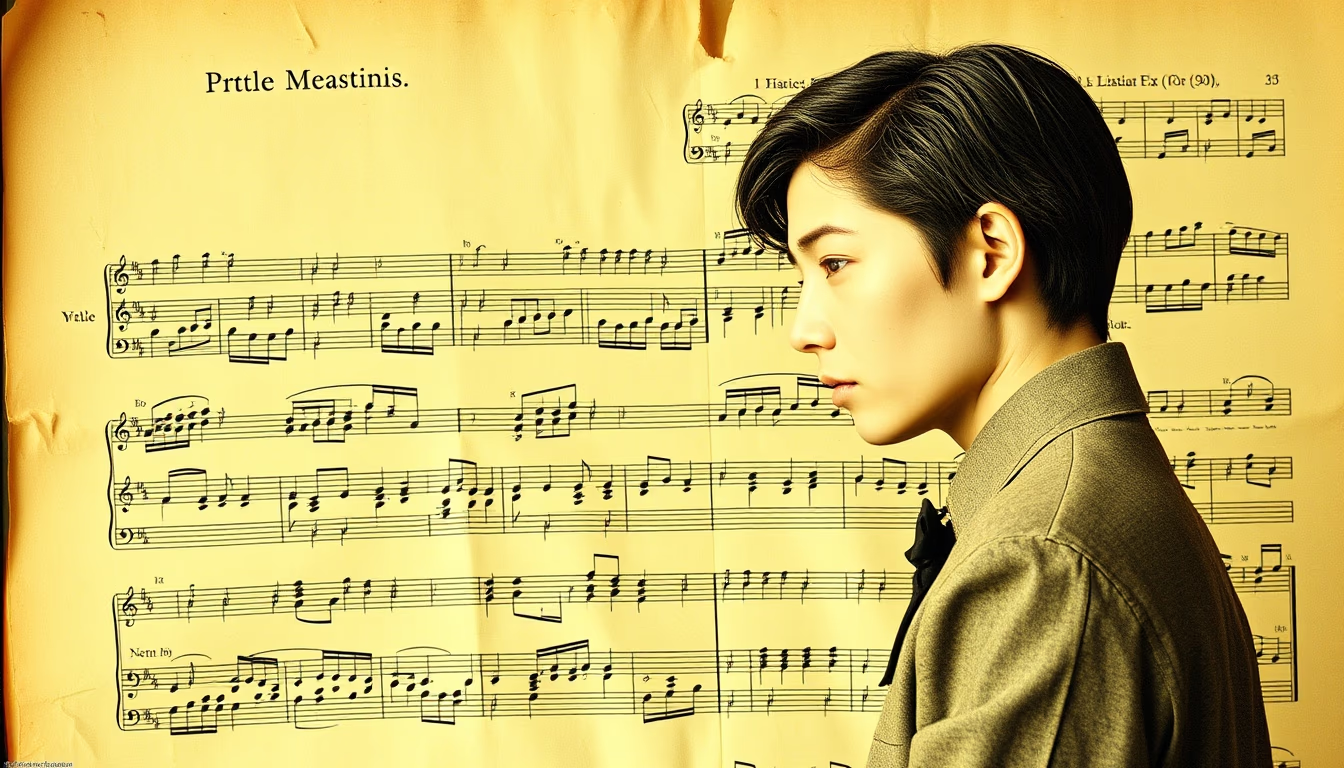
Antique handwritten music sheets reveal the history of musical notation and the work of copyists.
About this subject
Antique handwritten music sheets are historical documents that record music before the widespread use of music printing, which began in the 16th century with Ottaviano Petrucci. For centuries, monks, copyists, and musicians manually transcribed works onto parchment or handmade paper. Notable examples include Gregorian chant manuscripts from the Middle Ages, J.S. Bach's works preserved in copies by his students, and Mozart's autographs, now treasures in museums.
Their cultural significance extends beyond music: these sheets are studied by musicologists, paleographers, and historians. Each copy may contain regional variations, calligraphic embellishments, and even errors that reveal performance practices of the time. In Brazil, manuscripts by composers like Carlos Gomes and Heitor Villa-Lobos serve as primary sources for reconstructing original works.
Technical curiosities include the use of iron-gall ink, which darkens and damages paper over time, and watermarks that help date the support. The yellowish tone and grainy texture seen in images like this result from natural aging or reproduction processes that mimic an antique look, such as film grain filters.
Today, these sheets are widely used in editorial design, decoration, and as inspiration for typography, besides being invaluable sources for authentic performance of early music.
Frequently Asked Questions
How to identify an authentic antique handwritten music sheet?
Examine the paper type (laid or handmade), ink (iron-gall or India ink), handwriting style, and possible watermarks. Pencil annotations or corrections indicate historical use.
What is the difference between an autograph and a manuscript copy?
An autograph is written by the composer himself; a copy is made by a copyist. Autographs are rarer, more valuable, and bear the composer's original handwriting.
How do handwritten music sheets influence musical interpretation?
Details such as slurs, accidentals, and dynamics written by hand can reveal the composer's intentions not captured in printed editions, affecting tempo and articulation.
Direct URL
https://pub-c7d6a6ea828543ac903a74a341ccb2e1.r2.dev/imagens/music-sheet-handwritten-antique-film-grain-authentic-p4.avifHow to credit
Include a visible link back to UtilizAí. Copy one of the snippets below:
<a href="https://xn--utiliza-eza.com/en/midia/imagens/music-sheet-handwritten-antique-film-grain-authentic-p4">Music sheet handwritten antique</a> by <a href="https://xn--utiliza-eza.com">UtilizAí</a>, licensed under <a href="https://creativecommons.org/licenses/by/4.0/">CC BY 4.0</a>.
[Music sheet handwritten antique](https://xn--utiliza-eza.com/en/midia/imagens/music-sheet-handwritten-antique-film-grain-authentic-p4) by [UtilizAí](https://xn--utiliza-eza.com), CC BY 4.0
License: CC-BY-4.0