Music sheet handwritten antique
1344×768 · AVIF · CC BY 4.0
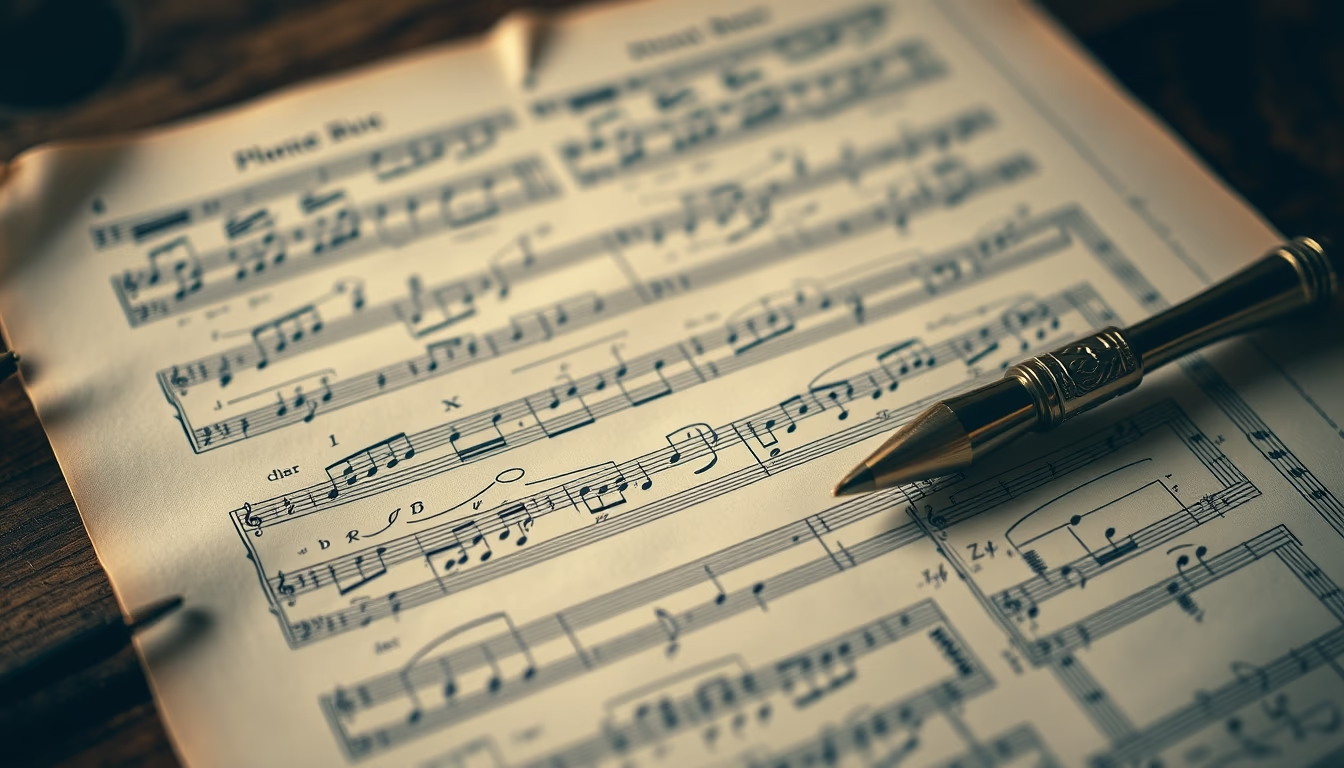
Ancient handwritten music sheets reveal the history of musical notation, with unique calligraphy and marks of time.
About this subject
Ancient handwritten music sheets are precious records of musical evolution, spanning from medieval plainchant to Baroque compositions. Unlike printed editions, each manuscript carries the personal handwriting of the copyist or composer, along with annotations, corrections, and usage marks that tell the story of its performance. Many of these sheets were produced in European monasteries and courts between the 12th and 18th centuries, using parchment or handmade paper and metal-based inks.
Musical notation in these documents evolved gradually. Medieval neumes gave way to the staff and rhythmic figures during the Renaissance, allowing greater precision in the reproduction of works. Composers such as Johann Sebastian Bach and Wolfgang Amadeus Mozart left autograph manuscripts that are still studied today to understand their interpretative intentions. These primary sources are essential for historically informed performance practices and musicology.
Preserving these documents faces challenges like paper aging, fungal action, and light exposure. Institutions like the National Library of France and the British Library digitize their collections to democratize access without compromising the originals. In Brazil, the collection of colonial music manuscripts at the National Library of Rio de Janeiro exemplifies the richness of this often overlooked heritage.
Beyond historical value, ancient handwritten music sheets inspire visual artists and designers, who appreciate the aesthetic of calligraphic curves and the relief of ink marks. They are a tangible link to humanity's musical past and a testament to the art and technique involved in transmitting music before the era of mass printing.
Frequently Asked Questions
How were ancient music sheets made?
They were handwritten by scribes or composers on parchment (animal skin) or handmade paper. The ink was usually made from soot or gall nuts, and the staff was drawn with a ruler and quill. The process was slow and expensive, limiting the circulation of works.
Why are handwritten music sheets important for music?
They are primary sources that reveal details about original notation, ornamentation, and the composer's intended interpretation. They allow musicologists and performers to recreate historically accurate versions of works and preserve compositions that were never printed.
Where are the major collections of handwritten music sheets preserved?
Major collections are held at the National Library of France, the British Library (UK), the Vatican Apostolic Library, and the Library of Congress (USA). In Brazil, the National Library of Rio de Janeiro has an important collection of colonial music manuscripts.
Direct URL
https://pub-c7d6a6ea828543ac903a74a341ccb2e1.r2.dev/imagens/music-sheet-handwritten-antique-documentary-photography-p6.avifHow to credit
Include a visible link back to UtilizAí. Copy one of the snippets below:
<a href="https://xn--utiliza-eza.com/en/midia/imagens/music-sheet-handwritten-antique-documentary-photography-p6">Music sheet handwritten antique</a> by <a href="https://xn--utiliza-eza.com">UtilizAí</a>, licensed under <a href="https://creativecommons.org/licenses/by/4.0/">CC BY 4.0</a>.
[Music sheet handwritten antique](https://xn--utiliza-eza.com/en/midia/imagens/music-sheet-handwritten-antique-documentary-photography-p6) by [UtilizAí](https://xn--utiliza-eza.com), CC BY 4.0
License: CC-BY-4.0