Music notes flowing visualization
1344×768 · AVIF · CC BY 4.0

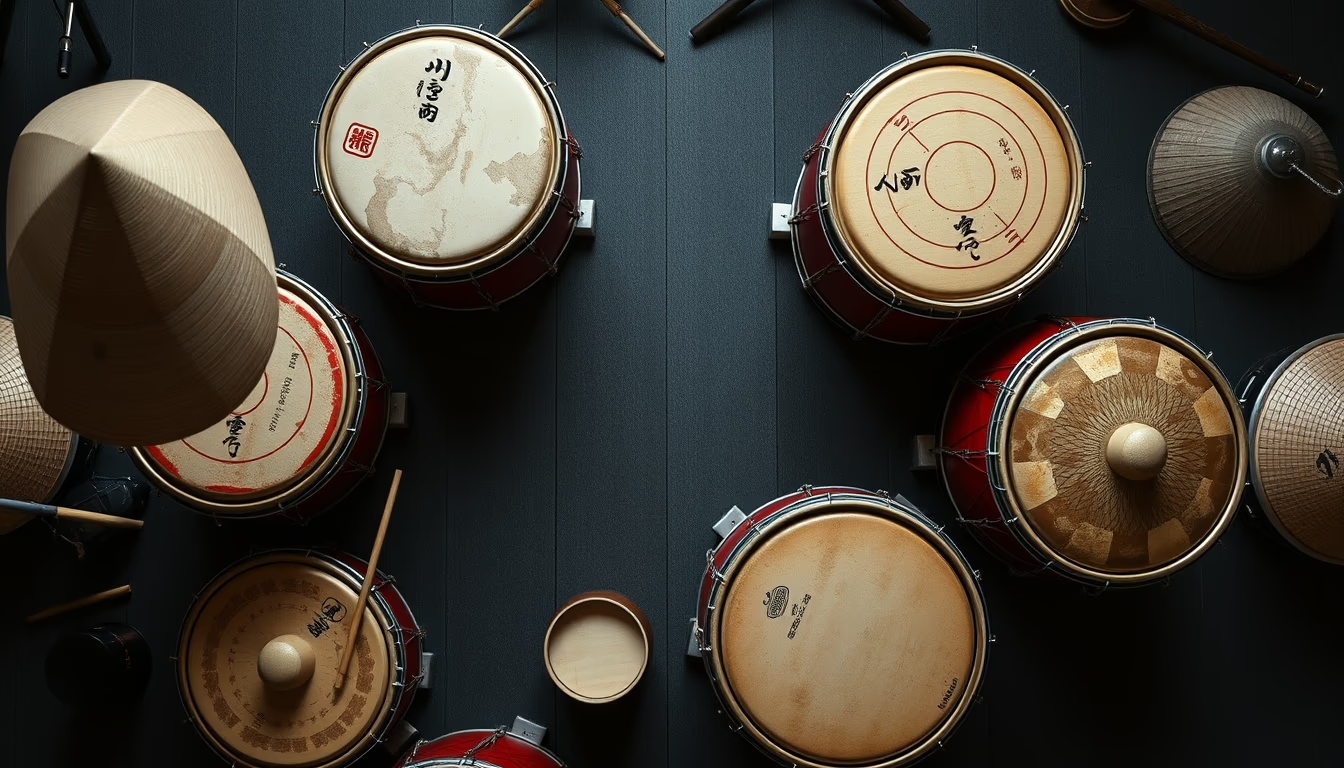
The visualization of flowing music notes translates sound waves into graphic elements, merging music and visual art in immersive cinematic representations.
About this subject
The visualization of flowing music notes is a technique that transforms the auditory experience into a visual landscape, often used in films, music videos, and live shows to represent the structure and movement of music. This approach builds on the concept of synesthesia, where stimuli from one sense (sound) evoke perceptions in another (vision). In practice, notes are drawn as graphic symbols that move through space, following rhythm, pitch, and intensity, creating an abstract choreography that helps audiences understand music more deeply.
From a technical standpoint, visualization can be generated by audio analysis software that extracts features such as frequency and amplitude, mapping them into shapes, colors, and trajectories. For example, high-pitched notes may appear as bright, fast points, while low notes become slow, dark waves. This representation is common in music visualization systems, such as those used in music players or interactive art installations.
In the film industry, scenes of flowing notes are often used to symbolize creativity, inspiration, or a composer's stream of thought. Major films like Disney's "Fantasia" (1940) and more recent productions like "Whiplash" (2014) use note animations to immerse viewers in the world of music. Additionally, the physics of sound explains that notes are vibrations in the air, and their visual representation as moving waves or particles is a direct analogy to interference patterns and resonance.
Interestingly, neuroscience studies show that exposure to music visualizations can improve rhythmic perception and melody memorization, especially in musically trained individuals. This tool is also used in music education to teach theory playfully, connecting abstract symbols to real sounds and facilitating the learning of sheet music reading.
Frequently Asked Questions
How are musical notes visually represented in a flow?
Notes are drawn as symbols (noteheads, stems, flags) that move through space, often along curved staffs. Colors, sizes, and speeds vary according to pitch, intensity, and rhythm, creating an animation that reflects the music's structure.
What is the relationship between colors and sounds in such visualizations?
Many systems map colors to note pitches or timbres, based on color scales or synesthetic associations. For example, blue may represent low notes and red high notes, but there is no fixed standard; each visualizer uses its own rules.
Why are notes represented as flowing rather than static?
The flow symbolizes the passage of time and melodic progression. In music, notes succeed each other, and visual movement helps convey a sense of rhythm, direction, and energy, making the experience more dynamic and engaging.
Direct URL
https://pub-c7d6a6ea828543ac903a74a341ccb2e1.r2.dev/imagens/music-notes-flowing-visualization-cinematic-wide-shot-p1.avifHow to credit
Include a visible link back to UtilizAí. Copy one of the snippets below:
<a href="https://xn--utiliza-eza.com/en/midia/imagens/music-notes-flowing-visualization-cinematic-wide-shot-p1">Music notes flowing visualization</a> by <a href="https://xn--utiliza-eza.com">UtilizAí</a>, licensed under <a href="https://creativecommons.org/licenses/by/4.0/">CC BY 4.0</a>.
[Music notes flowing visualization](https://xn--utiliza-eza.com/en/midia/imagens/music-notes-flowing-visualization-cinematic-wide-shot-p1) by [UtilizAí](https://xn--utiliza-eza.com), CC BY 4.0
License: CC-BY-4.0