Music festival empty grounds
1344×768 · AVIF · CC BY 4.0
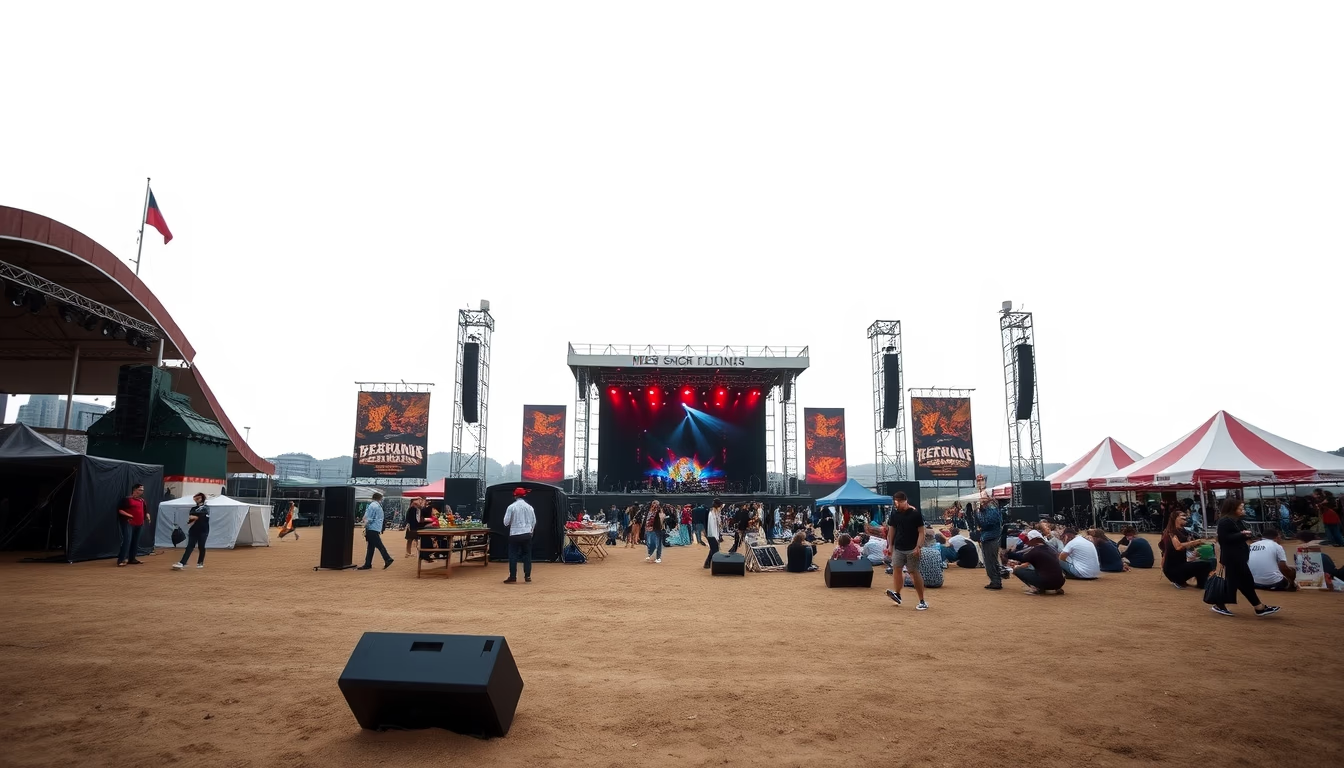
Empty music festival grounds reveal the monumental scale and logistical planning behind the world's largest outdoor events.
About this subject
Empty music festival grounds, such as those of Glastonbury in the UK or Rock in Rio in Brazil, represent the starting and ending point of a complex logistical operation. Before gates open, hundreds of workers install stages, metal structures, portable toilets, food tents, and sound systems that serve tens of thousands of people. The area, often equivalent to dozens of football fields, is prepared with protected grass or temporary flooring to withstand heavy foot traffic. The setup phase can take weeks, with equipment transported by trucks and helicopters in remote regions.
After the festival, the empty ground becomes the stage for an equally impressive cleanup operation. Festivals like Coachella in California or Lollapalooza in Chicago generate tons of waste, from plastic cups and cans to abandoned tents. Specialized waste management companies sort and recycle materials, while the soil is restored through techniques such as aeration and replanting of grass. In many countries, legislation requires organizers to leave the site in conditions equal to or better than before the event.
The scale of these empty spaces is also striking: the Glastonbury festival covers an area of over 900 hectares, equivalent to 1,260 football fields. During the event days, the temporary population often exceeds that of many Brazilian cities, such as Araraquara or Blumenau. This apparent emptiness is actually a testament to the temporary engineering that enables mass cultural experiences, with significant economic impact for host regions, generating jobs and boosting sectors such as hospitality, transportation, and food services.
Frequently Asked Questions
How long does it take to set up a large music festival?
Setup can take two to four weeks, depending on the event's size. Festivals like Rock in Rio require about 30 days to erect stages, sanitary facilities, food areas, and sound and lighting systems.
What happens to the waste generated during the festival?
Waste is sorted and recycled by specialized companies. Plastic cups, cans, and abandoned tents are separated. Many festivals run awareness campaigns to reduce waste, and the soil is restored after the event.
How is the ground cleaned after the festival?
Cleanup crews cover the entire area collecting waste, which is sent for recycling or landfills. The soil is treated with aeration and replanting of grass to restore the original turf, following environmental regulations.
Direct URL
https://pub-c7d6a6ea828543ac903a74a341ccb2e1.r2.dev/imagens/music-festival-empty-grounds-commercial-product-photography-p2.avifHow to credit
Include a visible link back to UtilizAí. Copy one of the snippets below:
<a href="https://xn--utiliza-eza.com/en/midia/imagens/music-festival-empty-grounds-commercial-product-photography-p2">Music festival empty grounds</a> by <a href="https://xn--utiliza-eza.com">UtilizAí</a>, licensed under <a href="https://creativecommons.org/licenses/by/4.0/">CC BY 4.0</a>.
[Music festival empty grounds](https://xn--utiliza-eza.com/en/midia/imagens/music-festival-empty-grounds-commercial-product-photography-p2) by [UtilizAí](https://xn--utiliza-eza.com), CC BY 4.0
License: CC-BY-4.0