Mushroom macro forest floor
1344×768 · AVIF · CC BY 4.0
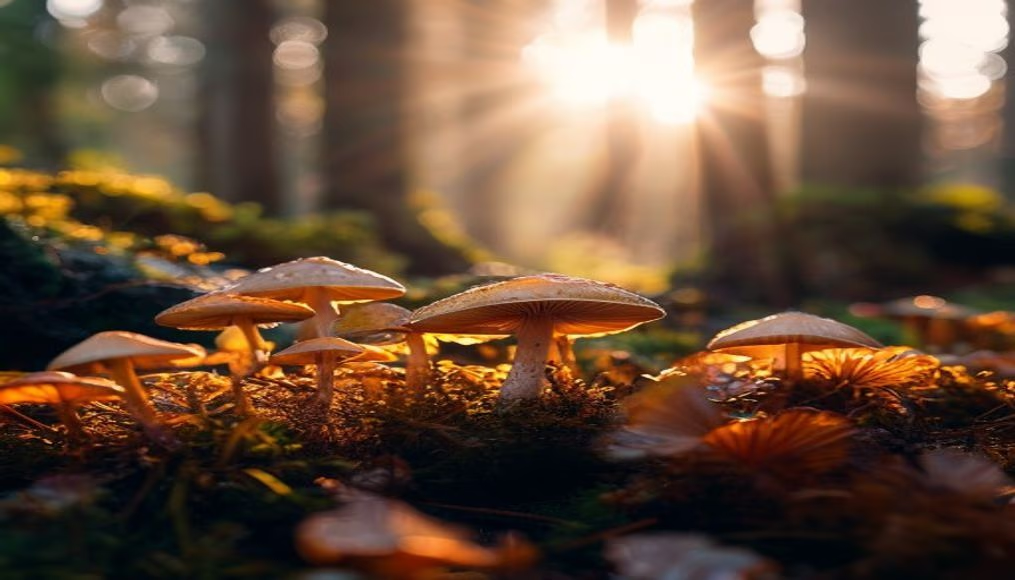
Mushrooms on the forest floor reveal a microcosm of life essential to the ecosystem, with functions of decomposition and symbiosis.
About this subject
Mushrooms are the visible fruiting bodies of fungi, organisms that play crucial roles in nutrient recycling and forest health. On the forest floor, they appear in an impressive variety of shapes, colors, and sizes, from tiny and delicate to robust and colorful. Most belong to the phylum Basidiomycota, known for producing spores on structures called basidia.
These fungi are primary decomposers, breaking down organic matter like fallen leaves, branches, and logs. Without them, forests would accumulate debris and nutrients would not be recycled. Moreover, many mushrooms form symbiotic relationships with tree roots, known as mycorrhizae, exchanging water and minerals for sugars. It is estimated that over 90% of terrestrial plants depend on mycorrhizal associations.
Brazil hosts an immense diversity of mushrooms, but it remains poorly studied. The Atlantic Forest, Amazon, and Cerrado are hotspots for yet uncatalogued species. Some mushrooms are edible and cultivated, such as shiitake and shimeji; others are toxic or hallucinogenic. Proper identification is essential.
Interestingly, the largest living organism on Earth is a fungus: Armillaria ostoyae, covering nearly 10 km² in a US forest. Mushrooms are also indicators of environmental quality, as they are sensitive to pollution and soil changes. Photographing them in macro reveals details like gills, stipe, and pileus, structures that fascinate scientists and enthusiasts alike.
Frequently Asked Questions
What is the function of mushrooms in nature?
Mushrooms are essential for decomposing organic matter and recycling nutrients. Many form mycorrhizae with plant roots, aiding in water and mineral uptake.
Is it safe to eat mushrooms found in the forest?
No, unless you are an expert. Many species are toxic or lethal. Proper identification requires deep mycological knowledge.
Why are mushrooms important environmental indicators?
Because they are sensitive to pollutants and soil changes, the presence or absence of certain mushrooms can indicate ecosystem health.
Direct URL
https://pub-c7d6a6ea828543ac903a74a341ccb2e1.r2.dev/imagens/mushroom-macro-forest-floor-travel-photography-v10.avifHow to credit
Include a visible link back to UtilizAí. Copy one of the snippets below:
<a href="https://xn--utiliza-eza.com/en/midia/imagens/mushroom-macro-forest-floor-travel-photography-v10">Mushroom macro forest floor</a> by <a href="https://xn--utiliza-eza.com">UtilizAí</a>, licensed under <a href="https://creativecommons.org/licenses/by/4.0/">CC BY 4.0</a>.
[Mushroom macro forest floor](https://xn--utiliza-eza.com/en/midia/imagens/mushroom-macro-forest-floor-travel-photography-v10) by [UtilizAí](https://xn--utiliza-eza.com), CC BY 4.0
License: CC-BY-4.0