Mrna vaccine vial closeup
1344×768 · AVIF · CC BY 4.0
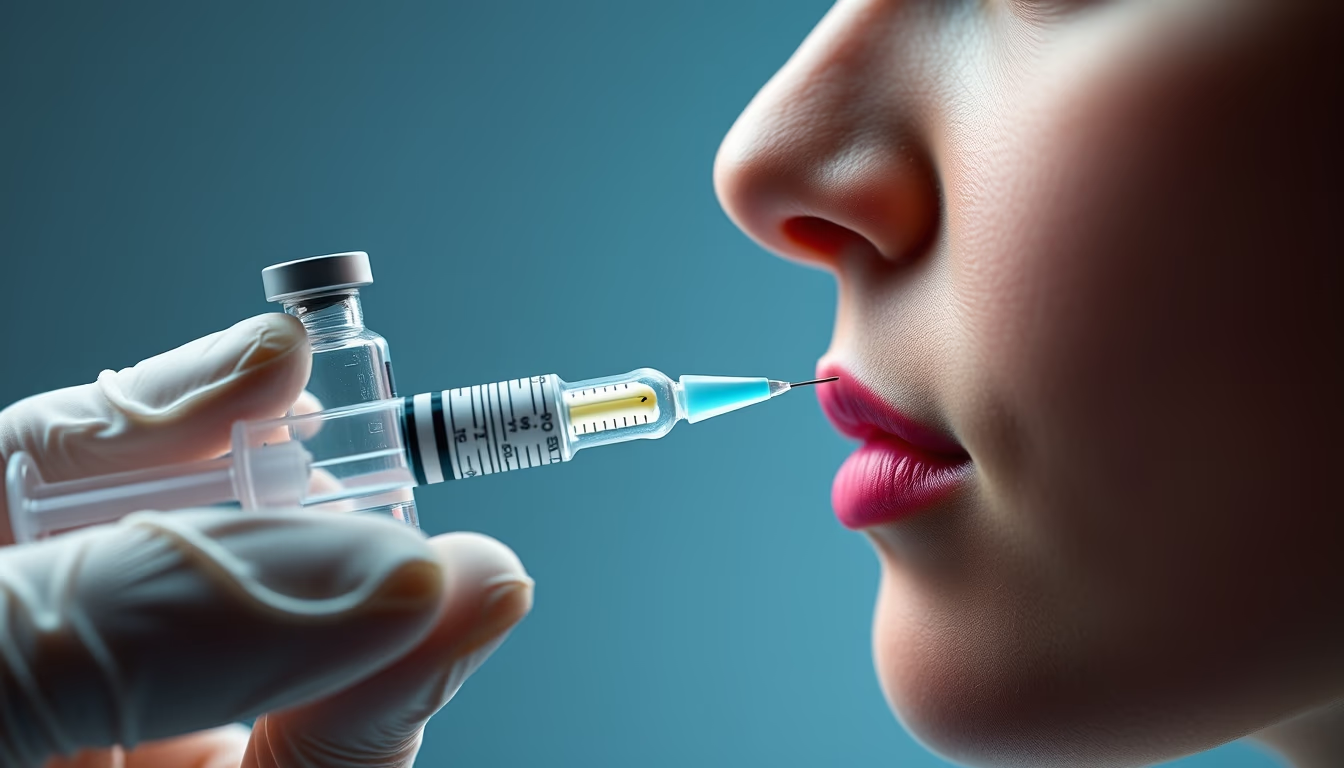
Closeup of an mRNA vaccine vial reveals details of the technology that revolutionized immunization against COVID-19.
About this subject
mRNA vaccines represent a significant advancement in immunology. Unlike traditional vaccines that use weakened or inactivated viruses, mRNA vaccines contain genetic instructions for the body's cells to produce a specific pathogen protein, such as the SARS-CoV-2 spike protein. This approach accelerates development and allows rapid adaptation to new variants.
Storage and logistics for these vaccines require special care. For instance, the Pfizer-BioNTech vaccine must be kept at approximately -70°C, while Moderna's can be stored at -20°C. This posed distribution challenges, especially in regions with limited refrigeration infrastructure, leading to innovations in cold chains and thermal packaging.
Historically, mRNA vaccines were the first of their kind approved for human use, in December 2020. The rapid development during the COVID-19 pandemic, in less than a year, was an unprecedented scientific achievement. Clinical trials and post-marketing surveillance confirmed high efficacy in preventing severe illness and hospitalization.
The future potential of mRNA vaccines extends beyond COVID-19. Research is underway for use against influenza, respiratory syncytial virus (RSV), Zika, and even cancer therapies, where mRNA can teach the immune system to attack tumor cells. The platform promises rapid responses to new infectious threats.
Frequently Asked Questions
How does an mRNA vaccine work?
The mRNA vaccine contains messenger RNA that instructs body cells to produce a harmless viral protein, such as the spike protein. The immune system then recognizes this protein as foreign and creates antibodies and memory cells to fight the actual virus.
What are the common side effects of mRNA vaccines?
Common side effects include pain at the injection site, fatigue, headache, muscle pain, chills, fever, and nausea. They are usually mild to moderate and resolve within a few days.
Why do mRNA vaccines need to be stored at very low temperatures?
mRNA is a fragile molecule that degrades quickly at higher temperatures. Ultra-cold storage, such as -70°C for the Pfizer-BioNTech vaccine, maintains mRNA stability until use.
Direct URL
https://pub-c7d6a6ea828543ac903a74a341ccb2e1.r2.dev/imagens/mrna-vaccine-vial-closeup-studio-editorial-portrait-p8.avifHow to credit
Include a visible link back to UtilizAí. Copy one of the snippets below:
<a href="https://xn--utiliza-eza.com/en/midia/imagens/mrna-vaccine-vial-closeup-studio-editorial-portrait-p8">Mrna vaccine vial closeup</a> by <a href="https://xn--utiliza-eza.com">UtilizAí</a>, licensed under <a href="https://creativecommons.org/licenses/by/4.0/">CC BY 4.0</a>.
[Mrna vaccine vial closeup](https://xn--utiliza-eza.com/en/midia/imagens/mrna-vaccine-vial-closeup-studio-editorial-portrait-p8) by [UtilizAí](https://xn--utiliza-eza.com), CC BY 4.0
License: CC-BY-4.0