Mrna vaccine vial closeup
1344×768 · AVIF · CC BY 4.0
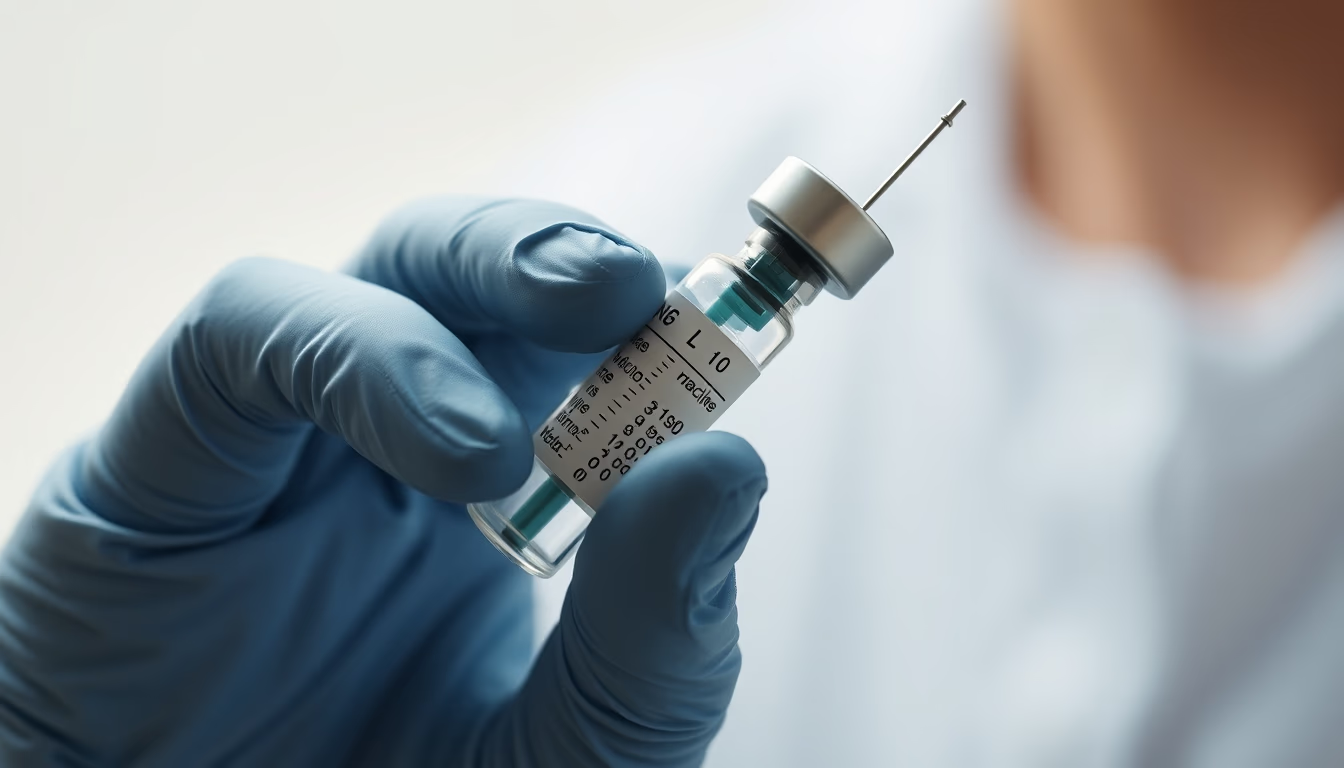
Close-up of an mRNA vaccine vial highlights the technology that revolutionized global immunization against COVID-19 and paved the way for new therapies.
About this subject
mRNA vaccines represent one of the greatest innovations in modern biotechnology. Unlike traditional vaccines that use inactivated viruses or recombinant proteins, mRNA vaccines instruct the body's cells to produce a specific protein from the pathogen, triggering an immune response. This technology was deployed at scale for the first time during the COVID-19 pandemic, with the Pfizer/BioNTech and Moderna vaccines being the first to receive emergency use authorization in 2020.
The typical mRNA vaccine vial, as depicted in the image, contains a frozen solution that must be stored at ultra-low temperatures, between -20°C and -80°C depending on the formulation. This presents a significant logistical challenge, especially in regions with limited cold-chain infrastructure. Once thawed, the contents must be diluted and administered within six hours to ensure effectiveness.
mRNA technology is not limited to COVID-19 vaccines. Ongoing research explores its use against influenza, Zika, HIV, cancer, and rare diseases. The speed of development, only 10 months for the COVID-19 vaccine, demonstrates the transformative potential of this approach. The image symbolizes not only a scientific breakthrough but also the global collaboration that enabled its unprecedented distribution.
Frequently Asked Questions
How do mRNA vaccines work?
They deliver a genetic instruction (messenger RNA) to the body's cells to produce a harmless viral protein, training the immune system to recognize and fight it in future infections.
Are mRNA vaccines safe?
Yes, they underwent rigorous clinical trials before emergency approval. Common side effects are mild and short-lived, such as injection site pain, fatigue, and low fever.
Why do mRNA vaccines require ultra-cold storage?
Messenger RNA is unstable and degrades rapidly at higher temperatures. Pfizer/BioNTech's formulation requires -80°C, while Moderna's can be stored at -20°C for up to six months.
Direct URL
https://pub-c7d6a6ea828543ac903a74a341ccb2e1.r2.dev/imagens/mrna-vaccine-vial-closeup-minimalist-composition-p11.avifHow to credit
Include a visible link back to UtilizAí. Copy one of the snippets below:
<a href="https://xn--utiliza-eza.com/en/midia/imagens/mrna-vaccine-vial-closeup-minimalist-composition-p11">Mrna vaccine vial closeup</a> by <a href="https://xn--utiliza-eza.com">UtilizAí</a>, licensed under <a href="https://creativecommons.org/licenses/by/4.0/">CC BY 4.0</a>.
[Mrna vaccine vial closeup](https://xn--utiliza-eza.com/en/midia/imagens/mrna-vaccine-vial-closeup-minimalist-composition-p11) by [UtilizAí](https://xn--utiliza-eza.com), CC BY 4.0
License: CC-BY-4.0