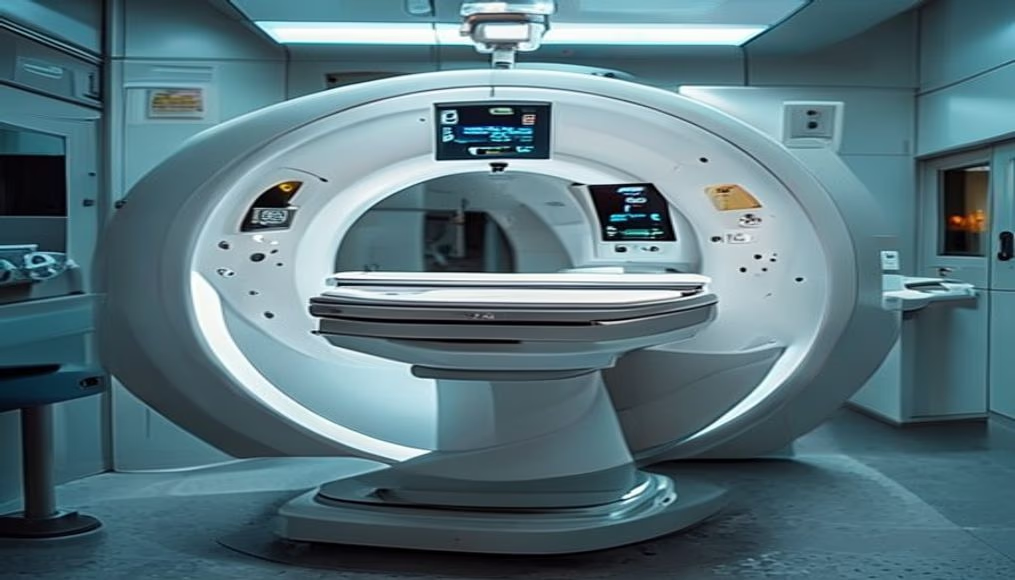
Mri scanner machine modern
1344×768 · AVIF · CC BY 4.0
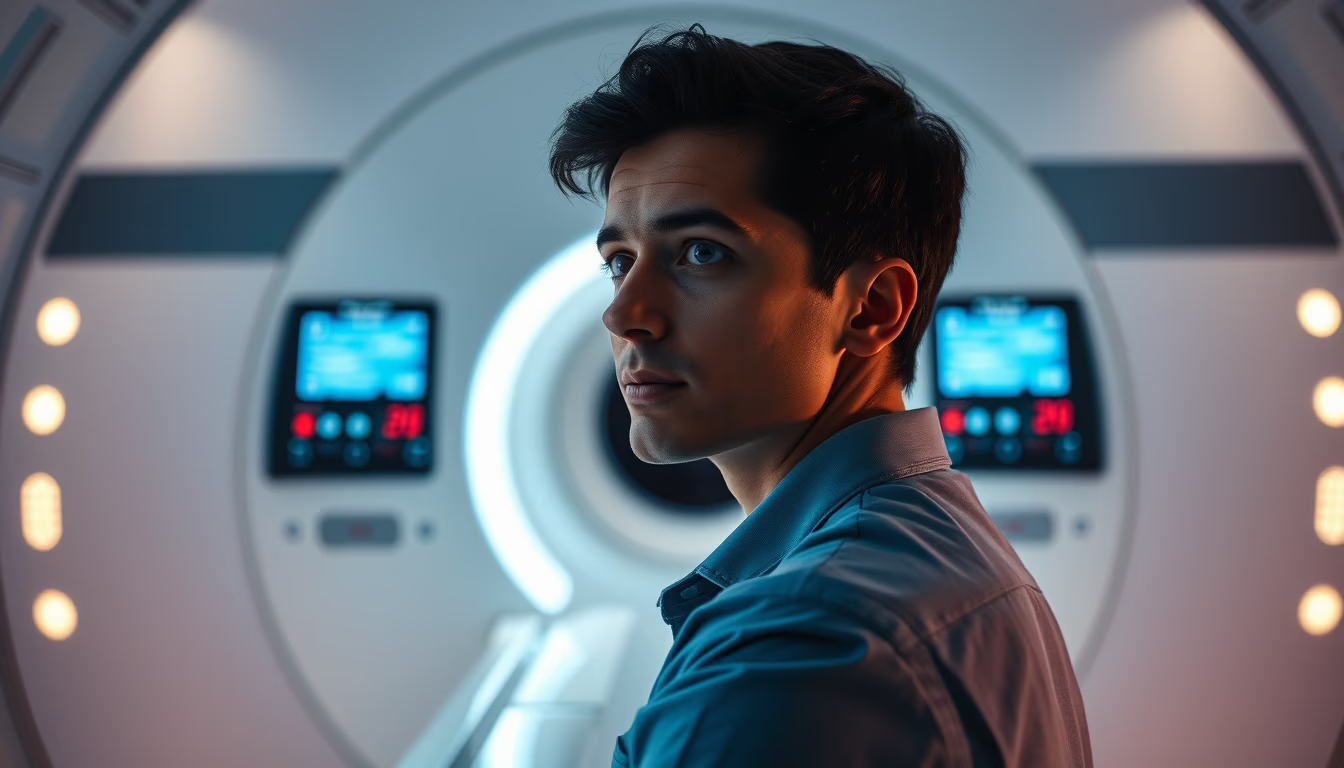
Modern MRI scanner in a clinical setting, essential for non-invasive diagnostic imaging.
About this subject
Magnetic resonance imaging (MRI) is a medical imaging technique that uses magnetic fields and radio waves to produce detailed images of organs and tissues. Unlike computed tomography, MRI does not use ionizing radiation, making it especially safe for repeated exams and vulnerable groups such as children and pregnant women (though use during pregnancy is evaluated case by case). Modern equipment, like the one depicted, features high-power superconducting magnets (typically 1.5 to 3 Tesla) enabling faster acquisition and higher resolution images. Technological advances include dedicated radiofrequency coils for each body part, noise reduction during scans, and artificial intelligence software that aids in early detection of tumors, neurological lesions, and musculoskeletal diseases. In Brazil, MRI is widely available in public and private hospitals, being one of the most requested exams for investigating chronic pain, strokes, and spinal pathologies. The machine requires special installation with shielding against external interference and a cryogenic system to keep magnets near absolute zero, justifying its high acquisition and maintenance cost. Despite this, MRI has become indispensable in modern medicine, reducing the need for invasive procedures such as exploratory biopsies.
Frequently Asked Questions
What is the difference between MRI and CT scan?
The main difference is that MRI uses magnetic fields and radio waves without ionizing radiation, while CT uses X-rays. MRI provides better contrast for soft tissues like the brain and muscles, but it is slower and more expensive.
Is it safe to have an MRI with metal implants?
It depends on the type of implant. Older devices such as pacemakers, aneurysm clips, or metal fragments may be contraindicated. Modern implants (like stents and orthopedic prostheses) are usually safe, but it is essential to inform the doctor before the exam.
How long does an MRI scan take?
On average, 30 to 60 minutes, depending on the area being examined and the need for contrast. More complex exams, such as cardiac or whole-body MRI, can take up to 90 minutes.
Direct URL
https://pub-c7d6a6ea828543ac903a74a341ccb2e1.r2.dev/imagens/mri-scanner-machine-modern-studio-editorial-portrait-v3.avifHow to credit
Include a visible link back to UtilizAí. Copy one of the snippets below:
<a href="https://xn--utiliza-eza.com/en/midia/imagens/mri-scanner-machine-modern-studio-editorial-portrait-v3">Mri scanner machine modern</a> by <a href="https://xn--utiliza-eza.com">UtilizAí</a>, licensed under <a href="https://creativecommons.org/licenses/by/4.0/">CC BY 4.0</a>.
[Mri scanner machine modern](https://xn--utiliza-eza.com/en/midia/imagens/mri-scanner-machine-modern-studio-editorial-portrait-v3) by [UtilizAí](https://xn--utiliza-eza.com), CC BY 4.0
License: CC-BY-4.0