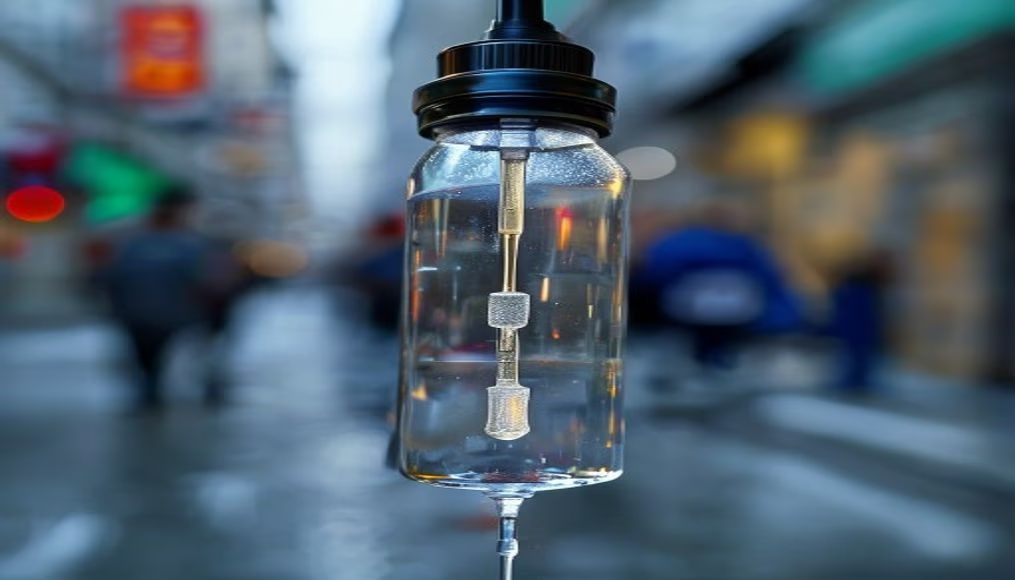
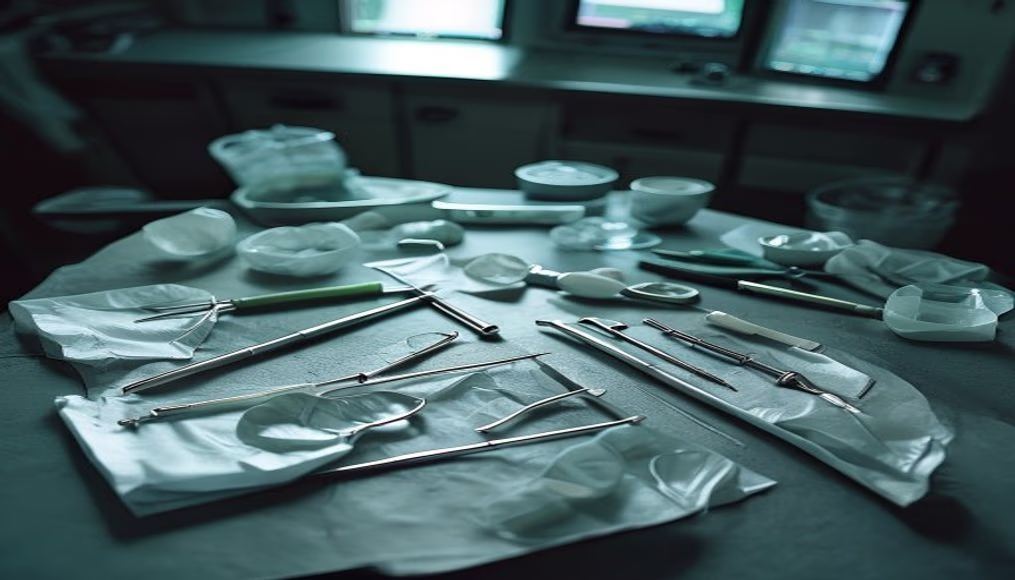
Microscope view cell culture
1344×768 · AVIF · CC BY 4.0

Cell cultures viewed under a microscope are fundamental for biomedical research, enabling studies on diseases, drugs, and cellular therapies.
About this subject
Observation of cell cultures under a microscope is an essential technique in cell and molecular biology. Cells are grown under controlled conditions of temperature, pH and nutrients, using specific media such as DMEM or RPMI, supplemented with fetal bovine serum and antibiotics. Phase-contrast or inverted microscopes are often used to visualize living cells without stains, allowing tracking of phenomena like cell division, migration and programmed cell death.
Primary cultures, derived directly from tissues, have a limited lifespan, while immortalized lines, such as HeLa or HEK 293, can divide indefinitely. The cell culture technique was developed in the early 20th century, but gained major momentum with the production of antibiotics and the demand for viral vaccines, such as the polio vaccine. Today, it is used for cytotoxicity tests, recombinant protein production, and modeling diseases like cancer and Alzheimer's.
In Brazil, institutions like Instituto Butantan and Fiocruz maintain cell culture laboratories for vaccine production and research. Contamination by mycoplasma and the need for good laboratory practices are constant challenges. Fluorescence microscopy, with markers like GFP, allows localization of specific proteins and study of cellular interactions in real time.
Frequently Asked Questions
What is a cell culture and what is it used for?
Cell culture is the process of growing cells under controlled laboratory conditions to study their behavior, test drugs, or produce proteins and vaccines.
What types of microscopes are used to observe living cells?
Inverted microscopes with phase contrast or DIC are common, as they allow visualization of cells in culture dishes without disturbing them. Fluorescence microscopes are also used to label specific structures.
Can cell cultures be used for vaccine production?
Yes, many viral vaccines, such as those against polio, measles, and COVID-19, are produced in cell cultures where viruses replicate.
Direct URL
https://pub-c7d6a6ea828543ac903a74a341ccb2e1.r2.dev/imagens/microscope-view-cell-culture-street-photography-v11.avifHow to credit
Include a visible link back to UtilizAí. Copy one of the snippets below:
<a href="https://xn--utiliza-eza.com/en/midia/imagens/microscope-view-cell-culture-street-photography-v11">Microscope view cell culture</a> by <a href="https://xn--utiliza-eza.com">UtilizAí</a>, licensed under <a href="https://creativecommons.org/licenses/by/4.0/">CC BY 4.0</a>.
[Microscope view cell culture](https://xn--utiliza-eza.com/en/midia/imagens/microscope-view-cell-culture-street-photography-v11) by [UtilizAí](https://xn--utiliza-eza.com), CC BY 4.0
License: CC-BY-4.0