Mri scanner machine modern
1344×768 · AVIF · CC BY 4.0
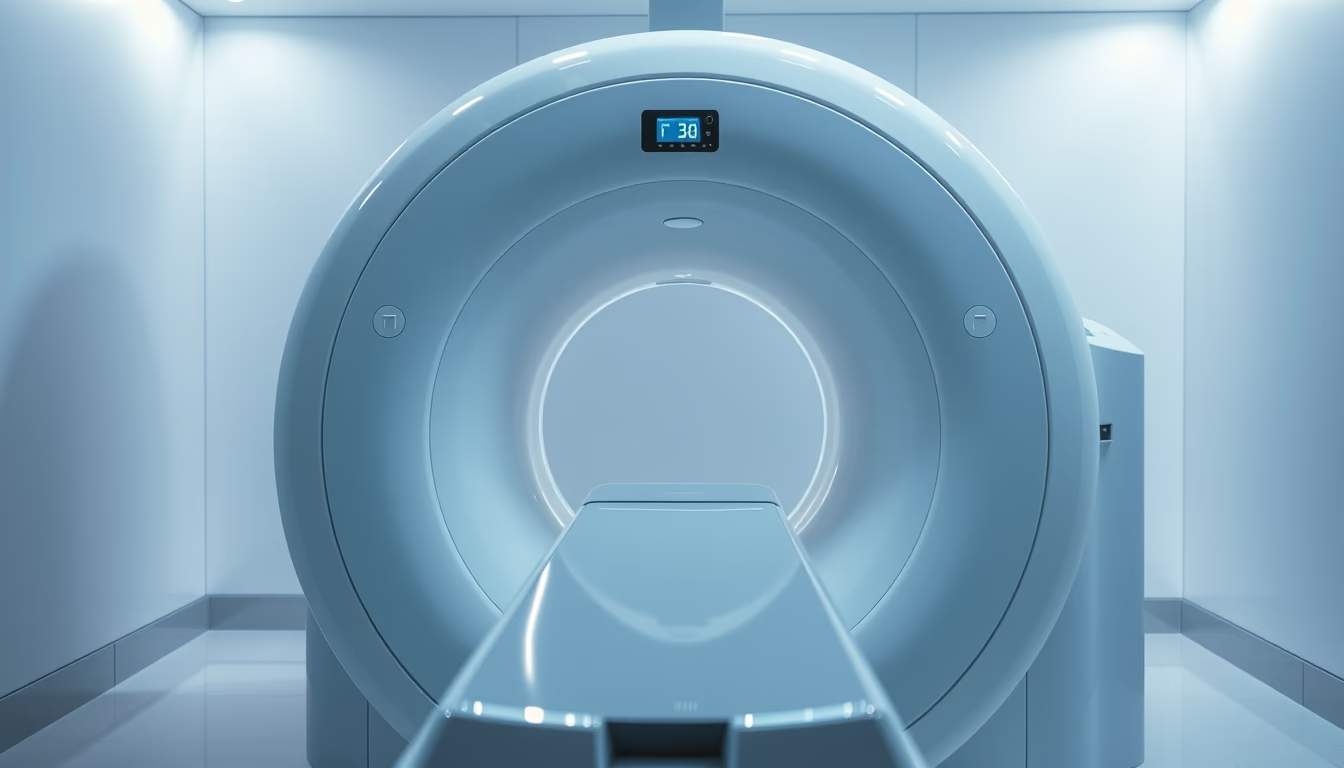
Learn how modern MRI scanners work, an essential technology for precise and non-invasive medical diagnostics.
About this subject
Magnetic Resonance Imaging (MRI) is a medical imaging technique that uses strong magnetic fields and radio waves to generate detailed images of organs and internal body structures. Unlike X-rays or computed tomography, MRI does not use ionizing radiation, making it a safe method for repeated scans and sensitive populations such as children and pregnant women (though restrictions apply in the first trimester).
The physical principle behind the exam relies on the behavior of hydrogen protons present in water and fat molecules within the human body. When exposed to a powerful magnetic field (typically 1.5 to 3 Tesla in modern scanners), these protons align. Radiofrequency pulses are then emitted, temporarily knocking them out of alignment. As they return to equilibrium, the protons release signals captured by coils and processed by computers to form high-resolution three-dimensional images.
Recent technological advances include ultra-high-field scanners (7 Tesla or more), which allow visualization of brain structures with unprecedented detail, as well as functional MRI (fMRI) sequences that map brain activity in real time. Portability and noise reduction have also improved significantly, offering greater patient comfort. Despite the high cost, a modern scanner can range from $1.5 to $3 million, MRI has become indispensable in neurology, orthopedics, cardiology, and oncology for diagnosing tumors, injuries, infections, and vascular diseases.
Interestingly, the first clinical MRI scanner was installed in the 1980s. Since then, over 40,000 units operate globally, performing approximately 80 million scans per year. Brazil has about 7,000 devices, mainly concentrated in the South and Southeast regions. Regulatory agencies like ANVISA strictly enforce safety requirements, including magnetic shielding and professional training, to prevent accidents with ferromagnetic objects.
Frequently Asked Questions
How long does an MRI scan take?
The duration varies depending on the body area and protocol, but typically lasts 20 to 60 minutes. More complex exams, such as functional MRI or with contrast, may take up to 90 minutes.
What are the risks of an MRI?
The main risk is the presence of ferromagnetic metal objects in the patient's body, which can move or heat up under the magnetic field. Therefore, it is essential to inform the doctor about implants, pacemakers, surgical clips, or metal fragments. Patients with claustrophobia may receive mild sedation.
What is the difference between MRI and CT scan?
CT uses X-rays to generate images and exposes the patient to ionizing radiation. MRI uses magnetic fields and radio waves, without radiation. MRI offers better contrast for soft tissues like brain and muscles, while CT is faster and preferred for bones and emergencies.
Direct URL
https://pub-c7d6a6ea828543ac903a74a341ccb2e1.r2.dev/imagens/mri-scanner-machine-modern-commercial-product-photography-v9.avifHow to credit
Include a visible link back to UtilizAí. Copy one of the snippets below:
<a href="https://xn--utiliza-eza.com/en/midia/imagens/mri-scanner-machine-modern-commercial-product-photography-v9">Mri scanner machine modern</a> by <a href="https://xn--utiliza-eza.com">UtilizAí</a>, licensed under <a href="https://creativecommons.org/licenses/by/4.0/">CC BY 4.0</a>.
[Mri scanner machine modern](https://xn--utiliza-eza.com/en/midia/imagens/mri-scanner-machine-modern-commercial-product-photography-v9) by [UtilizAí](https://xn--utiliza-eza.com), CC BY 4.0
License: CC-BY-4.0