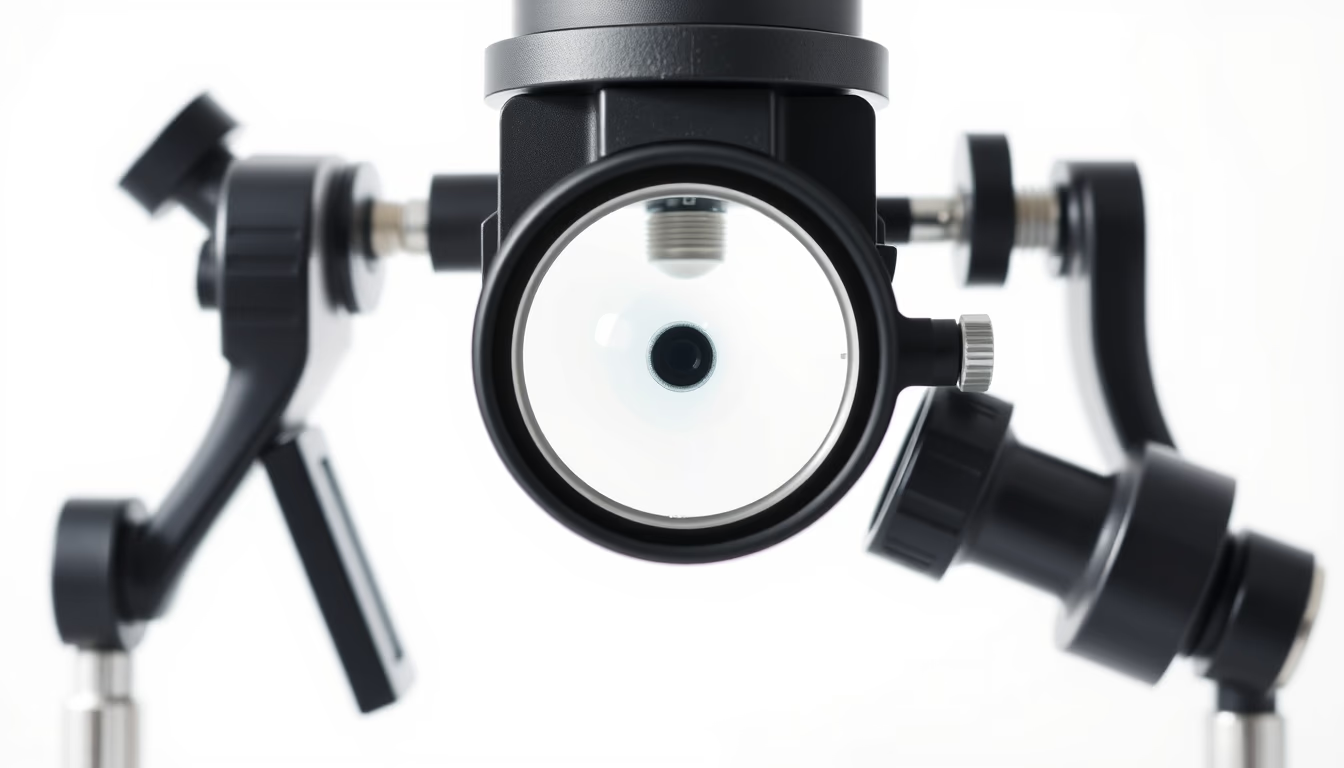
Mri machine gantry
1344×768 · AVIF · CC BY 4.0
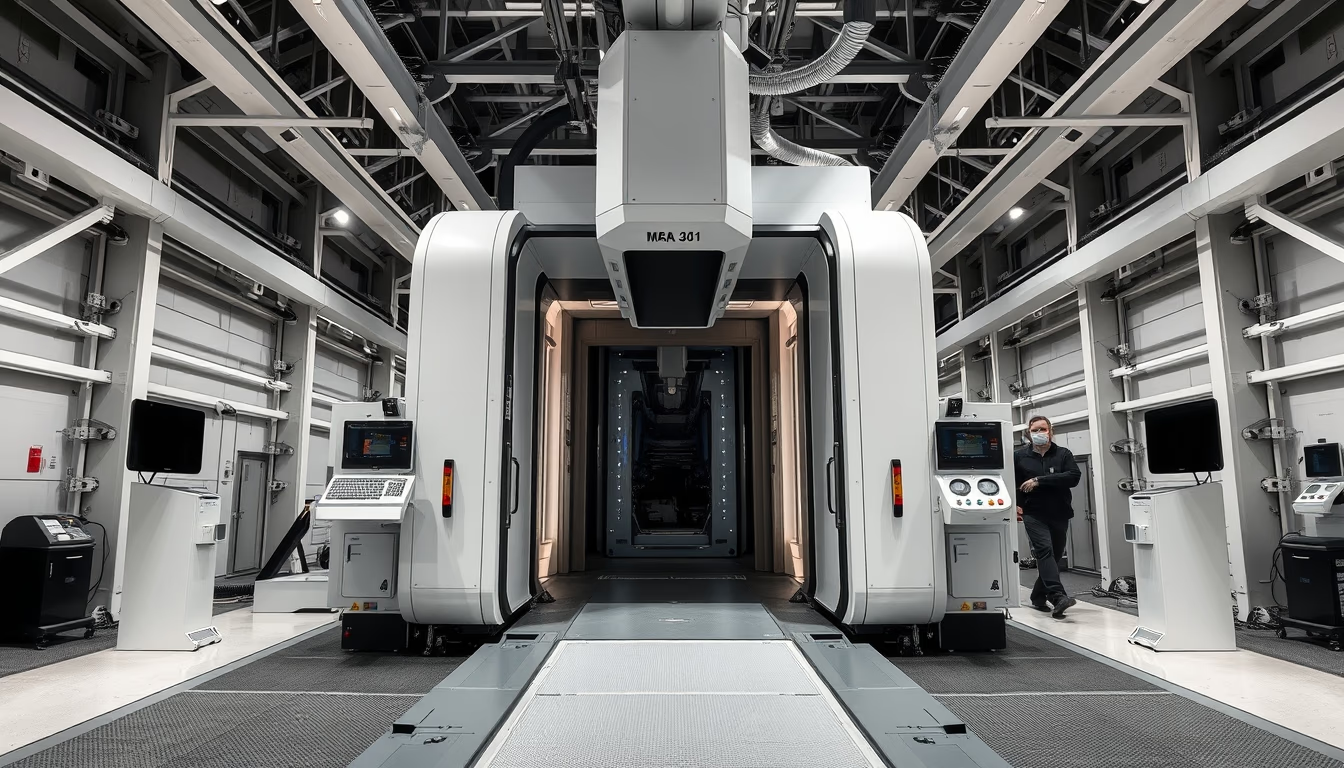
The gantry of an MRI machine is the tunnel-shaped structure housing the superconducting magnet and gradient coils.
About this subject
The gantry of a magnetic resonance imaging (MRI) machine is the central component housing the superconducting magnet, gradient coils, and radiofrequency coil. These magnets, typically made of niobium-titanium, operate at cryogenic temperatures near absolute zero (-269°C) maintained by liquid helium. Magnetic field strength is measured in teslas (T): most clinical scanners use 1.5T or 3T, while research models reach 7T or higher.
The tubular shape of the gantry, approximately 60, 70 cm in diameter, is designed to position the patient within the homogeneous magnetic field. During imaging, gradient coils create spatial variations in the field, enabling localization of proton signals. Technology has evolved since the first human scanner in the 1970s, with modern gantries being shorter and more open to reduce claustrophobia.
Beyond clinical use, the architectural design of the gantry impacts hospital installation: it requires RF shielding and acoustic insulation, as rapid gradient switching generates noise up to 120 dB. Maintaining vacuum and helium levels is critical to prevent quenching, a sudden heating of the magnet that releases helium gas. Current research explores ultra-high-field gantries for neuroimaging and spectroscopy.
Frequently Asked Questions
What is the main function of the gantry in an MRI?
The gantry houses the superconducting magnet and coils that generate the magnetic field and gradients needed to produce detailed images of internal body tissues.
Why does the gantry require liquid helium?
Liquid helium keeps the superconducting magnet at cryogenic temperatures, allowing it to carry electrical current without resistance, creating a stable and intense magnetic field.
Are there open gantries for claustrophobic patients?
Yes, there are systems with wider bores (wide-bore) or open designs (open MRI), though they typically have lower magnetic fields (up to 1.2T) compared to closed models.
Direct URL
https://pub-c7d6a6ea828543ac903a74a341ccb2e1.r2.dev/imagens/mri-machine-gantry-architectural-photography-p6.avifHow to credit
Include a visible link back to UtilizAí. Copy one of the snippets below:
<a href="https://xn--utiliza-eza.com/en/midia/imagens/mri-machine-gantry-architectural-photography-p6">Mri machine gantry</a> by <a href="https://xn--utiliza-eza.com">UtilizAí</a>, licensed under <a href="https://creativecommons.org/licenses/by/4.0/">CC BY 4.0</a>.
[Mri machine gantry](https://xn--utiliza-eza.com/en/midia/imagens/mri-machine-gantry-architectural-photography-p6) by [UtilizAí](https://xn--utiliza-eza.com), CC BY 4.0
License: CC-BY-4.0