Cardiology heart monitor
1344×768 · AVIF · CC BY 4.0

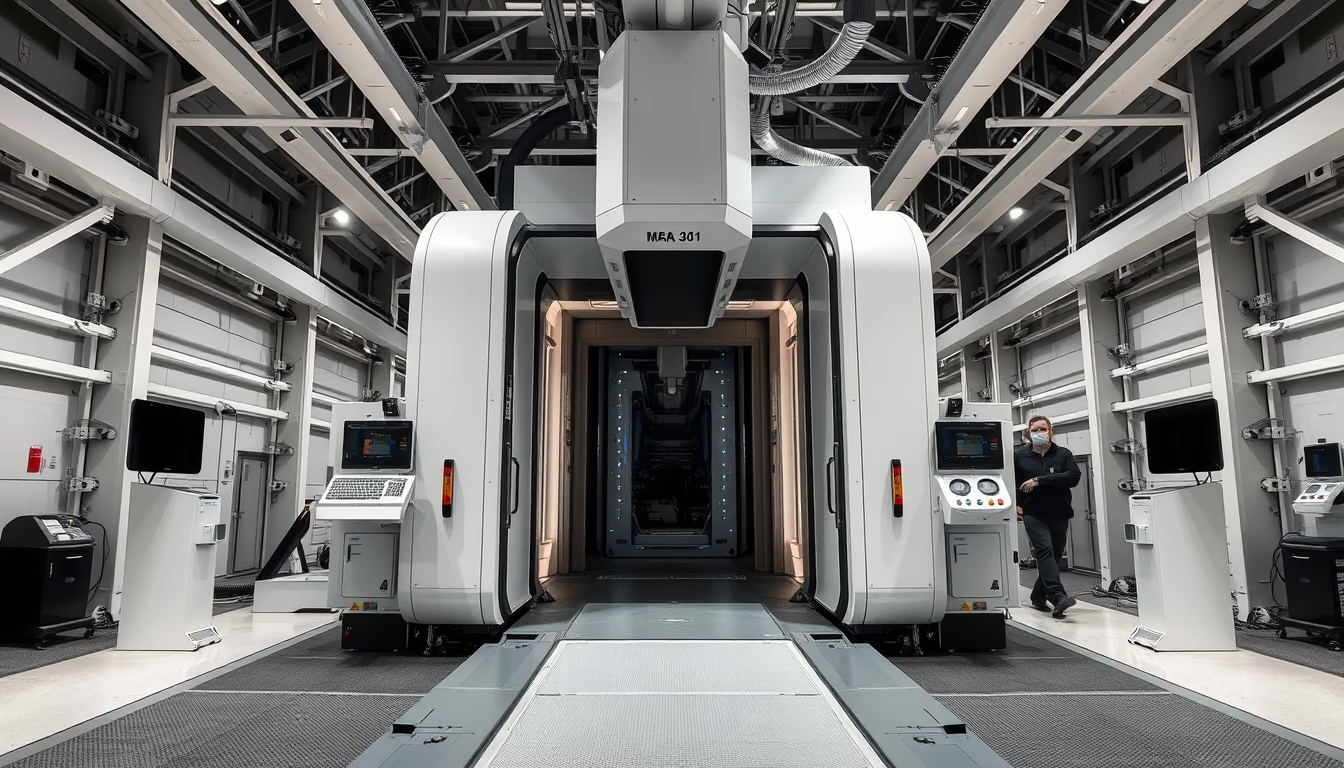
Cardiac monitor used in cardiology for continuous heart rhythm monitoring, essential for diagnosing arrhythmias.
About this subject
Cardiac monitors, such as Holter monitors and hospital telemetry devices, are fundamental tools in cardiology. They record the heart's electrical activity over extended periods, allowing detection of arrhythmias that may be transient or asymptomatic. These devices range from portable ambulatory models to integrated systems in intensive care units.
The Holter monitor, for instance, is a portable device worn by the patient for 24 to 48 hours, recording the electrocardiogram in real time. Hospital telemetry monitors continuously transmit data to a nursing station, enabling immediate intervention. Advances in technology have led to implantable monitors and wearable devices that allow remote monitoring for weeks or months.
In the context of travel, patients with heart conditions can use portable cardiac monitors for continuous monitoring while on the move, ensuring safety and early detection of changes. Modern equipment is lightweight, has long battery life, and connectivity with smartphones, facilitating data transmission to the doctor even from a distance. Portability is a key advantage for those who cannot interrupt treatment during business or leisure travel.
The importance of these monitors goes beyond diagnosis: they help evaluate the effectiveness of antiarrhythmic drugs, stratify risk of sudden death, and plan procedures such as cardiac ablation. Widespread use of ambulatory monitoring has significantly reduced adverse cardiovascular events in at-risk populations.
Frequently Asked Questions
How long is a Holter monitor worn?
Typically between 24 and 48 hours, but some devices can be worn for up to 7 days or longer, depending on medical recommendation.
Can a patient travel with a portable cardiac monitor?
Yes, as long as they follow the doctor's instructions and take care of battery and data transmission. Many modern monitors are compact and approved for travel use.
What types of arrhythmias can a cardiac monitor detect?
It can detect isolated premature beats, tachycardias, atrial fibrillation, bradycardias, and significant pauses in heart rhythm.
Direct URL
https://pub-c7d6a6ea828543ac903a74a341ccb2e1.r2.dev/imagens/cardiology-heart-monitor-travel-photography-p6.avifHow to credit
Include a visible link back to UtilizAí. Copy one of the snippets below:
<a href="https://xn--utiliza-eza.com/en/midia/imagens/cardiology-heart-monitor-travel-photography-p6">Cardiology heart monitor</a> by <a href="https://xn--utiliza-eza.com">UtilizAí</a>, licensed under <a href="https://creativecommons.org/licenses/by/4.0/">CC BY 4.0</a>.
[Cardiology heart monitor](https://xn--utiliza-eza.com/en/midia/imagens/cardiology-heart-monitor-travel-photography-p6) by [UtilizAí](https://xn--utiliza-eza.com), CC BY 4.0
License: CC-BY-4.0