Mount fuji winter snow
1344×768 · AVIF · CC BY 4.0
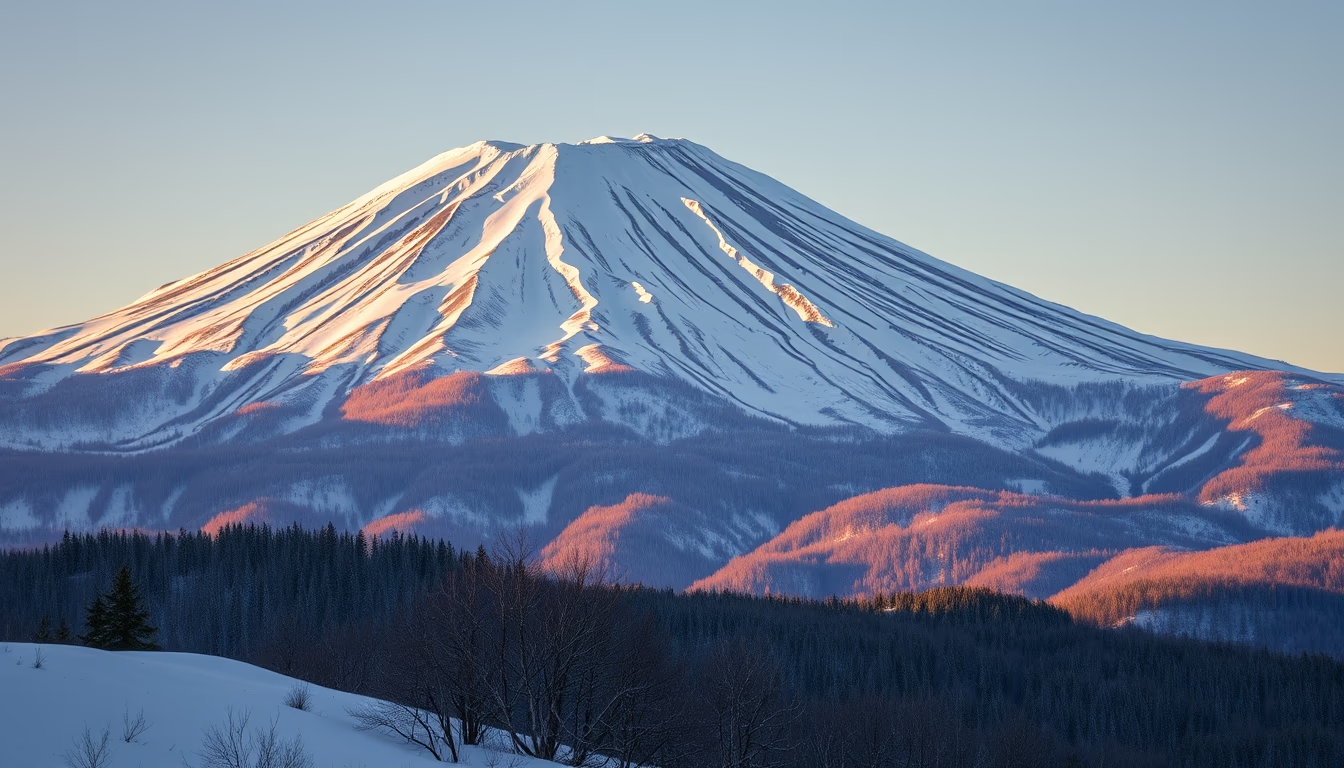
O Monte Fuji, coberto de neve no inverno, é o pico mais alto do Japão e um símbolo nacional, com 3.776 metros de altitude e vistas icônicas.
Sobre o tema
O Monte Fuji, localizado na ilha de Honshu, é um estratovulcão ativo que entrou em erupção pela última vez em 1707. Com 3.776 metros de altitude, é a montanha mais alta do Japão e um Patrimônio Mundial da UNESCO desde 2013. Durante o inverno, a neve cobre seu topo de outubro a maio, criando uma paisagem deslumbrante que atrai fotógrafos e turistas. A vista mais famosa é a partir do Lago Kawaguchi, um dos Cinco Lagos de Fuji, ou do Pagode Chureito, que enquadra o pico com cerejeiras na primavera e neve no inverno.
A montanha é considerada sagrada na cultura xintoísta e budista, sendo um local de peregrinação há séculos. A trilha Yoshida, uma das mais populares, é utilizada principalmente na temporada de escalada de julho e agosto, quando o clima é mais ameno. No inverno, a escalada é perigosa devido ao gelo e ventos fortes, sendo recomendada apenas para alpinistas experientes. A neve no Monte Fuji não apenas embeleza a paisagem, mas também alimenta os aquíferos da região.
Curiosamente, a forma simétrica do Monte Fuji foi imortalizada nas gravuras ukiyo-e de Katsushika Hokusai, como "Trinta e seis vistas do Monte Fuji", que influenciaram artistas ocidentais como Van Gogh. A montanha também aparece em inúmeros filmes, animes e obras literárias. A neve do inverno realça seu formato cônico perfeito, tornando-a um dos vulcões mais fotografados do mundo.
Perguntas frequentes
Qual é a melhor época para ver o Monte Fuji com neve?
A neve no Monte Fuji geralmente aparece de outubro a maio, sendo o inverno (dezembro a fevereiro) a época mais garantida para observar o pico completamente coberto de branco.
O Monte Fuji é um vulcão ativo?
Sim, o Monte Fuji é um estratovulcão ativo, mas sua última erupção ocorreu em 1707. Ele é monitorado constantemente e considerado de baixo risco atualmente.
É possível escalar o Monte Fuji no inverno?
A escalada no inverno é extremamente perigosa devido ao gelo, neve e ventos fortes, sendo permitida apenas para alpinistas experientes com equipamento adequado. A temporada oficial de escalada é de julho a agosto.
URL direta
https://pub-c7d6a6ea828543ac903a74a341ccb2e1.r2.dev/imagens/mount-fuji-winter-snow-travel-photography-p3.avifComo creditar
Inclua um link visível de volta pro UtilizAí. Copie um dos snippets abaixo:
<a href="https://xn--utiliza-eza.com/midia/imagens/mount-fuji-winter-snow-travel-photography-p3">Mount fuji winter snow</a> by <a href="https://xn--utiliza-eza.com">UtilizAí</a>, licensed under <a href="https://creativecommons.org/licenses/by/4.0/">CC BY 4.0</a>.
[Mount fuji winter snow](https://xn--utiliza-eza.com/midia/imagens/mount-fuji-winter-snow-travel-photography-p3) by [UtilizAí](https://xn--utiliza-eza.com), CC BY 4.0
Licença: CC-BY-4.0