Mount fuji winter snow
1344×768 · AVIF · CC BY 4.0
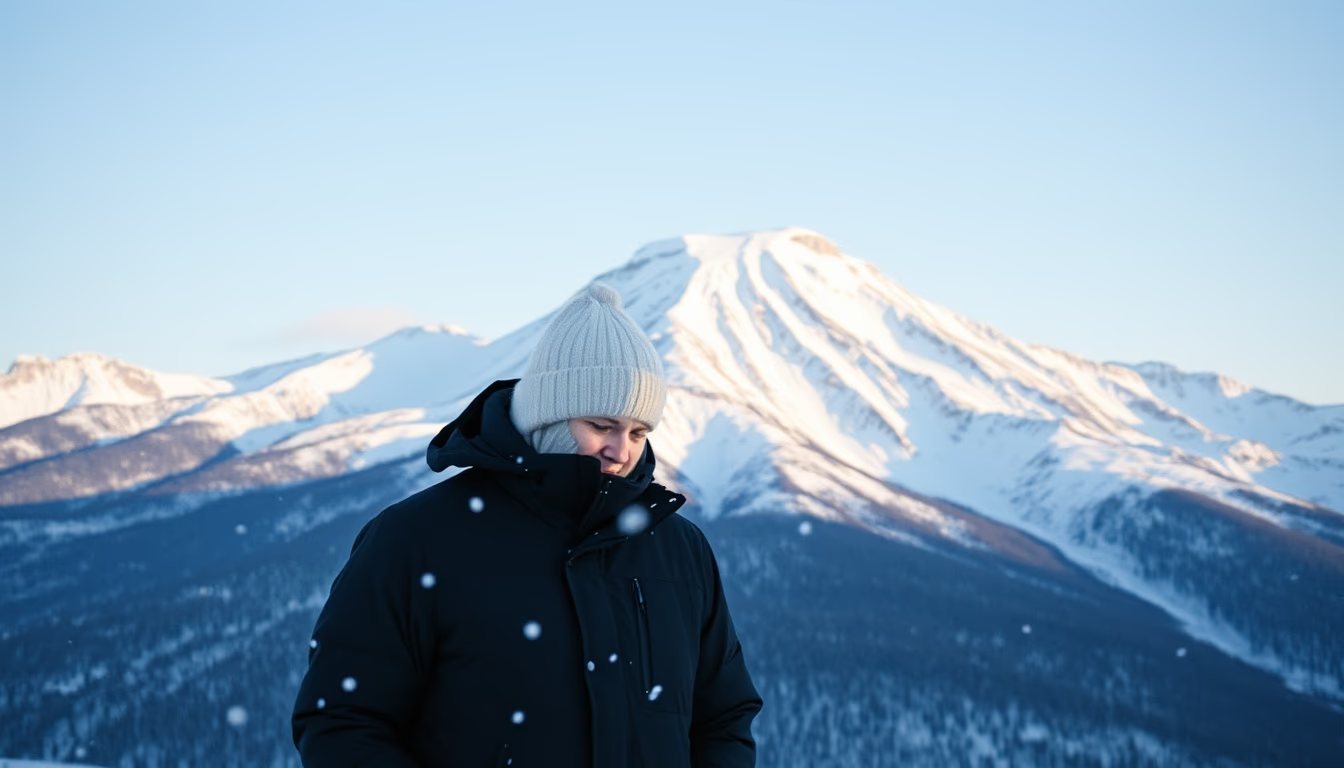
Mount Fuji, Japan's tallest peak at 3,776 meters, displays its iconic snow cap during winter, drawing visitors from around the world.
About this subject
Mount Fuji is an active stratovolcano and Japan's highest peak, located on Honshu Island about 100 km southwest of Tokyo. Its symmetrical cone covered in winter snow is a national symbol and a UNESCO World Heritage site since 2013. Snow typically begins accumulating on the summit in October and lasts until May, with peak winter conditions from December to February.
Japanese culture reveres Mount Fuji as a sacred mountain. Pilgrims have climbed its slopes for centuries, and the traditional Yoshida Trail remains popular. During winter, climbing is extremely dangerous due to ice, strong winds, and avalanche risk, recommended only for experienced mountaineers with a guide. The snow not only enhances the mountain's beauty but also feeds aquifers and hot springs in the Fuji Five Lakes region to the north.
Interestingly, the best views of Mount Fuji occur in winter when dry, cold air provides clear skies. Photos of the snow-capped mountain at sunrise or sunset are iconic in landscape photography. Mount Fuji has inspired countless artworks, such as Katsushika Hokusai's woodblock print series "36 Views of Mount Fuji," which depicts the mountain in different seasons, including winter scenes.
Snow cover varies with weather conditions. During El Niño years, snow cover can be reduced. The altitude of 3,776 meters ensures that the summit temperature remains below freezing during winter, maintaining ice and snow even after storms. Mount Fuji is not just a postcard; it is a natural phenomenon combining geology, culture, and climate.
Frequently Asked Questions
Why is Mount Fuji covered in snow during winter?
Mount Fuji is 3,776 meters high, and summit temperatures drop below freezing in winter, allowing snow to accumulate and persist from October to May.
Can you climb Mount Fuji in winter?
Yes, but it is extremely dangerous due to ice, strong winds, and avalanches. Winter climbing is recommended only for experienced mountaineers with proper gear and a guide.
What is the best time to see Mount Fuji with snow?
Winter months, especially December to February, offer the clearest skies and most consistent snow cover, providing the best views.
Direct URL
https://pub-c7d6a6ea828543ac903a74a341ccb2e1.r2.dev/imagens/mount-fuji-winter-snow-film-grain-authentic-p7.avifHow to credit
Include a visible link back to UtilizAí. Copy one of the snippets below:
<a href="https://xn--utiliza-eza.com/en/midia/imagens/mount-fuji-winter-snow-film-grain-authentic-p7">Mount fuji winter snow</a> by <a href="https://xn--utiliza-eza.com">UtilizAí</a>, licensed under <a href="https://creativecommons.org/licenses/by/4.0/">CC BY 4.0</a>.
[Mount fuji winter snow](https://xn--utiliza-eza.com/en/midia/imagens/mount-fuji-winter-snow-film-grain-authentic-p7) by [UtilizAí](https://xn--utiliza-eza.com), CC BY 4.0
License: CC-BY-4.0