Mount fuji japan reflection
1344×768 · AVIF · CC BY 4.0
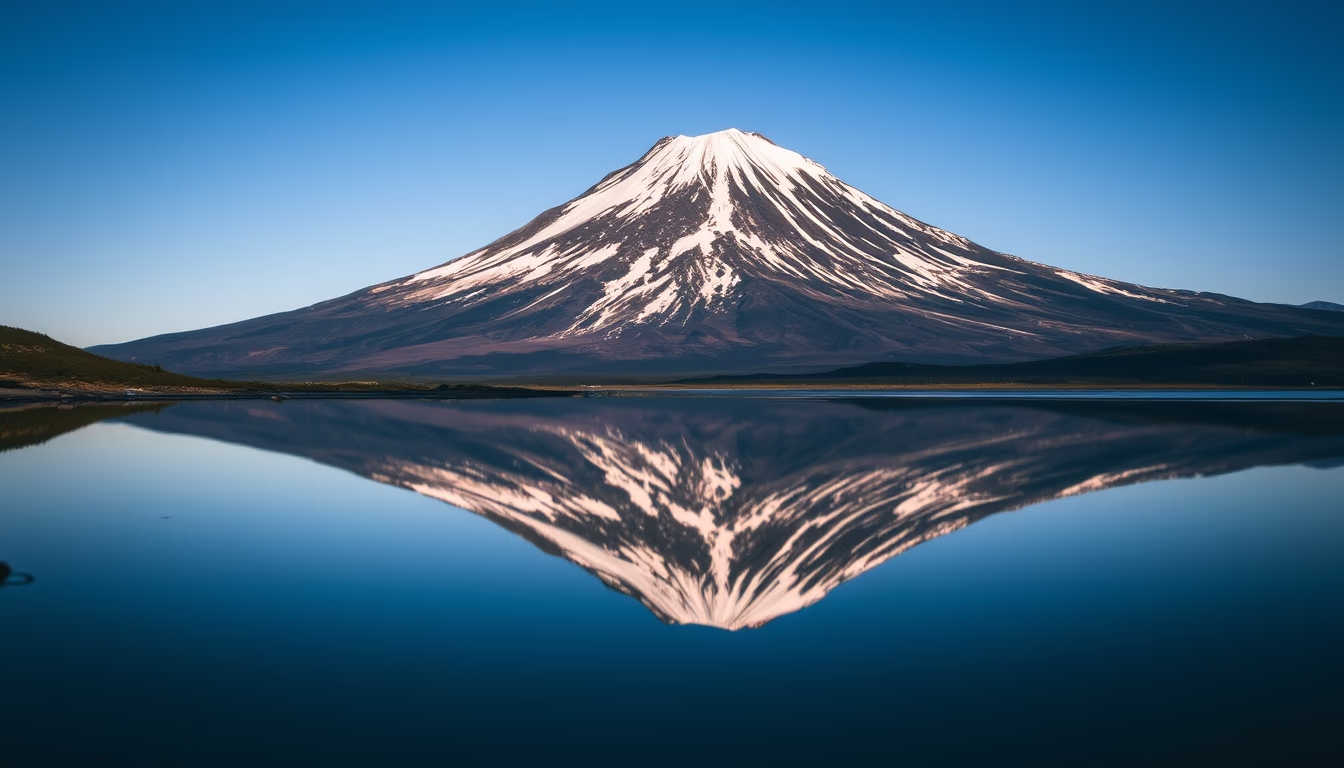
Mount Fuji, Japan's tallest peak at 3,776 meters, is an active stratovolcano and UNESCO World Heritage site, renowned for its symmetrical cone and reflections on Lake Kawaguchi.
About this subject
Mount Fuji, located on Honshu Island, is Japan's highest peak, rising to 3,776 meters above sea level. This stratovolcano last erupted in 1707 and is one of the country's most recognized national symbols. Its near-perfect conical shape results from millennia of volcanic activity, and seasonal snow caps the summit for much of the year.
The mountain holds deep cultural and spiritual significance. It is considered sacred in Shinto and Buddhism and has been a pilgrimage destination for centuries. In 2013, it was inscribed as a UNESCO World Heritage site as "Mount Fuji, object of faith and source of art." The landscape has inspired countless works, including Hokusai's famous ukiyo-e prints, such as "The Great Wave off Kanagawa," which features the mountain in the background.
Climbing to the summit is permitted only during the official climbing season from July to September. The most popular route, the Yoshida Trail, starts from the 5th Station and takes 5 to 7 hours. About 300,000 people climb Fuji annually. The sunrise view from the top is an iconic moment known as "Goraiko."
The reflection of Mount Fuji in the waters of Lake Kawaguchi, one of the Fuji Five Lakes, is one of Japan's most photographed scenes. The lake offers an unobstructed view of the mountain, and on calm days, the mirror image is perfect. This composition is a recurring theme in postcards and tourist photographs.
Frequently Asked Questions
How tall is Mount Fuji?
Mount Fuji stands at 3,776 meters (12,389 feet), making it the tallest peak in Japan.
Is Mount Fuji an active volcano?
Yes, it is an active stratovolcano. Its last eruption occurred in 1707 during the Edo period.
When is the best time to climb Mount Fuji?
The official climbing season runs from July to September, when trails and huts are open and weather conditions are safer.
Direct URL
https://pub-c7d6a6ea828543ac903a74a341ccb2e1.r2.dev/imagens/mount-fuji-japan-reflection-magazine-editorial-p3.avifHow to credit
Include a visible link back to UtilizAí. Copy one of the snippets below:
<a href="https://xn--utiliza-eza.com/en/midia/imagens/mount-fuji-japan-reflection-magazine-editorial-p3">Mount fuji japan reflection</a> by <a href="https://xn--utiliza-eza.com">UtilizAí</a>, licensed under <a href="https://creativecommons.org/licenses/by/4.0/">CC BY 4.0</a>.
[Mount fuji japan reflection](https://xn--utiliza-eza.com/en/midia/imagens/mount-fuji-japan-reflection-magazine-editorial-p3) by [UtilizAí](https://xn--utiliza-eza.com), CC BY 4.0
License: CC-BY-4.0