Morse code key brass
1344×768 · AVIF · CC BY 4.0

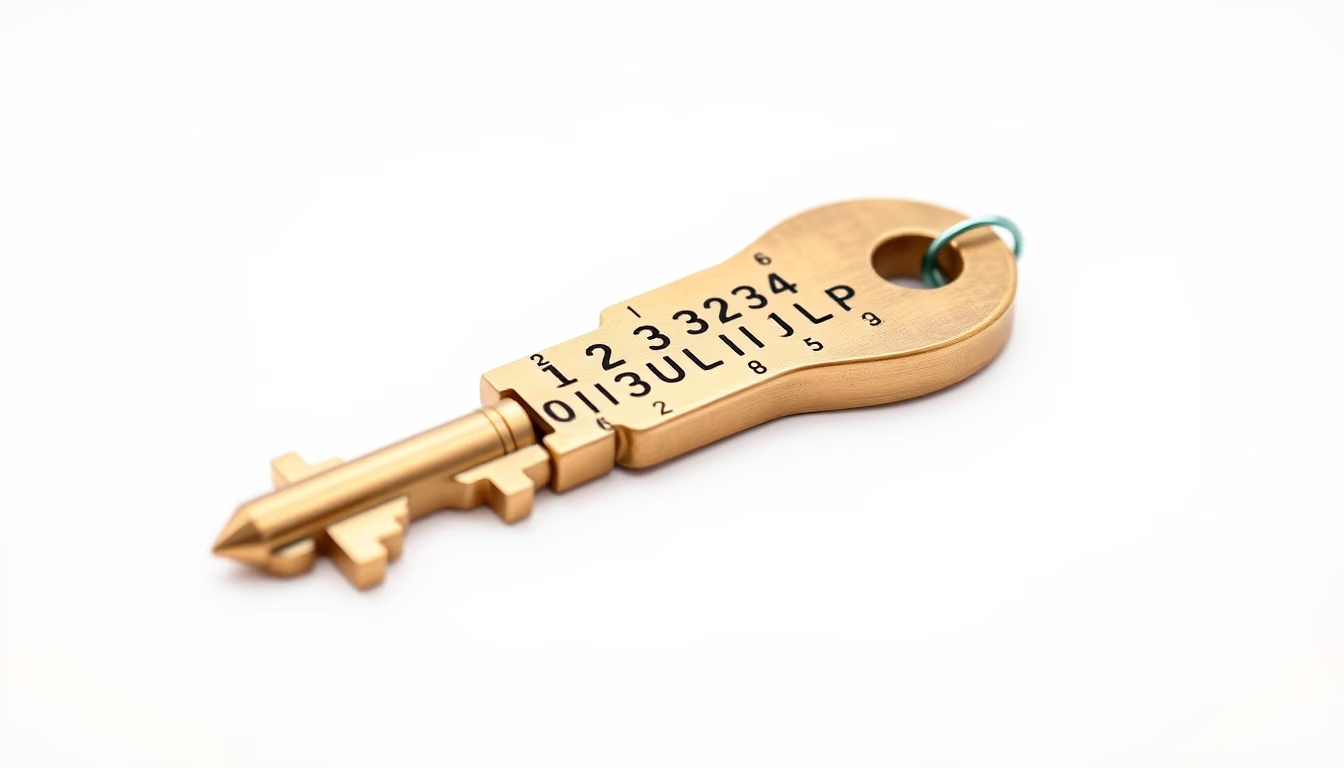
Brass telegraph key, the instrument that converted electrical pulses into Morse code dots and dashes, revolutionizing communications in the 19th century.
About this subject
The brass telegraph key, also known as a Morse key, was the central device in telegraph stations during the peak of electrical communications. Invented by Alfred Vail in 1844, the key allowed the opening and closing of an electrical circuit, generating short (dot) and long (dash) signals. Brass was the preferred material due to its conductivity and durability, offering smooth and precise contact.
Operation required skill: the operator pressed the lever knob, closing the circuit for controlled intervals. Reception was through sound or by a paper tape register. Such keys were used in railways, newspapers, and international business until the mid-20th century when telex and radio began to supplant the telegraph. However, Morse code remains in use by amateur radio operators and in emergency situations.
Interestingly, the iconic shape of the brass key, with its rectangular base and vertical lever, was standardized by Western Union and other companies. Vintage models are now collector's items, and their industrial aesthetic attracts technology history enthusiasts. The long exposure used in the photograph highlights the metal reflections and the mechanical precision of the instrument.
Frequently Asked Questions
How does a brass telegraph key work?
The key works by closing and opening an electrical circuit. Pressing the lever connects two metal contacts, allowing current to flow. The duration of the press determines whether the signal is a short dot or a long dash.
What is the difference between a brass key and modern Morse code keys?
Brass keys are mechanical and require manual movement. Modern keys, such as vibroplex or electronic keyers, use spring mechanisms or digital circuits to automatically generate signals, increasing speed and precision.
Why was brass the most common material for telegraph keys?
Brass offers good electrical conductivity, corrosion resistance, and malleability, allowing for precise and durable contacts. Additionally, the polished metal provides low contact resistance and easy maintenance.
Direct URL
https://pub-c7d6a6ea828543ac903a74a341ccb2e1.r2.dev/imagens/morse-code-key-brass-long-exposure-fresh4.avifHow to credit
Include a visible link back to UtilizAí. Copy one of the snippets below:
<a href="https://xn--utiliza-eza.com/en/midia/imagens/morse-code-key-brass-long-exposure-fresh4">Morse code key brass</a> by <a href="https://xn--utiliza-eza.com">UtilizAí</a>, licensed under <a href="https://creativecommons.org/licenses/by/4.0/">CC BY 4.0</a>.
[Morse code key brass](https://xn--utiliza-eza.com/en/midia/imagens/morse-code-key-brass-long-exposure-fresh4) by [UtilizAí](https://xn--utiliza-eza.com), CC BY 4.0
License: CC-BY-4.0