Morse code key brass
1344×768 · AVIF · CC BY 4.0
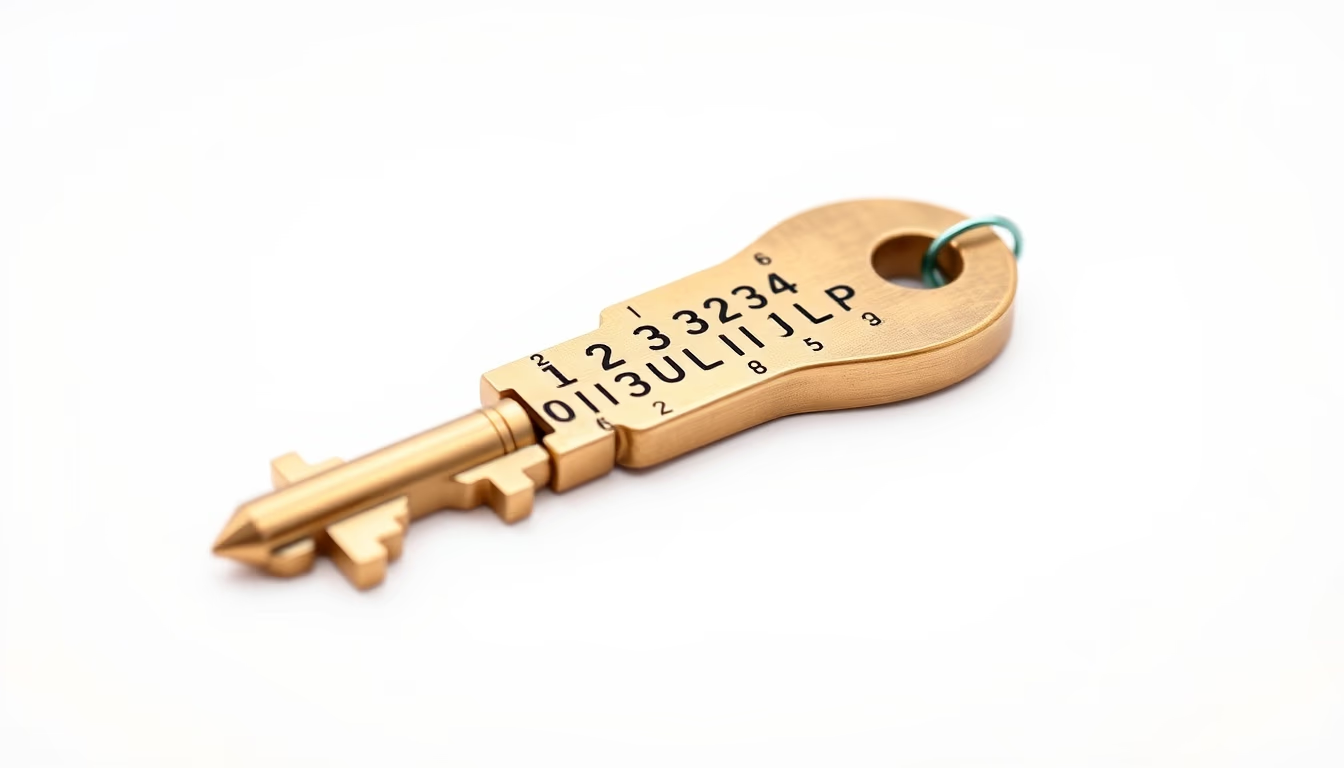
Brass telegraph key, a historic instrument for transmitting Morse code, essential in 19th-century communications and still used by amateur radio operators.
About this subject
The brass telegraph key is the device that enabled the transmission of Morse code signals, invented by Samuel Morse and Alfred Vail in the 1830s. The operator presses a metal lever to close an electrical circuit, generating pulses that travel along wires to a distant receiver. Each sequence of dots and dashes represents letters and numbers, forming the basis of telegraphic communication. Brass was chosen for its electrical conductivity and resistance to corrosion, ensuring reliable contacts over years of heavy use.
Operating a telegraph key requires skill and rhythm. The operator must control contact duration to produce short dots and longer dashes with precise spacing. In the 19th century, this technology connected continents via submarine cables, such as the first transatlantic telegraph cable in 1866. Brass keys varied in design from simple models to ornate pieces with wooden bases and polished metal details. Manufacturers like J.H. Bunnell & Co. and Lionel were prominent in producing telegraphic equipment.
With the advent of the telephone and internet, commercial telegraphy disappeared, but Morse code and brass keys remain alive in amateur radio. Hobbyists worldwide use traditional keys or modern adaptations for shortwave communication. The brass key is also a collectible item, representing a milestone in telecommunications history. Museums and enthusiasts preserve these objects to demonstrate how humanity began communicating instantly over long distances.
Frequently Asked Questions
What is a brass telegraph key?
It is an instrument used to transmit Morse code, consisting of a metal lever that closes and opens an electrical circuit, generating pulses representing dots and dashes. Made of brass, it was the primary input device in 19th-century telegraph systems.
How does a Morse code key work?
Pressing the lever closes the electrical contact, allowing current to flow and produce a signal. The duration of the press determines whether it is a dot (short) or a dash (long). Releasing opens the circuit, creating intervals between signals.
Are brass telegraph keys still used today?
Yes, mainly by amateur radio operators in shortwave communication. While modern equipment exists, many operators prefer traditional brass keys for tactile feel and accuracy, as well as historical value.
Direct URL
https://pub-c7d6a6ea828543ac903a74a341ccb2e1.r2.dev/imagens/morse-code-key-brass-fish-eye-wide-angle-fresh6.avifHow to credit
Include a visible link back to UtilizAí. Copy one of the snippets below:
<a href="https://xn--utiliza-eza.com/en/midia/imagens/morse-code-key-brass-fish-eye-wide-angle-fresh6">Morse code key brass</a> by <a href="https://xn--utiliza-eza.com">UtilizAí</a>, licensed under <a href="https://creativecommons.org/licenses/by/4.0/">CC BY 4.0</a>.
[Morse code key brass](https://xn--utiliza-eza.com/en/midia/imagens/morse-code-key-brass-fish-eye-wide-angle-fresh6) by [UtilizAí](https://xn--utiliza-eza.com), CC BY 4.0
License: CC-BY-4.0