Moon detail crater closeup
1344×768 · AVIF · CC BY 4.0
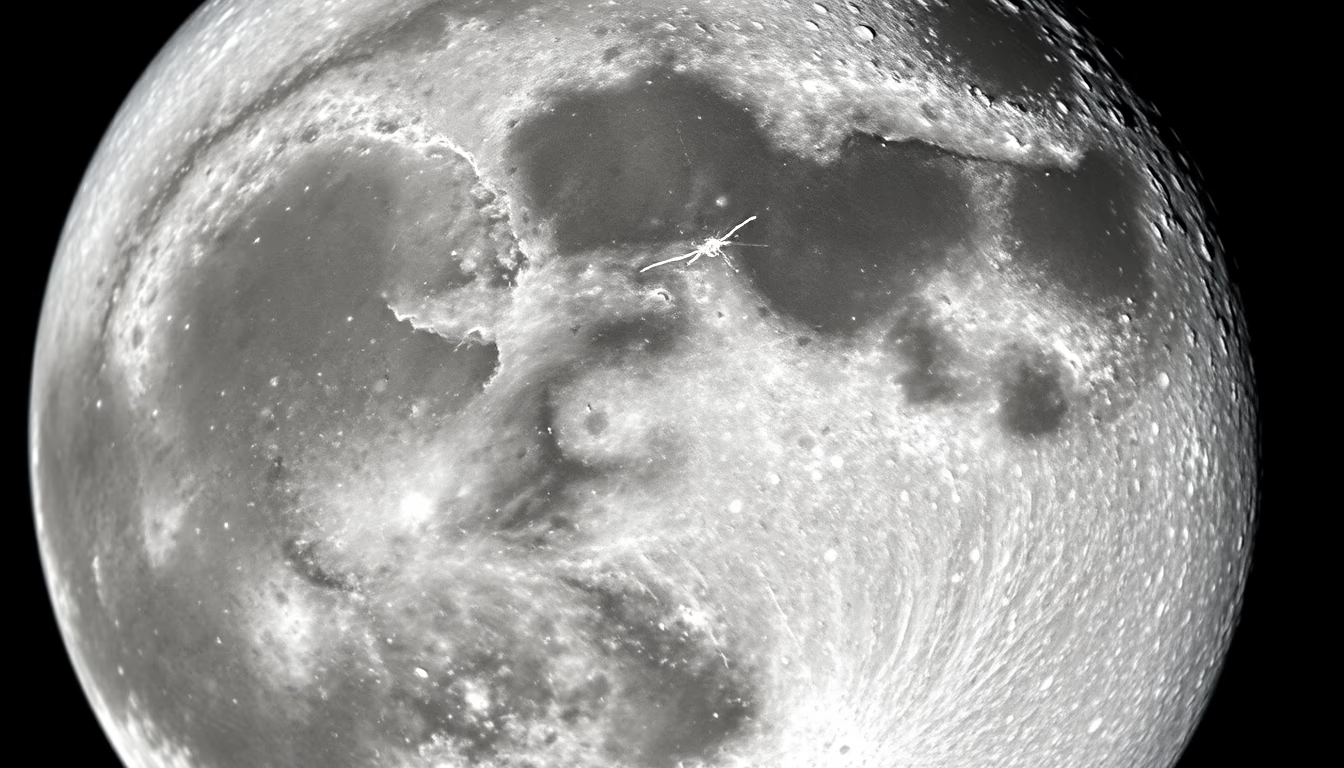
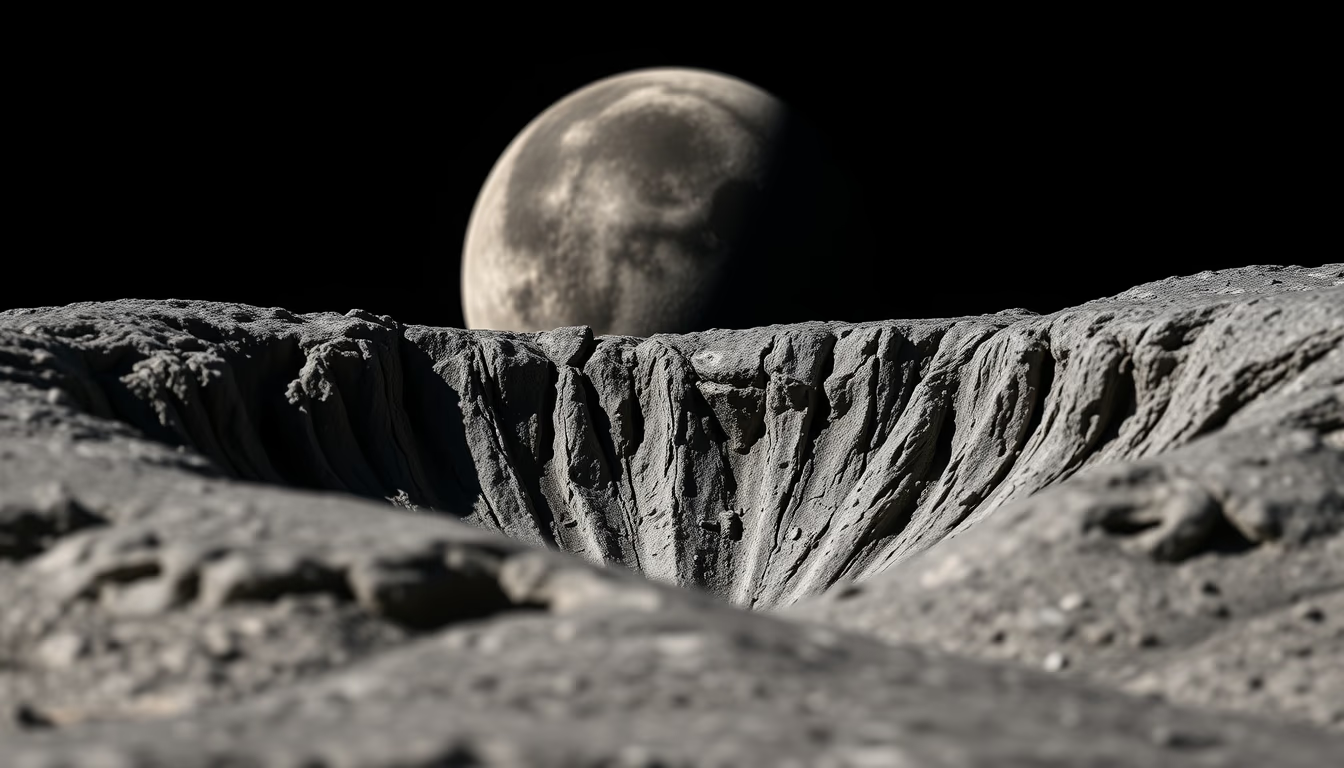
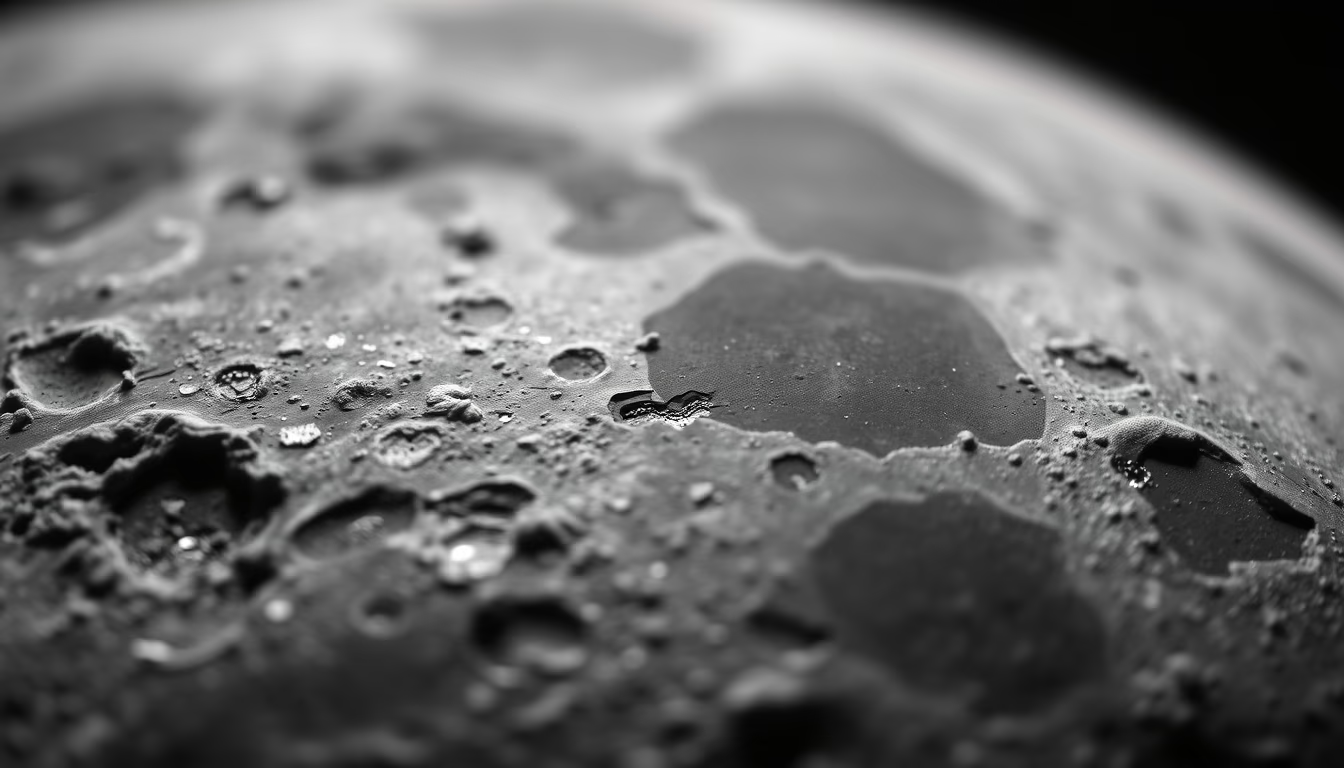
Extreme closeup of a lunar crater, revealing textures and shadows that evidence billions of years of impacts on Earth's natural satellite.
About this subject
The Moon's surface is covered with impact craters, resulting from collisions with asteroids and comets over billions of years. Unlike Earth, the Moon lacks an atmosphere or intense geological activity, preserving these scars for geological eons. The featured crater exhibits sharp rims and a central peak, a common characteristic of complex craters formed by high-energy impacts. The base of the central peak is typically composed of rocks melted during the impact, known as breccias.
Lunar craters vary greatly in size, from microscopic to basins hundreds of kilometers in diameter, such as the South Pole-Aitken Basin. Studying these structures helps scientists understand the history of the Solar System, including impact frequency and the relative age of planetary surfaces. The lack of erosion on the Moon means older craters can be superimposed by younger ones, creating a unique stratigraphic record.
Interestingly, many lunar craters are named after scientists and explorers, such as Copernicus, Tycho, and Aristarchus. The Tycho crater, for instance, is known for its bright ray system that extends for hundreds of kilometers, visible even to the naked eye from Earth during a full Moon. This closeup view allows observation of details like central peaks and terraced inner walls, formed by post-impact collapse.
Frequently Asked Questions
How many craters are there on the Moon?
It is estimated that there are over 30,000 craters with a diameter greater than 1 km on the Moon, plus countless smaller ones. Most are concentrated in the highlands, while the lunar maria have fewer craters because they are geologically younger.
What is the largest crater on the Moon?
The largest confirmed impact crater is the South Pole-Aitken Basin, about 2,500 km in diameter and over 8 km deep. It lies on the far side of the Moon and is considered one of the largest impact basins in the Solar System.
Why don't lunar craters erode?
The Moon has no atmosphere, wind, or liquid water, the main agents of erosion on Earth. Therefore, lunar craters remain virtually unchanged for billions of years, except for new impacts or the action of solar wind that causes slight surface weathering.
Direct URL
https://pub-c7d6a6ea828543ac903a74a341ccb2e1.r2.dev/imagens/moon-detail-crater-closeup-studio-editorial-portrait-p3.avifHow to credit
Include a visible link back to UtilizAí. Copy one of the snippets below:
<a href="https://xn--utiliza-eza.com/en/midia/imagens/moon-detail-crater-closeup-studio-editorial-portrait-p3">Moon detail crater closeup</a> by <a href="https://xn--utiliza-eza.com">UtilizAí</a>, licensed under <a href="https://creativecommons.org/licenses/by/4.0/">CC BY 4.0</a>.
[Moon detail crater closeup](https://xn--utiliza-eza.com/en/midia/imagens/moon-detail-crater-closeup-studio-editorial-portrait-p3) by [UtilizAí](https://xn--utiliza-eza.com), CC BY 4.0
License: CC-BY-4.0