Moon detail crater closeup
1344×768 · AVIF · CC BY 4.0
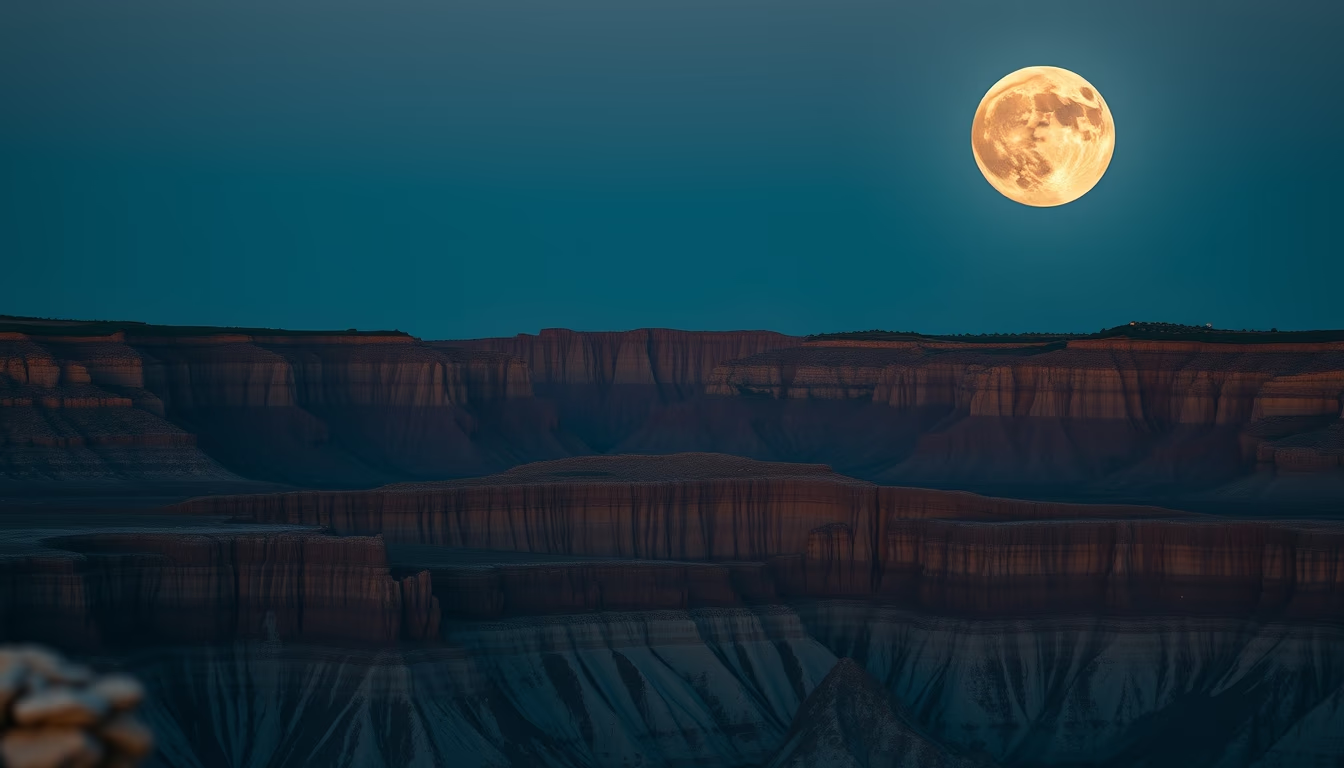
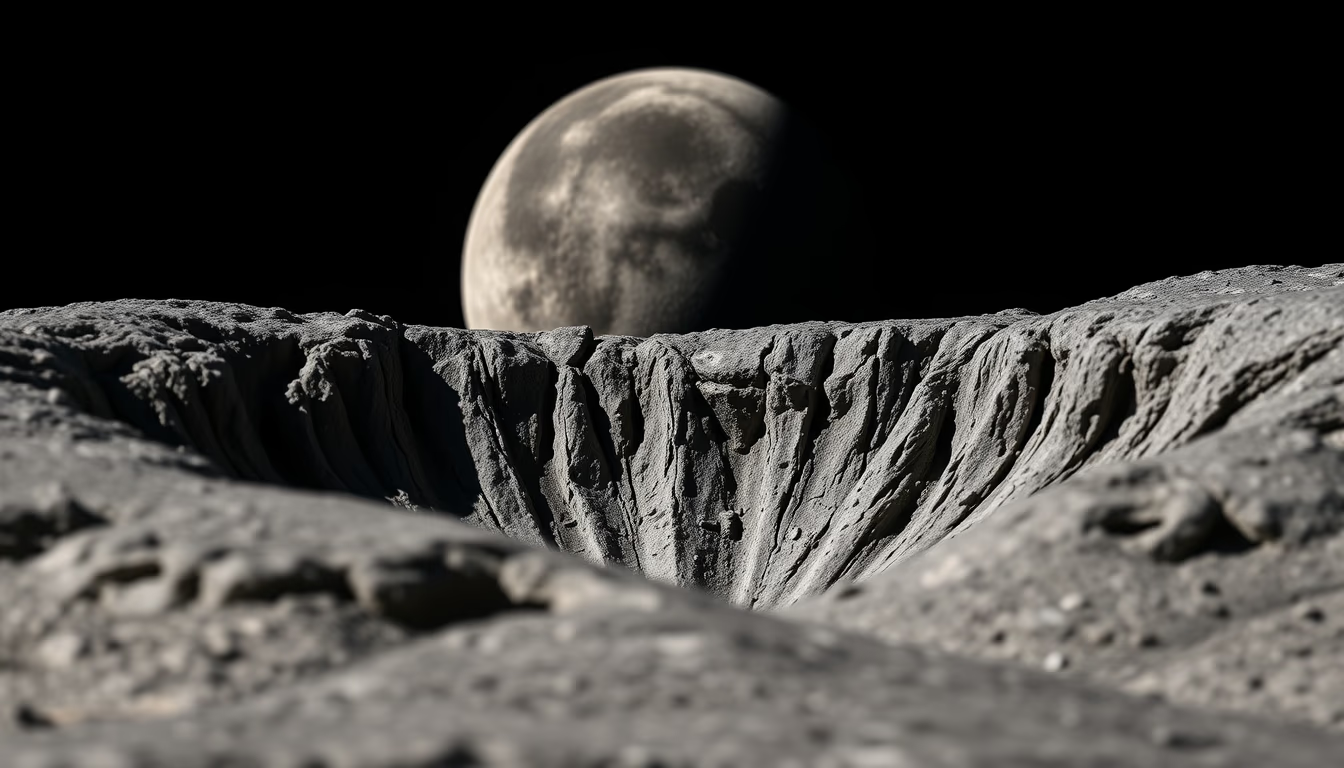
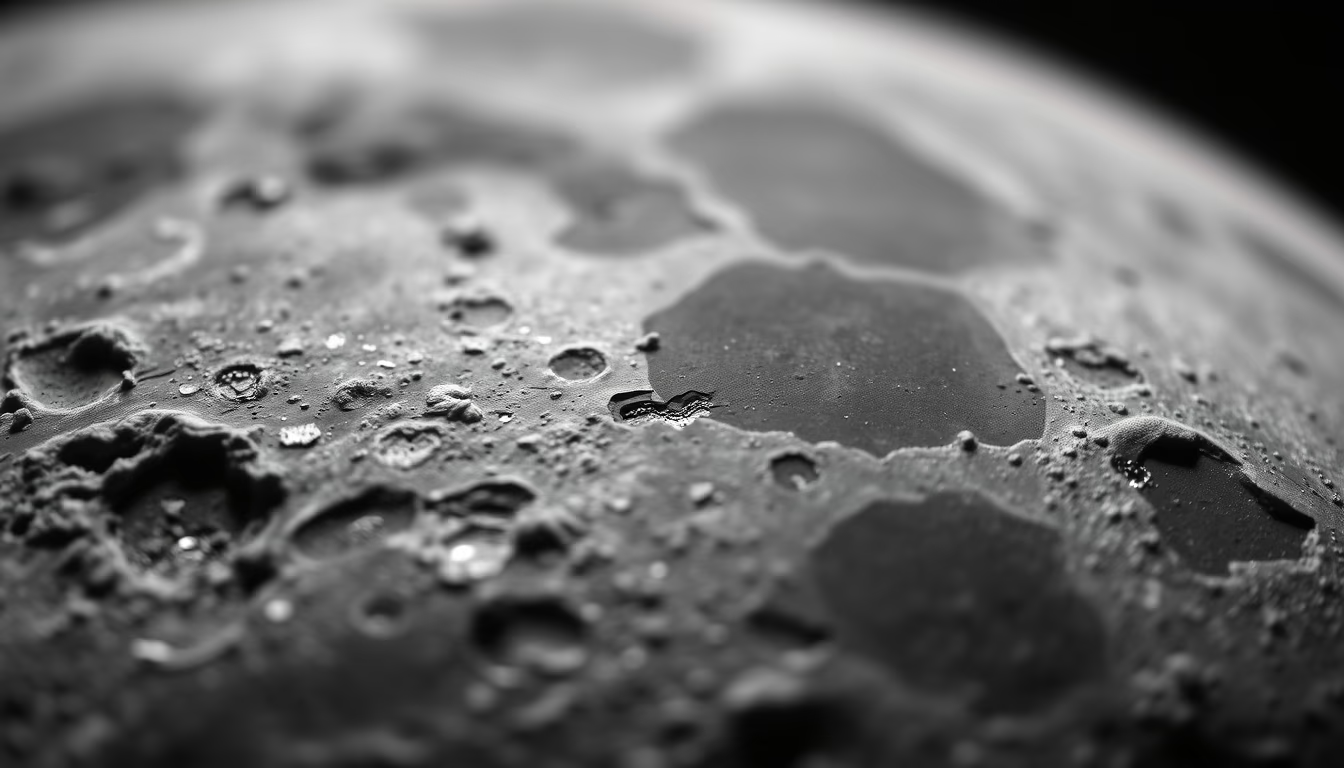
A close-up of a lunar crater reveals the impact marks that have shaped the Moon's surface over billions of years.
About this subject
The Moon, our natural satellite, has a surface covered with impact craters resulting from collisions with asteroids and comets over billions of years. Unlike Earth, the Moon lacks an atmosphere and significant geological activity, preserving these scars for eons. Lunar craters vary greatly in size, from small depressions to basins hundreds of kilometers in diameter, such as the South Pole-Aitken Basin, one of the largest in the Solar System. In close-ups, details like central peaks, formed by the rebound of material after impact, and terraced walls, resulting from the collapse of the rims, become visible. Young craters like Tycho and Copernicus exhibit bright ray systems, composed of ejected material that spreads in radial lines. Studying these craters helps scientists understand the impact history of the inner solar system and provides clues about the relative ages of different lunar regions. Missions such as Apollo and Luna collected samples that date specific events, while modern probes like the Lunar Reconnaissance Orbiter map every detail of the surface.
Frequently Asked Questions
How are lunar craters formed?
They form when asteroids or comets collide with the Moon's surface at high speed. The impact excavates a depression and ejects material around it, creating raised rims and, in larger craters, central peaks.
What is the largest crater on the Moon?
The largest is the South Pole-Aitken Basin, about 2,500 km in diameter and over 8 km deep. It is located on the far side of the Moon.
Why don't lunar craters disappear over time?
Because the Moon lacks an atmosphere, wind, or rain that cause erosion. Additionally, there are no tectonic plates to renew the surface, so craters remain virtually intact for billions of years.
Direct URL
https://pub-c7d6a6ea828543ac903a74a341ccb2e1.r2.dev/imagens/moon-detail-crater-closeup-cinematic-wide-shot-p2.avifHow to credit
Include a visible link back to UtilizAí. Copy one of the snippets below:
<a href="https://xn--utiliza-eza.com/en/midia/imagens/moon-detail-crater-closeup-cinematic-wide-shot-p2">Moon detail crater closeup</a> by <a href="https://xn--utiliza-eza.com">UtilizAí</a>, licensed under <a href="https://creativecommons.org/licenses/by/4.0/">CC BY 4.0</a>.
[Moon detail crater closeup](https://xn--utiliza-eza.com/en/midia/imagens/moon-detail-crater-closeup-cinematic-wide-shot-p2) by [UtilizAí](https://xn--utiliza-eza.com), CC BY 4.0
License: CC-BY-4.0