Corredor de hospital moderno paredes brancas limpas e luz natural
1344×768 · AVIF · CC BY 4.0
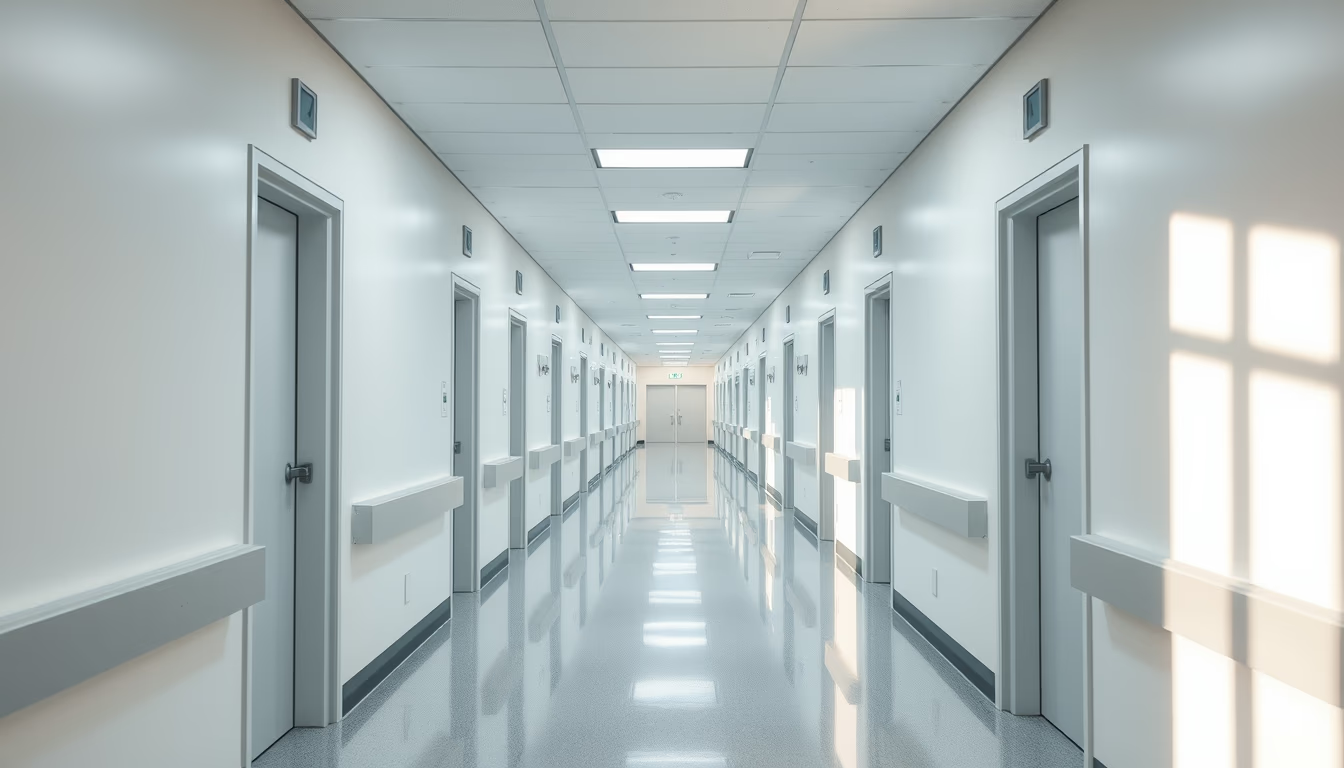
Corredores hospitalares modernos combinam funcionalidade, conforto e segurança para pacientes e profissionais de saúde.
Sobre o tema
Os corredores de hospitais modernos são projetados para otimizar a circulação de pacientes, visitantes e equipes médicas, minimizando o estresse e o risco de infecções. Paredes brancas e lisas facilitam a limpeza e a desinfecção, enquanto a luz natural, obtida por meio de janelas amplas ou claraboias, contribui para o bem-estar psicológico e reduz a necessidade de iluminação artificial durante o dia. Estudos mostram que a exposição à luz natural em ambientes de saúde acelera a recuperação de pacientes e melhora o humor dos funcionários.
A disposição simétrica de portas e sinalizações segue normas rigorosas de acessibilidade, como as da ABNT NBR 9050 no Brasil, que determinam larguras mínimas de 1,20 m para corredores em áreas de circulação. Materiais antiderrapantes no piso e cantos arredondados reduzem o risco de quedas. Corrimãos instalados em ambas as paredes auxiliam pessoas com mobilidade reduzida, e a iluminação indireta evita ofuscamento.
No contexto brasileiro, hospitais como o Sírio-Libanês e o Albert Einstein adotam esse design clean, com foco na humanização. A cor branca, associada à esterilidade, na verdade exige manutenção constante para evitar acúmulo de sujeira visível. Tecnologias como revestimentos antimicrobianos e sistemas de ventilação com filtragem HEPA são comuns nesses corredores para garantir a qualidade do ar.
Curiosamente, o layout de corredores simétricos também facilita a evacuação em emergências, com saídas claramente sinalizadas e distâncias máximas de 30 metros até a saída mais próxima, conforme exigido pelo Corpo de Bombeiros. A integração de painéis informativos digitais e sistemas de chamada de enfermeiros completa o ambiente funcional.
Perguntas frequentes
Por que os corredores de hospitais modernos são geralmente brancos?
A cor branca facilita a limpeza e a desinfecção, além de transmitir sensação de limpeza e esterilidade. No entanto, exige manutenção constante para evitar que sujeira se torne visível.
Qual a largura mínima de um corredor hospitalar no Brasil?
Segundo a norma ABNT NBR 9050, corredores em áreas de circulação hospitalar devem ter no mínimo 1,20 m de largura para garantir acessibilidade.
Como a luz natural beneficia pacientes em hospitais?
A luz natural regula o ciclo circadiano, melhora o humor e pode acelerar a recuperação pós-operatória. Também reduz a necessidade de iluminação artificial, economizando energia.
URL direta
https://pub-c7d6a6ea828543ac903a74a341ccb2e1.r2.dev/imagens/modern-hospital-corridor-clean-white-walls-and-natural-light-symmetric-composition-studio-professional-lighting.avifComo creditar
Inclua um link visível de volta pro UtilizAí. Copie um dos snippets abaixo:
<a href="https://xn--utiliza-eza.com/midia/imagens/modern-hospital-corridor-clean-white-walls-and-natural-light-symmetric-composition-studio-professional-lighting">Corredor de hospital moderno paredes brancas limpas e luz natural</a> by <a href="https://xn--utiliza-eza.com">UtilizAí</a>, licensed under <a href="https://creativecommons.org/licenses/by/4.0/">CC BY 4.0</a>.
[Corredor de hospital moderno paredes brancas limpas e luz natural](https://xn--utiliza-eza.com/midia/imagens/modern-hospital-corridor-clean-white-walls-and-natural-light-symmetric-composition-studio-professional-lighting) by [UtilizAí](https://xn--utiliza-eza.com), CC BY 4.0
Licença: CC-BY-4.0