Corredor de hospital moderno paredes brancas limpas e luz natural
1344×768 · AVIF · CC BY 4.0
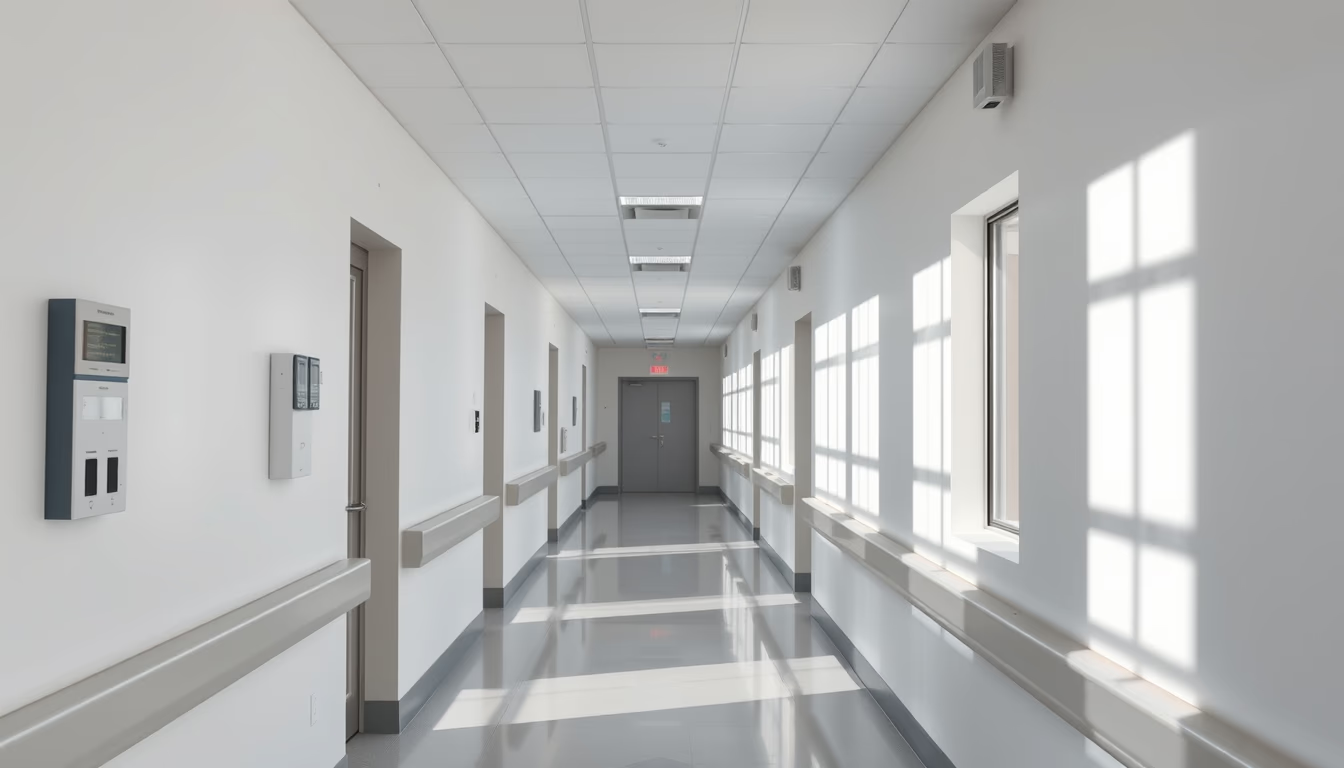
Corredores de hospitais modernos são projetados para reduzir o estresse de pacientes e profissionais, combinando paredes brancas com luz natural abundante.
Sobre o tema
O design de hospitais modernos evoluiu significativamente nas últimas décadas, priorizando a humanização dos espaços. Corredores amplos com paredes brancas e iluminação natural não são apenas estéticos; estudos mostram que a luz do dia reduz a ansiedade, melhora o humor e acelera a recuperação de pacientes. No Brasil, hospitais como o Sírio-Libanês e o Albert Einstein adotaram esse conceito, influenciados por tendências internacionais de arquitetura hospitalar.
A escolha do branco não é acidental. Essa cor transmite limpeza, esterilidade e calma, sendo associada à segurança e ao profissionalismo. No entanto, o branco excessivo pode causar desconforto visual; por isso, arquitetos utilizam contrastes sutis com móveis coloridos ou obras de arte, como visto em corredores de hospitais infantis. A luz natural, por sua vez, regula o ciclo circadiano, essencial para pacientes internados por longos períodos.
Corredores hospitalares também seguem normas rigorosas de acessibilidade e fluxo. A largura mínima, no Brasil, é de 2,50 metros para permitir a passagem de macas e cadeiras de rodas. Além disso, a sinalização visual clara e a ausência de obstáculos são cruciais para evacuações rápidas. Em hospitais modernos, corredores frequentemente conectam alas de forma lógica, reduzindo o tempo de deslocamento de médicos e enfermeiros.
Curiosamente, a iluminação natural em corredores hospitalares tem um impacto econômico: reduz o consumo de energia elétrica, contribuindo para certificações sustentáveis como LEED. Hospitais como o Hospital das Clínicas de São Paulo têm investido em claraboias e janelas amplas para maximizar esse recurso. A tendência global é integrar cada vez mais a natureza ao ambiente hospitalar, com jardins internos e vista para áreas verdes, transformando corredores em espaços de cura.
Perguntas frequentes
Por que os corredores de hospitais modernos são tão largos?
A largura mínima de 2,50 metros é exigida por normas de acessibilidade para permitir a passagem simultânea de macas, cadeiras de rodas e equipes médicas, além de facilitar evacuações emergenciais.
A luz natural realmente ajuda na recuperação de pacientes?
Sim. A luz natural regula o ciclo circadiano, melhora o humor e reduz os níveis de cortisol, hormônio do estresse. Estudos indicam que pacientes expostos à luz natural têm alta mais rápida e menor uso de analgésicos.
O que significa humanização hospitalar no design?
Humanização hospitalar é um conceito que busca tornar os ambientes mais acolhedores, reduzindo o estresse. Inclui uso de cores suaves, luz natural, arte, jardins e espaços de convivência, priorizando o bem-estar de pacientes, familiares e profissionais.
URL direta
https://pub-c7d6a6ea828543ac903a74a341ccb2e1.r2.dev/imagens/modern-hospital-corridor-clean-white-walls-and-natural-light-documentary-photography-bright-midday-sun.avifComo creditar
Inclua um link visível de volta pro UtilizAí. Copie um dos snippets abaixo:
<a href="https://xn--utiliza-eza.com/midia/imagens/modern-hospital-corridor-clean-white-walls-and-natural-light-documentary-photography-bright-midday-sun">Corredor de hospital moderno paredes brancas limpas e luz natural</a> by <a href="https://xn--utiliza-eza.com">UtilizAí</a>, licensed under <a href="https://creativecommons.org/licenses/by/4.0/">CC BY 4.0</a>.
[Corredor de hospital moderno paredes brancas limpas e luz natural](https://xn--utiliza-eza.com/midia/imagens/modern-hospital-corridor-clean-white-walls-and-natural-light-documentary-photography-bright-midday-sun) by [UtilizAí](https://xn--utiliza-eza.com), CC BY 4.0
Licença: CC-BY-4.0