Modern data center cooling system
1344×768 · AVIF · CC BY 4.0
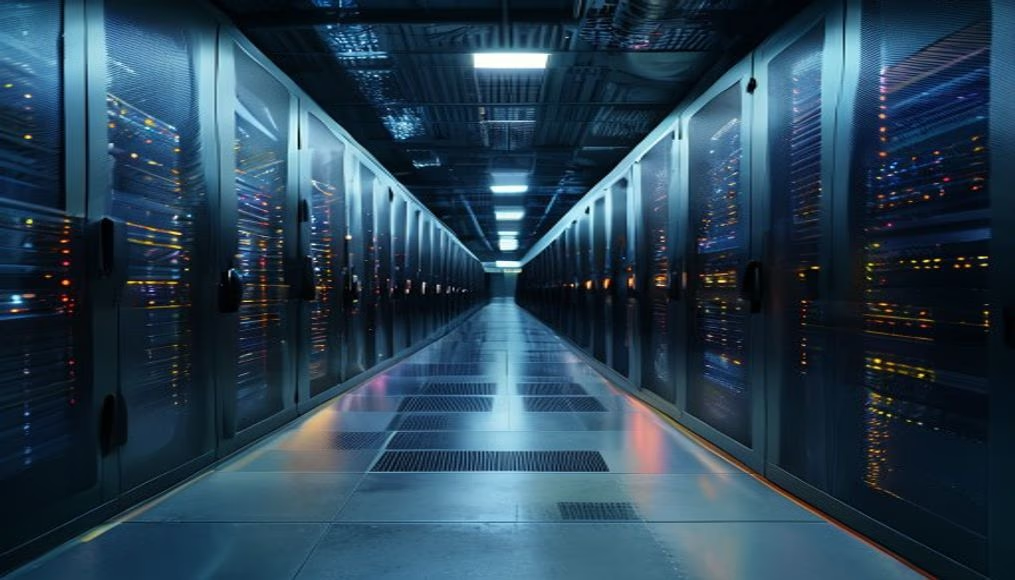
Modern data center cooling systems combine energy efficiency with technologies like liquid cooling and immersion to support high server density.
About this subject
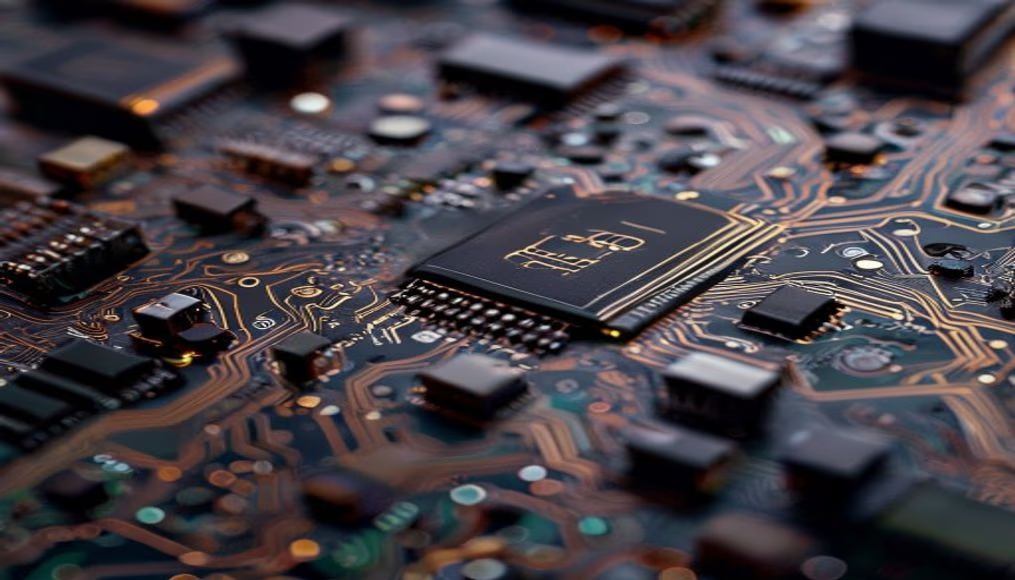
Cooling systems in data centers have evolved significantly to keep pace with the rising power density of servers. While traditional data centers use precision air conditioning (CRAC/CRAH), modern facilities adopt solutions like direct-to-chip liquid cooling and immersion in dielectric liquid. This shift is driven by the need to lower PUE (Power Usage Effectiveness) and water consumption, while enabling higher rack density.
Liquid cooling, for instance, can remove up to 100 times more heat than air in the same volume, making it ideal for high-performance GPUs and CPUs. Immersion cooling fully submerges servers in non-conductive fluid, eliminating fans and reducing noise. Free cooling techniques (using outside air) are also widely employed in temperate climates, utilizing thermosiphons or chillers with economizers.
Another trend is heat reuse, where generated heat warms nearby buildings or feeds district heating systems. Modern data centers often adopt modular designs and artificial intelligence to optimize airflow and temperature in real time, minimizing hot spots. Strategic placement in cold regions, such as the Nordic countries, further reduces operational costs.
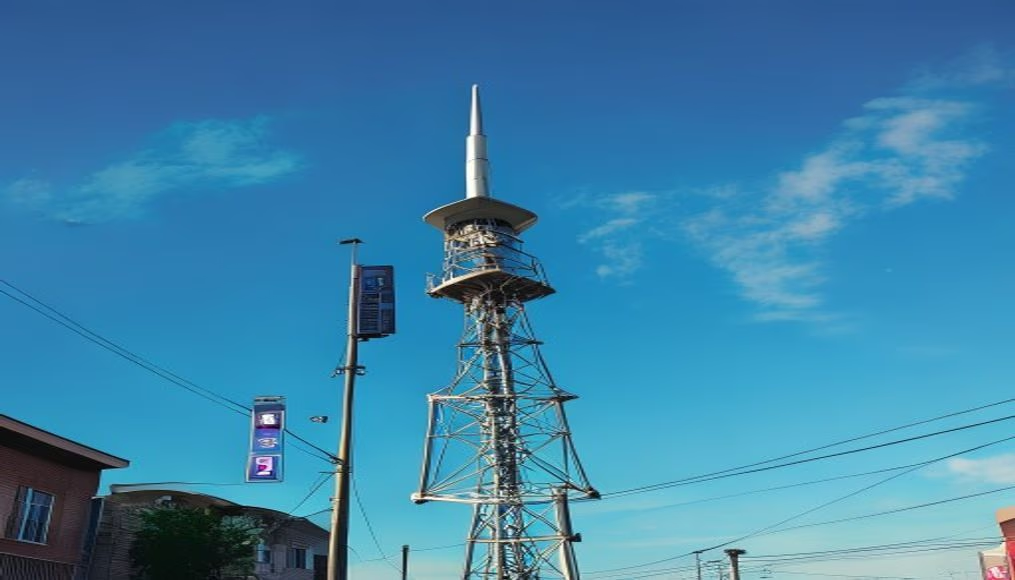
From an urban perspective, many facilities are built with facades that hide cooling towers or chillers, blending into the streetscape. This discretion contrasts with the internal technical complexity, where pumps, heat exchangers, and backup systems ensure 24/7 uninterrupted operation.
Frequently Asked Questions
What is the difference between air cooling and liquid cooling in data centers?
Air cooling uses fans and air conditioners to dissipate heat, while liquid cooling uses fluids (such as water or refrigerants) to remove heat directly from components, being much more efficient for high densities.
What is PUE and why is it important for cooling systems?
PUE (Power Usage Effectiveness) is the ratio of total energy consumed by the data center to the energy used by IT equipment. A PUE near 1 indicates high efficiency; modern cooling systems help lower this value.
Can data centers actually reuse the heat they generate?
Yes, many modern data centers capture waste heat to warm offices, homes, or even public pools, contributing to sustainability and reducing heating costs.
Direct URL
https://pub-c7d6a6ea828543ac903a74a341ccb2e1.r2.dev/imagens/modern-data-center-cooling-system-street-photography-v11.avifHow to credit
Include a visible link back to UtilizAí. Copy one of the snippets below:
<a href="https://xn--utiliza-eza.com/en/midia/imagens/modern-data-center-cooling-system-street-photography-v11">Modern data center cooling system</a> by <a href="https://xn--utiliza-eza.com">UtilizAí</a>, licensed under <a href="https://creativecommons.org/licenses/by/4.0/">CC BY 4.0</a>.
[Modern data center cooling system](https://xn--utiliza-eza.com/en/midia/imagens/modern-data-center-cooling-system-street-photography-v11) by [UtilizAí](https://xn--utiliza-eza.com), CC BY 4.0
License: CC-BY-4.0