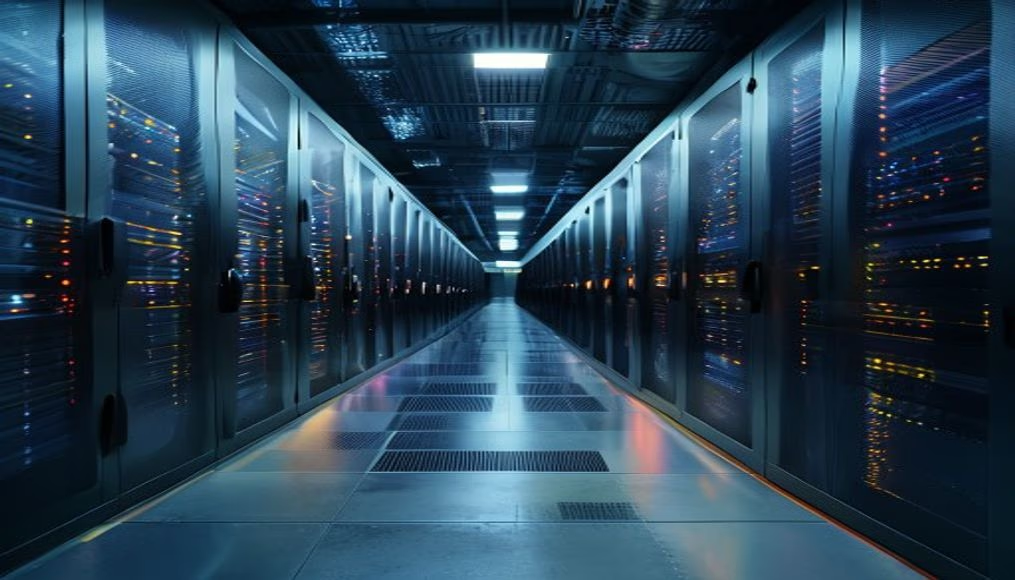
Modern data center cooling system
1344×768 · AVIF · CC BY 4.0
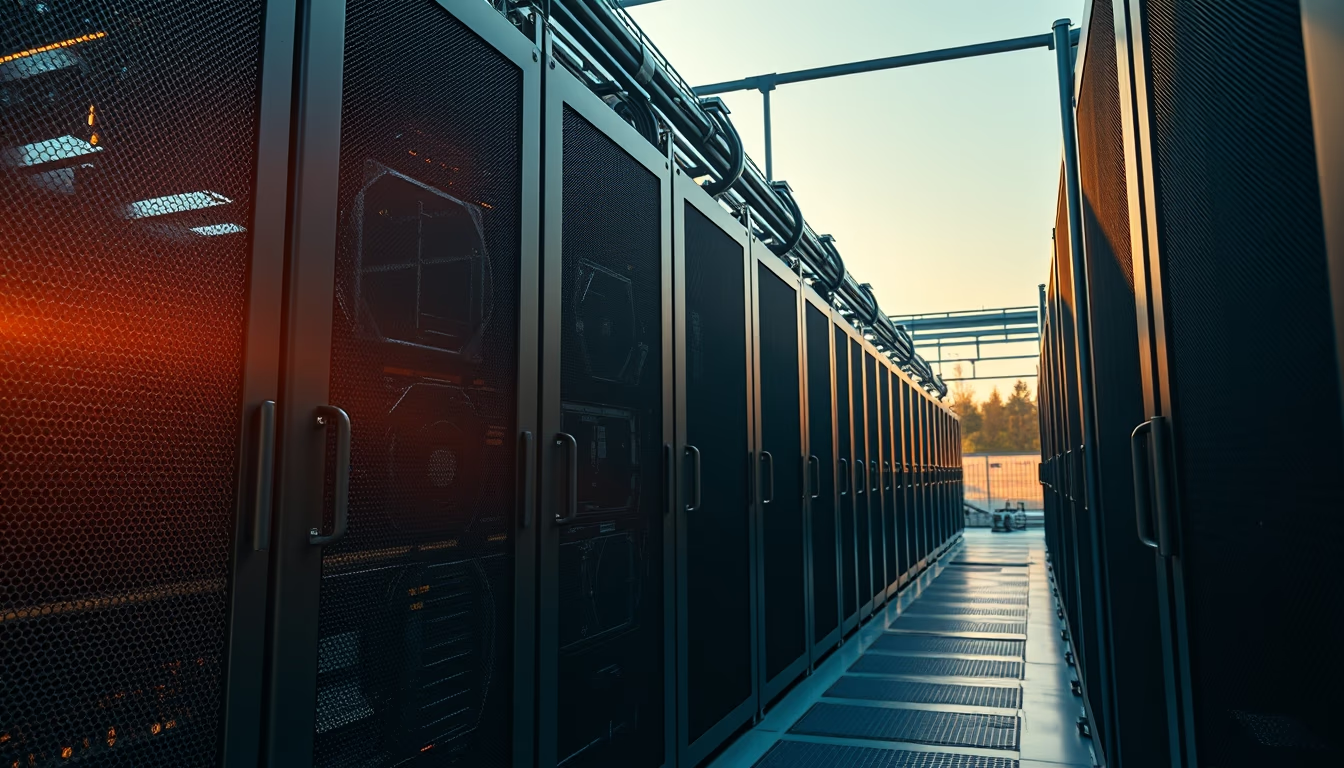
Modern data center cooling systems are critical for maintaining continuous operation of high-performance servers, combining energy efficiency with advanced thermal dissipation technologies.
About this subject
Data centers consume about 1% of global electricity, and roughly 40% of that energy goes to cooling systems. Traditional methods like precision air conditioning are being replaced by more efficient solutions such as direct-to-chip liquid cooling and dielectric immersion. These technologies allow servers to operate at higher temperatures with lower energy consumption.
Direct liquid cooling uses water or dielectric fluids circulating through tubes that directly contact heat-generating components like CPUs and GPUs. Dielectric immersion fully submerges servers in a non-conductive liquid, eliminating the need for fans and drastically reducing noise. Companies like Microsoft and Google have tested underwater data centers to leverage natural cooling.
Beyond hardware, thermal management software optimizes airflow and workload distribution to avoid hot spots. The use of artificial intelligence to predict cooling demands is also rising, reducing energy waste. Efficiency is measured by the Power Usage Effectiveness (PUE) metric, where values close to 1.0 indicate that nearly all energy is used for computing, not cooling.
Interestingly, data centers in Nordic regions often use outside cold air for free cooling, while facilities in hot climates may reuse waste heat to warm nearby buildings, as Amazon does in some locations. The trend is for cooling systems to become even more integrated with renewable energy sources and thermal storage.
Frequently Asked Questions
What is the main advantage of liquid cooling in data centers?
Liquid cooling is more efficient than air because it removes heat faster and allows higher server density, reducing energy consumption and required physical space.
What is PUE and why is it important?
PUE (Power Usage Effectiveness) is the ratio of total energy used by the data center to the energy used by IT equipment. The closer to 1.0, the more efficient the facility.
Can data centers use renewable energy for cooling?
Yes. Many data centers use solar or wind power to run pumps and chillers, and some reuse waste heat for district heating or agriculture.
Direct URL
https://pub-c7d6a6ea828543ac903a74a341ccb2e1.r2.dev/imagens/modern-data-center-cooling-system-cinematic-wide-shot-v2.avifHow to credit
Include a visible link back to UtilizAí. Copy one of the snippets below:
<a href="https://xn--utiliza-eza.com/en/midia/imagens/modern-data-center-cooling-system-cinematic-wide-shot-v2">Modern data center cooling system</a> by <a href="https://xn--utiliza-eza.com">UtilizAí</a>, licensed under <a href="https://creativecommons.org/licenses/by/4.0/">CC BY 4.0</a>.
[Modern data center cooling system](https://xn--utiliza-eza.com/en/midia/imagens/modern-data-center-cooling-system-cinematic-wide-shot-v2) by [UtilizAí](https://xn--utiliza-eza.com), CC BY 4.0
License: CC-BY-4.0