Modern data center cooling system
1344×768 · AVIF · CC BY 4.0
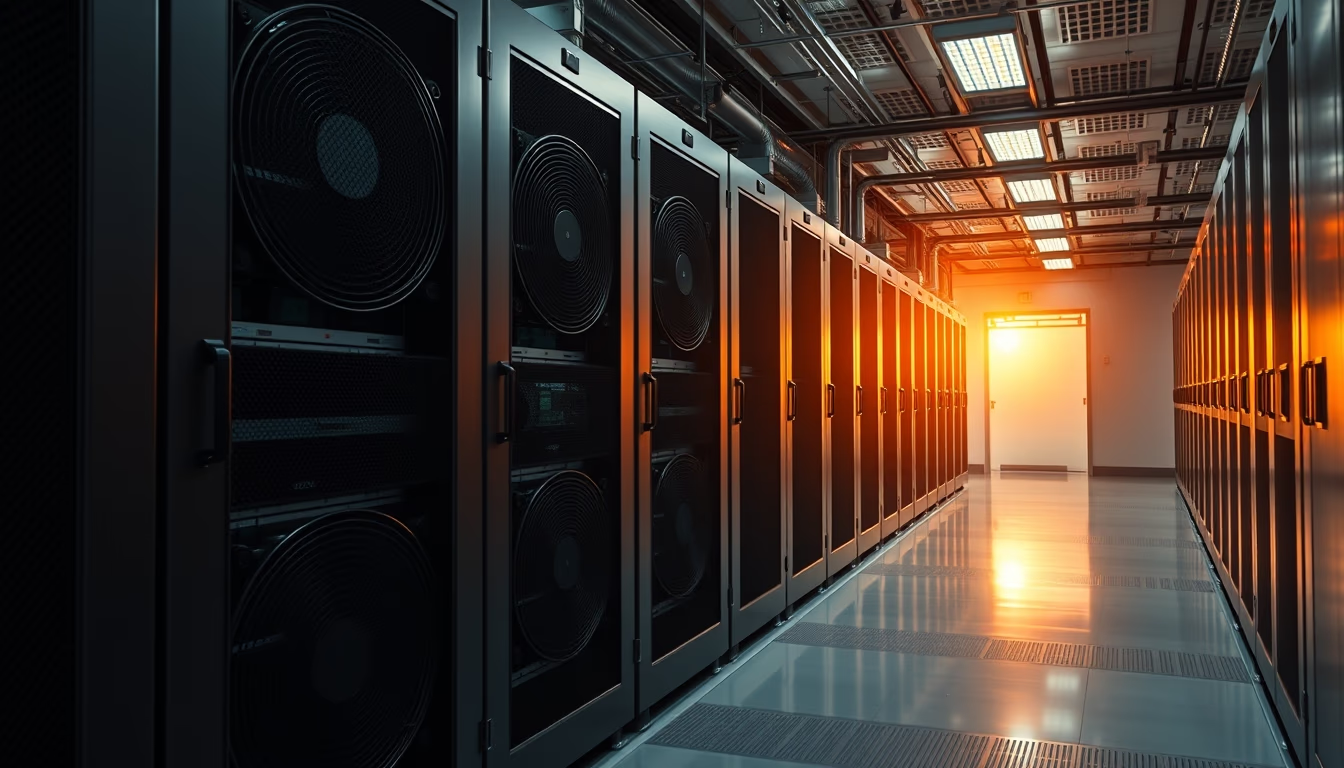
Modern data center cooling systems are crucial for maintaining optimal temperature and humidity, ensuring server performance and longevity.
About this subject
Modern data centers house thousands of servers that generate intense heat, requiring sophisticated cooling systems. Liquid cooling, for instance, uses water or dielectric fluids to absorb heat directly from components, being up to 40% more efficient than traditional air cooling. Technologies like immersion cooling and cold plate cooling are gaining popularity, especially in high-density installations. Google uses evaporative cooling and artificial intelligence in its data centers to optimize energy consumption, reducing Power Usage Effectiveness (PUE) to near 1.1. Additionally, data centers located in cold climates, such as Facebook's in Sweden, leverage outside air for natural cooling, cutting energy costs. Preventive maintenance and real-time monitoring are essential to avoid catastrophic failures, such as server crashes due to overheating. The data center cooling sector moves billions of dollars annually, with constant innovations to handle the increasing computational demand driven by artificial intelligence and the cloud.
Frequently Asked Questions
What is PUE and why is it important in data center cooling?
PUE (Power Usage Effectiveness) is the ratio of total energy consumed by a data center to the energy used by IT equipment. The closer to 1, the more efficient the cooling system. A PUE of 1.1 means only 10% of energy is spent on cooling and other infrastructure.
What is the difference between air cooling and liquid cooling?
Air cooling uses fans and air conditioning to dissipate heat, being simpler and cheaper but less efficient. Liquid cooling uses water or special fluids to absorb heat directly from components, offering higher cooling capacity and energy savings, especially in high-density servers.
How is artificial intelligence used in data center cooling?
AI is used to predict workloads and dynamically adjust cooling systems, optimizing energy use. For example, Google's DeepMind reduced cooling energy consumption by up to 40% in its data centers using machine learning algorithms.
Direct URL
https://pub-c7d6a6ea828543ac903a74a341ccb2e1.r2.dev/imagens/modern-data-center-cooling-system-cinematic-wide-shot.avifHow to credit
Include a visible link back to UtilizAí. Copy one of the snippets below:
<a href="https://xn--utiliza-eza.com/en/midia/imagens/modern-data-center-cooling-system-cinematic-wide-shot">Modern data center cooling system</a> by <a href="https://xn--utiliza-eza.com">UtilizAí</a>, licensed under <a href="https://creativecommons.org/licenses/by/4.0/">CC BY 4.0</a>.
[Modern data center cooling system](https://xn--utiliza-eza.com/en/midia/imagens/modern-data-center-cooling-system-cinematic-wide-shot) by [UtilizAí](https://xn--utiliza-eza.com), CC BY 4.0
License: CC-BY-4.0