Mitochondria 3d render
1344×768 · AVIF · CC BY 4.0
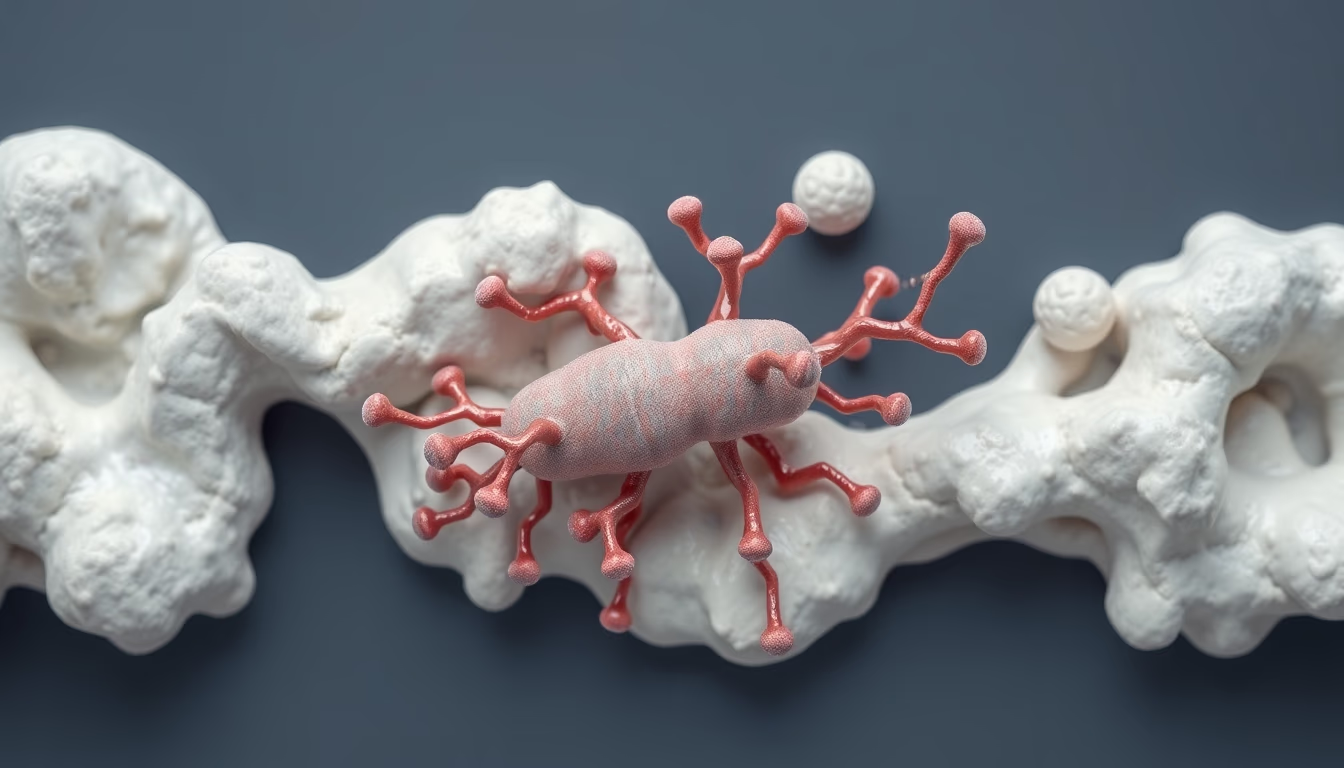
As mitocôndrias são organelas celulares que geram energia na forma de ATP, fundamentais para o metabolismo aeróbico e a vida eucariótica.
Sobre o tema
As mitocôndrias são organelas de dupla membrana presentes na maioria das células eucarióticas. Sua principal função é a produção de adenosina trifosfato (ATP) por meio da fosforilação oxidativa, processo que ocorre na membrana interna. Elas são conhecidas como as usinas de energia da célula, pois fornecem o combustível necessário para diversas atividades celulares, como contração muscular, divisão celular e transmissão de sinais nervosos. Além disso, as mitocôndrias estão envolvidas em outras funções essenciais, como a regulação do ciclo celular, a apoptose (morte celular programada) e a produção de calor (termogênese) em tecidos como a gordura marrom.
Um aspecto fascinante das mitocôndrias é sua origem evolutiva. Segundo a teoria endossimbiótica, proposta por Lynn Margulis na década de 1960, as mitocôndrias descendem de bactérias aeróbicas que foram incorporadas por células ancestrais há cerca de 1,5 bilhão de anos. Essa origem explica por que as mitocôndrias possuem seu próprio DNA circular (DNA mitocondrial), que é herdado exclusivamente da mãe, e seus próprios ribossomos semelhantes aos bacterianos. O DNA mitocondrial humano contém 37 genes, essenciais para a respiração celular. Mutações nesse DNA podem causar doenças mitocondriais, que afetam tecidos com alta demanda energética, como músculos e cérebro.
A quantidade de mitocôndrias por célula varia enormemente: enquanto hemácias maduras não possuem nenhuma, células hepáticas podem conter de 1000 a 2000, e os ovócitos podem ter centenas de milhares. A biogênese mitocondrial é regulada por fatores como exercício físico e estresse calórico. As mitocôndrias também desempenham papel crucial no envelhecimento e em doenças neurodegenerativas, como Parkinson e Alzheimer, devido ao acúmulo de danos oxidativos. Estudos recentes indicam que a função mitocondrial pode ser modulada por intervenções como restrição calórica e compostos como resveratrol, abrindo caminho para terapias antienvelhecimento.
Perguntas frequentes
O que são mitocôndrias?
Mitocôndrias são organelas celulares com dupla membrana que produzem a maior parte da energia química (ATP) necessária para as reações bioquímicas da célula. Elas estão presentes em praticamente todas as células eucarióticas.
Como as mitocôndrias produzem energia?
Elas produzem ATP através da fosforilação oxidativa, um processo que usa oxigênio e nutrientes (como glicose) para gerar energia. Esse processo envolve a cadeia de transporte de elétrons na membrana interna e a quimiosmose.
Por que as mitocôndrias têm seu próprio DNA?
O DNA mitocondrial é uma herança de sua origem bacteriana, conforme a teoria endossimbiótica. Esse DNA circular codifica proteínas essenciais para a respiração celular e é herdado exclusivamente da mãe, pois as mitocôndrias do espermatozoide são degradadas após a fertilização.
URL direta
https://pub-c7d6a6ea828543ac903a74a341ccb2e1.r2.dev/imagens/mitochondria-3d-render-isometric-flat-lay-p1.avifComo creditar
Inclua um link visível de volta pro UtilizAí. Copie um dos snippets abaixo:
<a href="https://xn--utiliza-eza.com/midia/imagens/mitochondria-3d-render-isometric-flat-lay-p1">Mitochondria 3d render</a> by <a href="https://xn--utiliza-eza.com">UtilizAí</a>, licensed under <a href="https://creativecommons.org/licenses/by/4.0/">CC BY 4.0</a>.
[Mitochondria 3d render](https://xn--utiliza-eza.com/midia/imagens/mitochondria-3d-render-isometric-flat-lay-p1) by [UtilizAí](https://xn--utiliza-eza.com), CC BY 4.0
Licença: CC-BY-4.0