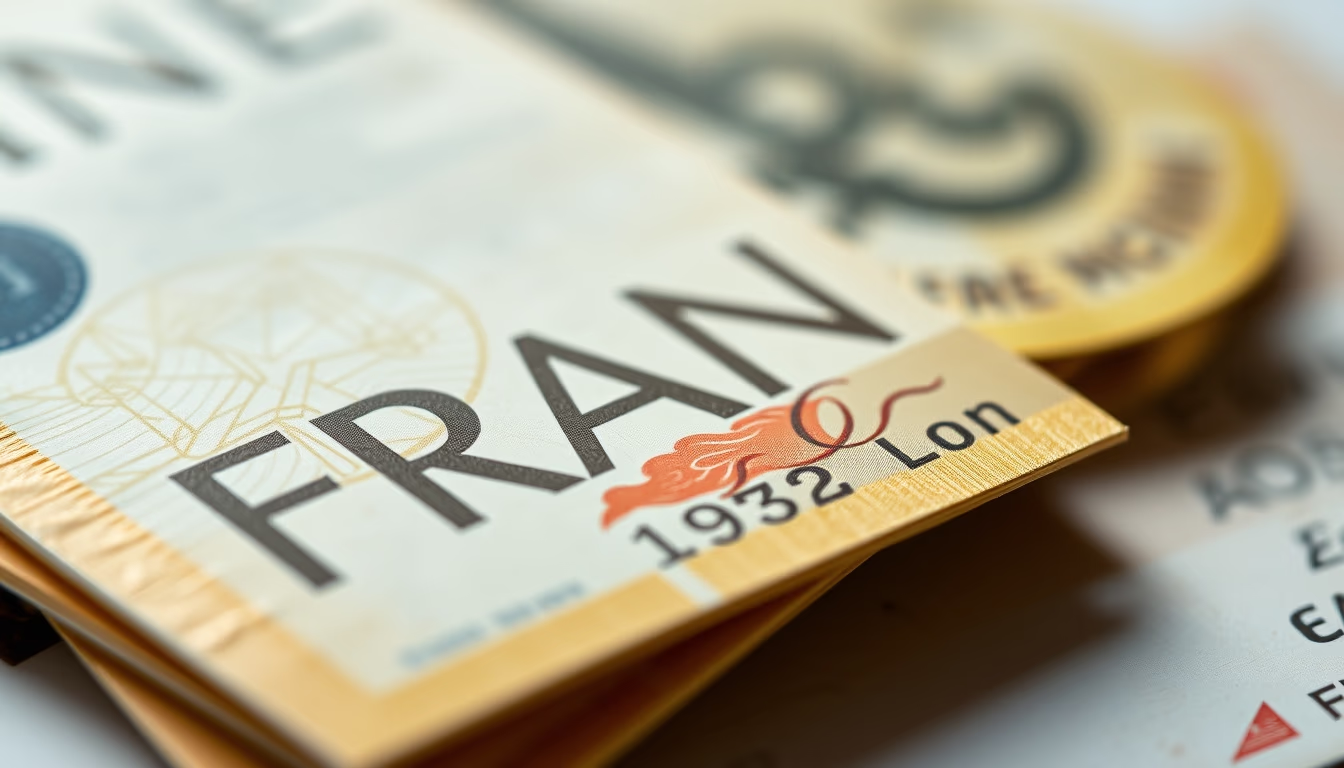
Medieval florin gold
1344×768 · AVIF · CC BY 4.0

The medieval gold florin, minted in Florence from 1252, became the standard currency in European trade due to its purity and standardized weight.
About this subject
The gold florin was introduced in 1252 by the Republic of Florence, Italy, as part of a monetary reform aimed at stabilizing regional trade. The coin weighed approximately 3.5 grams of high-purity gold (about 24 carats), which immediately earned trust among merchants and bankers. The florin's design featured a fleur-de-lis on one side, the heraldic symbol of Florence, and on the other the figure of Saint John the Baptist, the city's patron saint. This standardization was innovative at a time when most European coins suffered from variations in weight and metal content.
The florin's importance extended beyond Italian borders. During the 13th and 14th centuries, it became the preferred currency for international transactions, used on trade routes connecting Europe to North Africa and the Levant. Its stable value allowed it to serve as a unit of account in contracts and deeds, even influencing other mints such as the Venetian ducat and the Hungarian florin. The reliability of the Florentine florin was so great that its production continued for centuries, despite economic and political changes.
Interestingly, the word "florin" derives from "fiorino," Italian for "little flower," referring to the fleur-de-lis struck on the coin. The coin also inspired the names of other currencies, such as the German gulden and the Dutch florin. Today, the original florin is a sought-after piece for numismatic collectors, representing not only material value but also Florence's crucial role in the development of modern financial systems.
Frequently Asked Questions
What was the medieval gold florin?
The gold florin was a coin minted in Florence from 1252, made of high-purity gold (approximately 24 carats) weighing 3.5 grams. It became an international standard for European trade.
Why was the florin so trusted?
Due to its consistent purity and exact weight, the florin maintained stable value for centuries. Florentine authorities guaranteed its quality, earning trust among merchants and bankers.
What was the design of the florin?
One side featured the fleur-de-lis (symbol of Florence) and the other the figure of Saint John the Baptist. This design became iconic and was copied by other European coins.
Direct URL
https://pub-c7d6a6ea828543ac903a74a341ccb2e1.r2.dev/imagens/medieval-florin-gold-long-exposure-fresh12.avifHow to credit
Include a visible link back to UtilizAí. Copy one of the snippets below:
<a href="https://xn--utiliza-eza.com/en/midia/imagens/medieval-florin-gold-long-exposure-fresh12">Medieval florin gold</a> by <a href="https://xn--utiliza-eza.com">UtilizAí</a>, licensed under <a href="https://creativecommons.org/licenses/by/4.0/">CC BY 4.0</a>.
[Medieval florin gold](https://xn--utiliza-eza.com/en/midia/imagens/medieval-florin-gold-long-exposure-fresh12) by [UtilizAí](https://xn--utiliza-eza.com), CC BY 4.0
License: CC-BY-4.0