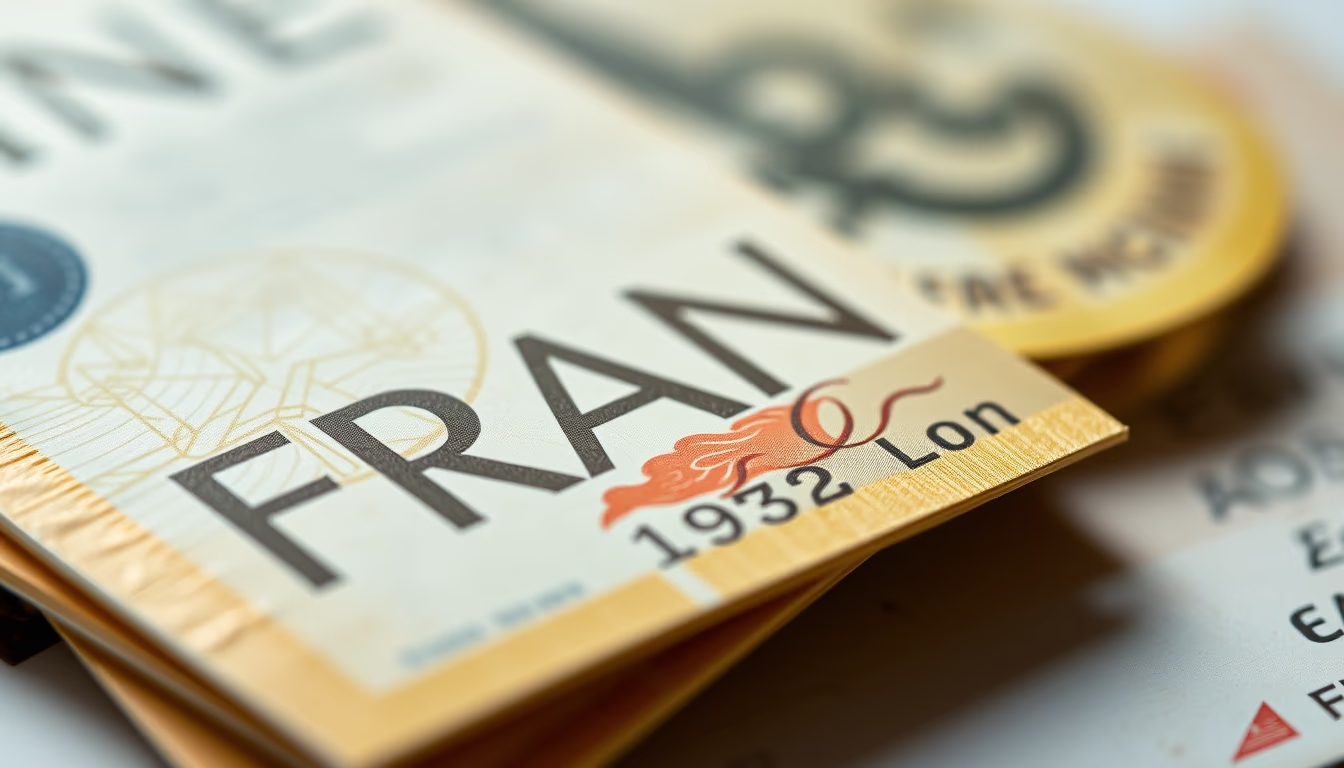
Medieval florin gold
1344×768 · AVIF · CC BY 4.0

The medieval gold florin, minted in Florence from 1252, was the most influential gold coin in Europe, setting commercial standards for centuries.
About this subject
The gold florin, also known as the fiorino d'oro, was introduced by the Republic of Florence in 1252 and quickly became the benchmark currency in international trade. Each florin contained about 3.5 grams of 24-karat gold, ensuring purity and trust. Its design featured Saint John the Baptist, patron saint of Florence, on one side, and the lily (giglio), the city's symbol, on the other.
The adoption of the florin was driven by the need for a stable coin for expanding commercial transactions, especially with the East. Unlike other contemporary coins, the florin maintained its weight and purity for decades, which gave it immense credibility. Florentine banks and merchants spread the coin throughout Europe, from England to the Byzantine Empire, influencing local minting.
Interestingly, the term 'florin' gave rise to several later coins, such as the Hungarian forint and the Dutch gulden. The coin was so highly valued that it served as a standard for trade agreements and even for papal tithes. Its production continued until the 16th century, when new European gold coins began to compete.
The florin represents not only an economic advancement but also the rise of Florence as a financial power during the Late Middle Ages. Today, well-preserved specimens are highly sought after by collectors and can fetch significant sums at numismatic auctions.
Frequently Asked Questions
Why was the gold florin so reliable?
The florin maintained constant weight and purity (3.5 g of 24k gold), ensuring international credibility. Florence strictly controlled minting to prevent counterfeiting.
How much is a medieval florin worth today?
Numismatic value varies greatly with condition. Well-preserved specimens can fetch from a few thousand to tens of thousands of dollars at auctions.
Which coins were inspired by the florin?
Many European coins adopted its name and standard, such as the Hungarian forint, Dutch gulden, and Polish złoty.
Direct URL
https://pub-c7d6a6ea828543ac903a74a341ccb2e1.r2.dev/imagens/medieval-florin-gold-fish-eye-wide-angle-fresh14.avifHow to credit
Include a visible link back to UtilizAí. Copy one of the snippets below:
<a href="https://xn--utiliza-eza.com/en/midia/imagens/medieval-florin-gold-fish-eye-wide-angle-fresh14">Medieval florin gold</a> by <a href="https://xn--utiliza-eza.com">UtilizAí</a>, licensed under <a href="https://creativecommons.org/licenses/by/4.0/">CC BY 4.0</a>.
[Medieval florin gold](https://xn--utiliza-eza.com/en/midia/imagens/medieval-florin-gold-fish-eye-wide-angle-fresh14) by [UtilizAí](https://xn--utiliza-eza.com), CC BY 4.0
License: CC-BY-4.0