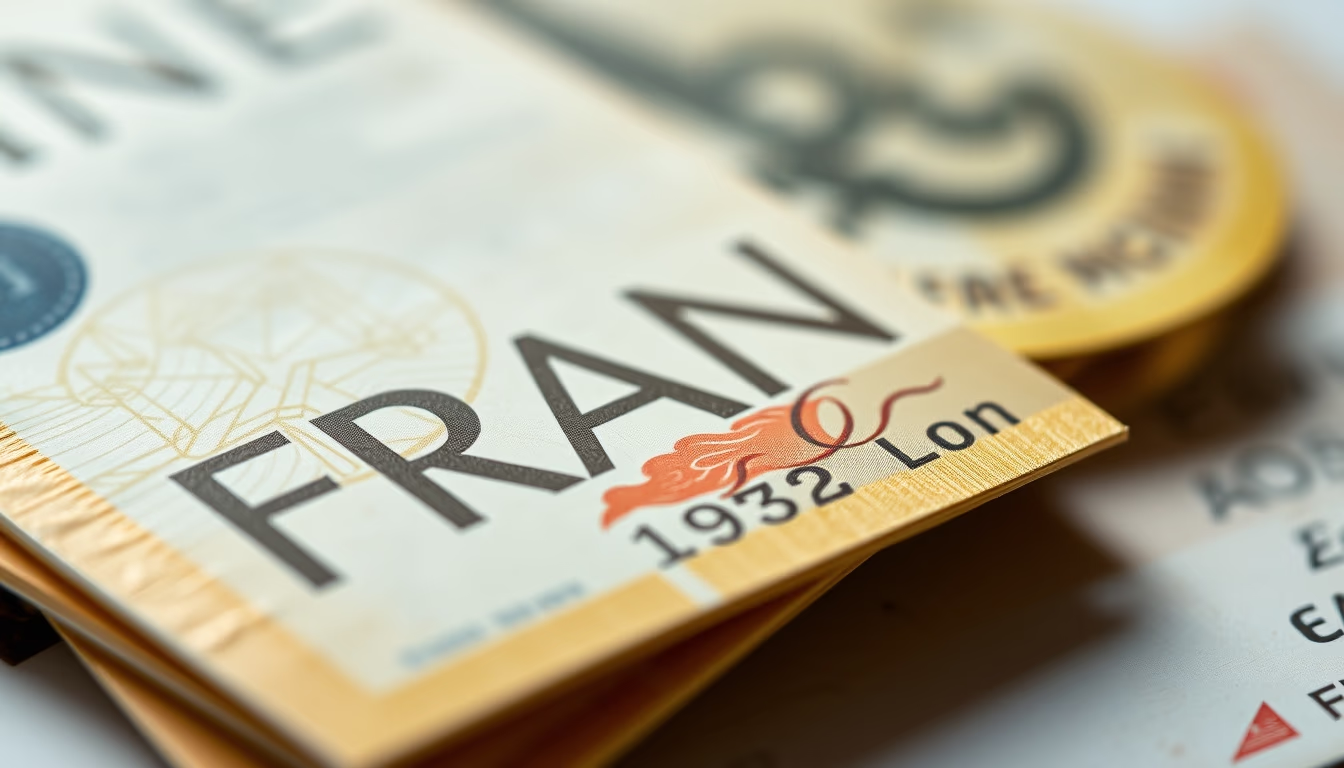
Medieval florin gold
1344×768 · AVIF · CC BY 4.0

The gold florin was first minted in Florence in 1252, becoming a commercial standard in medieval Europe.
About this subject
The gold florin, or fiorino d'oro, was first minted by the Republic of Florence in 1252 and quickly became one of the most influential coins of the Middle Ages. Weighing approximately 3.5 grams of very high purity gold (about 24 karats), the florin was recognized for its consistency and reliability. Its name derives from the fleur-de-lis, the symbol of the city, stamped on the obverse, while the reverse featured Saint John the Baptist, the patron saint of Florence.
The creation of the florin was a response to the need for a stable currency for international trade, especially after the Hundred Years' War and the expansion of commercial routes. Unlike the silver coins then prevalent, the gold florin facilitated high-value transactions among Italian, French, and English merchants. Its acceptance was so widespread that it inspired copies, such as the Venetian ducat (1284) and the Hungarian florin, and influenced the development of monetary systems throughout Europe.
Interestingly, the florin maintained its value for centuries due to the strict standardization of gold content, which was rare at the time. The coin was minted in large quantities: by the 14th century, Florence is estimated to have produced hundreds of thousands of florins annually. Today, well-preserved specimens are highly sought after in numismatic collections, with values that can reach thousands of euros depending on condition and year of issue. The legacy of the florin even persists in later coin names, such as the Dutch florin used until the adoption of the euro.
Frequently Asked Questions
Why was the gold florin so important in the Middle Ages?
The florin was crucial because it offered a stable standard of pure gold amidst debased silver coins, facilitating long-distance trade between kingdoms and city-states.
What is the difference between the florin and the Venetian ducat?
Both were high-purity gold coins, but the ducat emerged in 1284 as a response to the florin's success. The ducat featured Saint Mark on the obverse and Christ on the reverse, while the florin had the fleur-de-lis and Saint John the Baptist.
Is the florin still used as currency anywhere?
No. The Dutch florin was replaced by the euro in 2002, and the historical florin ceased circulation in the Renaissance. Today, it is only a numismatic item.
Direct URL
https://pub-c7d6a6ea828543ac903a74a341ccb2e1.r2.dev/imagens/medieval-florin-gold-aerial-drone-shot-fresh0.avifHow to credit
Include a visible link back to UtilizAí. Copy one of the snippets below:
<a href="https://xn--utiliza-eza.com/en/midia/imagens/medieval-florin-gold-aerial-drone-shot-fresh0">Medieval florin gold</a> by <a href="https://xn--utiliza-eza.com">UtilizAí</a>, licensed under <a href="https://creativecommons.org/licenses/by/4.0/">CC BY 4.0</a>.
[Medieval florin gold](https://xn--utiliza-eza.com/en/midia/imagens/medieval-florin-gold-aerial-drone-shot-fresh0) by [UtilizAí](https://xn--utiliza-eza.com), CC BY 4.0
License: CC-BY-4.0