Medieval cathedral gothic
1344×768 · JPG · CC BY 4.0
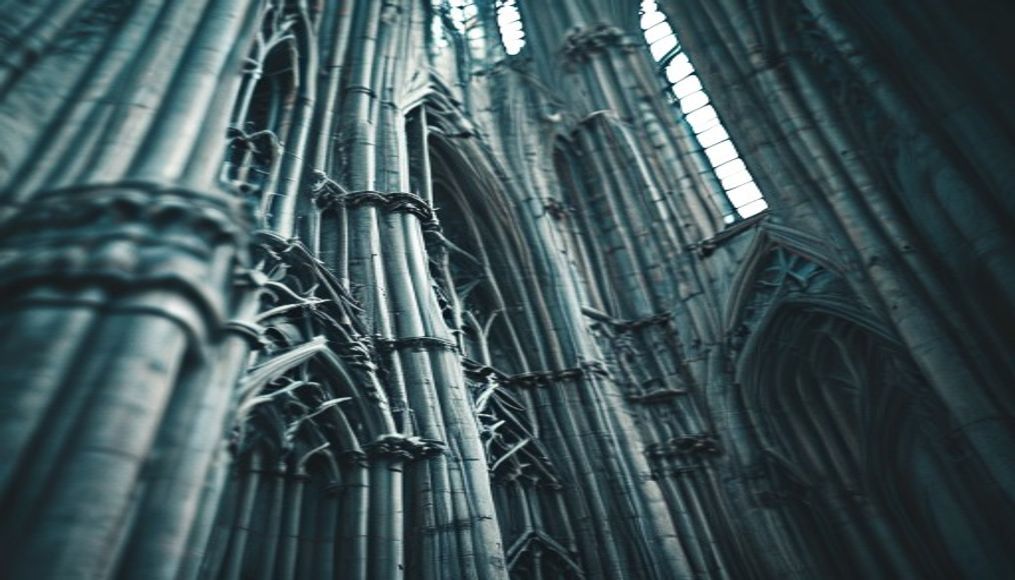
The Medieval Gothic Cathedral represents the pinnacle of European religious architecture from the 12th to 16th centuries, featuring pointed arches and colorful stained glass.
About this subject
Gothic architecture emerged in the Île-de-France region around 1140 with the reconstruction of the Abbey of Saint-Denis. This style succeeded Romanesque, introducing structural innovations that allowed taller, brighter buildings. Key features include the pointed arch (ogive), ribbed vaults, and flying buttresses, which channeled weight to external supports, freeing walls for large windows.
Stained glass windows were central, serving a didactic purpose by narrating biblical stories to an illiterate population. Rose windows, such as those at Chartres Cathedral, symbolized cosmic and divine harmony. Gargoyles, carved as grotesque animals or demons, functioned as water spouts to protect walls from rain damage. Every sculpted detail, chimeras, bestiaries, carried moral or theological symbolism.
Notable examples include Notre-Dame de Paris (consecrated 1345), Cologne Cathedral (begun 1248), and Milan Cathedral (Late Gothic). Construction took decades or centuries, involving guilds of masons, carpenters, and glaziers. Limestone and sandstone were common, and natural light was filtered through colored glass with symbolic hues.
The Gothic legacy endures: many cathedrals are UNESCO World Heritage sites, attracting millions of visitors yearly. The 19th-century Gothic Revival revived these elements in churches and civic buildings, such as the British Parliament. Today, architectural and engineering studies analyze medieval solutions for large spans, inspiring contemporary designs.
Frequently Asked Questions
What defines medieval Gothic architecture?
Gothic architecture is defined by the pointed arch, ribbed vaults, flying buttresses, and large stained glass windows. It originated in 12th-century France and emphasized verticality and light, symbolizing spiritual elevation.
What was the function of gargoyles in Gothic cathedrals?
Gargoyles served a practical function as water spouts to divert rainwater from walls, preventing damage. They also held symbolic meaning, representing demonic forces warded off by the sacred, and served as visual reminders of the dangers of sin.
Where are the largest Gothic cathedrals in Europe?
The largest Gothic cathedrals include Seville Cathedral (Spain), Cologne Cathedral (Germany), Milan Cathedral (Italy), and Chartres Cathedral (France). Each has impressive dimensions and unique features, such as the tallest church spire in Ulm (Germany).
Direct URL
https://pub-c7d6a6ea828543ac903a74a341ccb2e1.r2.dev/imagens/medieval-cathedral-gothic-macro-closeup-p4.jpgHow to credit
Include a visible link back to UtilizAí. Copy one of the snippets below:
<a href="https://xn--utiliza-eza.com/en/midia/imagens/medieval-cathedral-gothic-macro-closeup-p4">Medieval cathedral gothic</a> by <a href="https://xn--utiliza-eza.com">UtilizAí</a>, licensed under <a href="https://creativecommons.org/licenses/by/4.0/">CC BY 4.0</a>.
[Medieval cathedral gothic](https://xn--utiliza-eza.com/en/midia/imagens/medieval-cathedral-gothic-macro-closeup-p4) by [UtilizAí](https://xn--utiliza-eza.com), CC BY 4.0
License: CC-BY-4.0