Medieval cathedral gothic
1344×768 · AVIF · CC BY 4.0
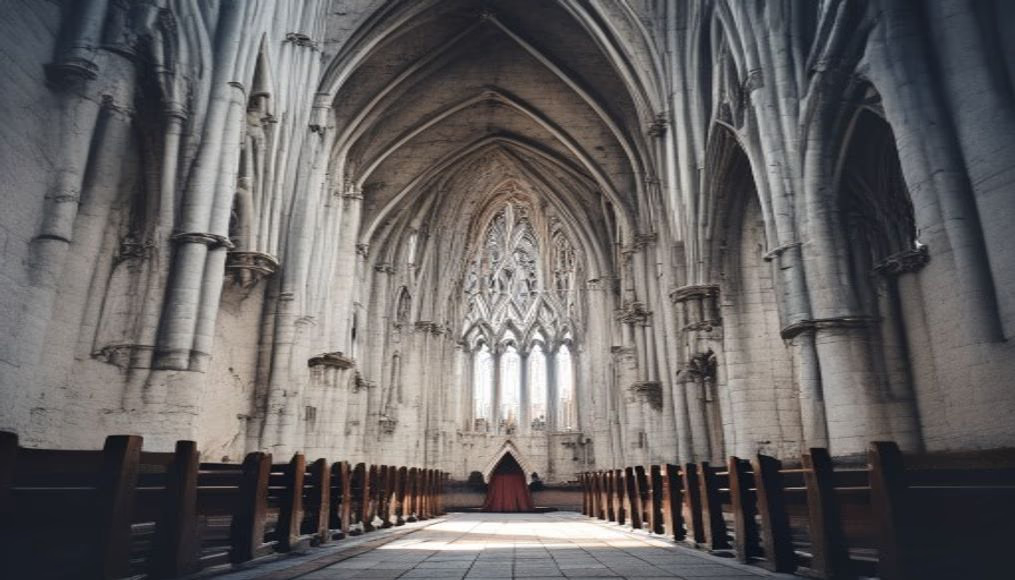
Medieval gothic cathedrals combine vertical architecture, colorful stained glass, and flying buttresses to create spaces of light and spirituality.
About this subject
Gothic cathedrals emerged in the 12th century in the Île-de-France region, revolutionizing religious architecture. The style emphasized verticality and light, in contrast to the heavy Romanesque walls. Innovations such as the pointed arch and ribbed vault allowed for taller, slenderer buildings, while flying buttresses transferred wall weight to external piers, freeing space for large stained glass windows.
Stained glass windows, besides beautifying, served a didactic purpose: they narrated biblical stories and symbolized divine light. Manufacturing techniques involved fusing sand, potash, and metal oxides to achieve vivid colors. Cathedrals like Notre-Dame de Paris, Chartres, and Reims became templates, influencing constructions across Europe. The typical floor plan followed a Latin cross, with a nave, choir, and ambulatory.
A curiosity: Cologne Cathedral in Germany took over 600 years to complete, blending original Gothic and neo-Gothic styles. Chartres Cathedral boasts one of the best-preserved stained glass ensembles from the 12th and 13th centuries. Gothic also appeared in monasteries, universities, and civic buildings, marking a cultural and technical milestone of the Middle Ages.
Frequently Asked Questions
What is the difference between Gothic and Romanesque architecture?
Romanesque (10th-12th centuries) features thick walls, round arches, and limited light. Gothic (12th-16th centuries) introduced pointed arches, ribbed vaults, and flying buttresses, allowing greater height, large openings, and abundant stained glass.
Why do Gothic cathedrals have such large stained glass windows?
Stained glass replaced large masonry areas and symbolized divine light. Moreover, as most people were illiterate, the biblical scenes in the glass served as visual tools for teaching Christian faith.
What are the largest Gothic cathedrals in the world?
Among the largest are Cologne Cathedral (Germany), 157 m long; Milan Cathedral (Italy), area of 12,000 m²; and St. Vitus Cathedral (Prague), which took centuries to complete. All display prominent Gothic features.
Direct URL
https://pub-c7d6a6ea828543ac903a74a341ccb2e1.r2.dev/imagens/medieval-cathedral-gothic-documentary-photography-p0.avifHow to credit
Include a visible link back to UtilizAí. Copy one of the snippets below:
<a href="https://xn--utiliza-eza.com/en/midia/imagens/medieval-cathedral-gothic-documentary-photography-p0">Medieval cathedral gothic</a> by <a href="https://xn--utiliza-eza.com">UtilizAí</a>, licensed under <a href="https://creativecommons.org/licenses/by/4.0/">CC BY 4.0</a>.
[Medieval cathedral gothic](https://xn--utiliza-eza.com/en/midia/imagens/medieval-cathedral-gothic-documentary-photography-p0) by [UtilizAí](https://xn--utiliza-eza.com), CC BY 4.0
License: CC-BY-4.0