Medical evacuation helicopter
1344×768 · AVIF · CC BY 4.0
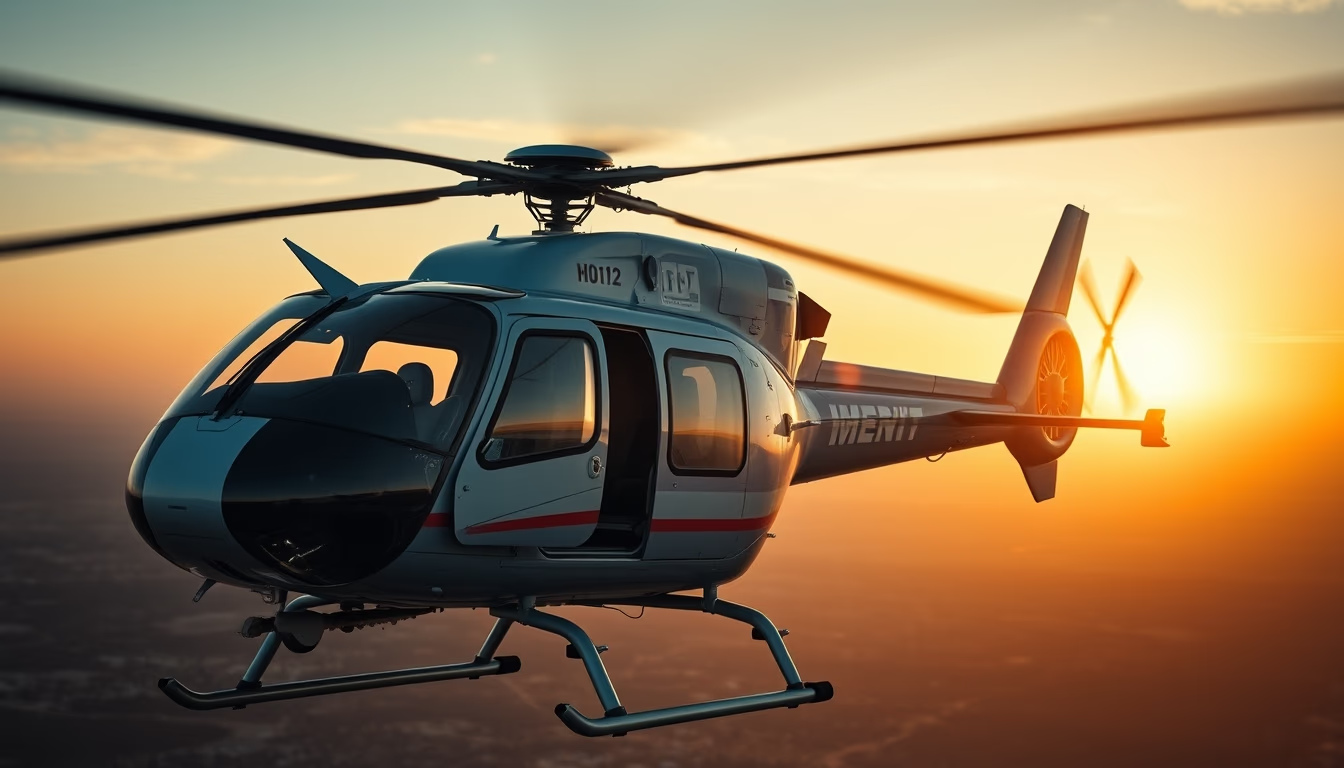
A medical evacuation helicopter is crucial for aeromedical rescue, quickly transporting critical patients with advanced life-support equipment.
About this subject
Medical evacuation helicopters, also known as aeromedical rescue aircraft, play a vital role in pre-hospital care. They significantly reduce transport time for trauma victims, severe accident patients, or medical emergencies in remote areas. Equipped with stretchers, mechanical ventilators, defibrillators, and emergency medications, these helicopters function as flying intensive care units. Models such as the AgustaWestland AW109, Eurocopter EC145, and Sikorsky S-76 are widely used by emergency services worldwide.
The history of aeromedical transport dates back to the Korean War (1950-1953), when Bell H-13 helicopters evacuated wounded soldiers. Since then, technology has evolved, and today dedicated helicopter emergency medical services (HEMS) exist, with adapted cabins and specialized equipment. In Brazil, the Fire Department and SAMU operate helicopters like the EC145 for service in large urban centers and hard-to-reach areas such as the Amazon and Pantanal.
A crucial aspect is the ability to land in tight spots, such as highways or stadiums. Trained pilots perform precise landings in adverse conditions using night vision systems and GPS. The crew includes a pilot, a doctor, and a nurse, all specialized in flight and emergency care. Studies show that helicopter use reduces mortality by up to 30% in severe trauma cases, depending on response time. Countries like Germany and Switzerland have a dense network of aeromedical bases, with response times under 15 minutes in urban areas.
Rigorous maintenance and frequent inspections are essential for safety. Each flight follows triage protocols, and the decision to deploy a helicopter considers factors like weather, distance, and patient condition. Operational costs are high, but the social benefit justifies the investment. In natural disasters or major accidents, these helicopters coordinate with ground vehicles and hospitals, forming an integrated rescue network.
Frequently Asked Questions
What is the difference between a medical evacuation helicopter and a rescue helicopter?
A medical evacuation helicopter is equipped to transport critically ill patients with advanced life support, whereas a rescue helicopter may focus on search and rescue missions in difficult terrain, often without full medical equipment.
How long does it take for a medical helicopter to arrive on scene?
It depends on location and base network. In urban areas with well-distributed bases, response time can be under 15 minutes. In remote regions, it may take 30 minutes to an hour.
What equipment is essential onboard a medical evacuation helicopter?
Essential equipment includes a stretcher, mechanical ventilator, defibrillator, cardiac monitor, infusion pumps, oxygen, emergency medications, and trauma immobilization devices.
Direct URL
https://pub-c7d6a6ea828543ac903a74a341ccb2e1.r2.dev/imagens/medical-evacuation-helicopter-cinematic-wide-shot-fresh14.avifHow to credit
Include a visible link back to UtilizAí. Copy one of the snippets below:
<a href="https://xn--utiliza-eza.com/en/midia/imagens/medical-evacuation-helicopter-cinematic-wide-shot-fresh14">Medical evacuation helicopter</a> by <a href="https://xn--utiliza-eza.com">UtilizAí</a>, licensed under <a href="https://creativecommons.org/licenses/by/4.0/">CC BY 4.0</a>.
[Medical evacuation helicopter](https://xn--utiliza-eza.com/en/midia/imagens/medical-evacuation-helicopter-cinematic-wide-shot-fresh14) by [UtilizAí](https://xn--utiliza-eza.com), CC BY 4.0
License: CC-BY-4.0