Marimba xylophone
1344×768 · AVIF · CC BY 4.0
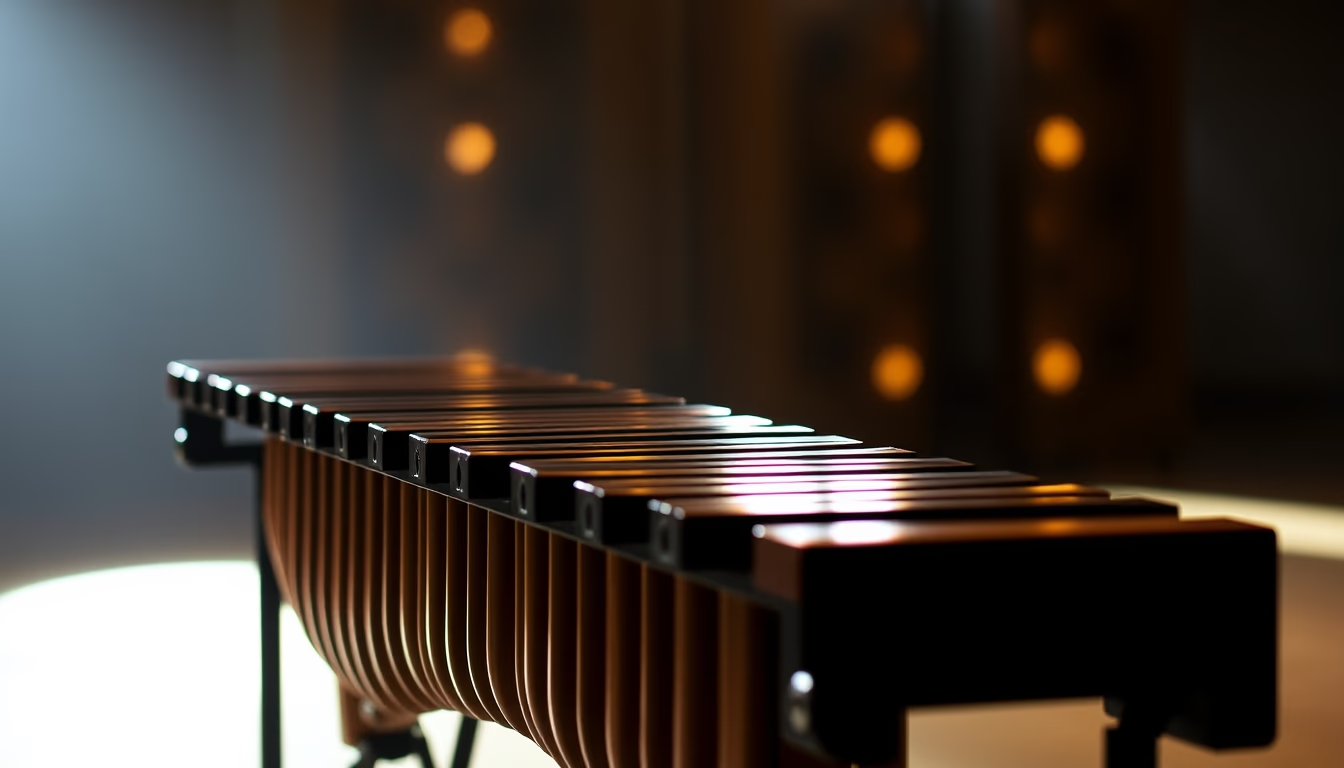
The marimba is a melodic percussion instrument of African origin, widely used in classical, jazz, and Latin American folk music.
About this subject
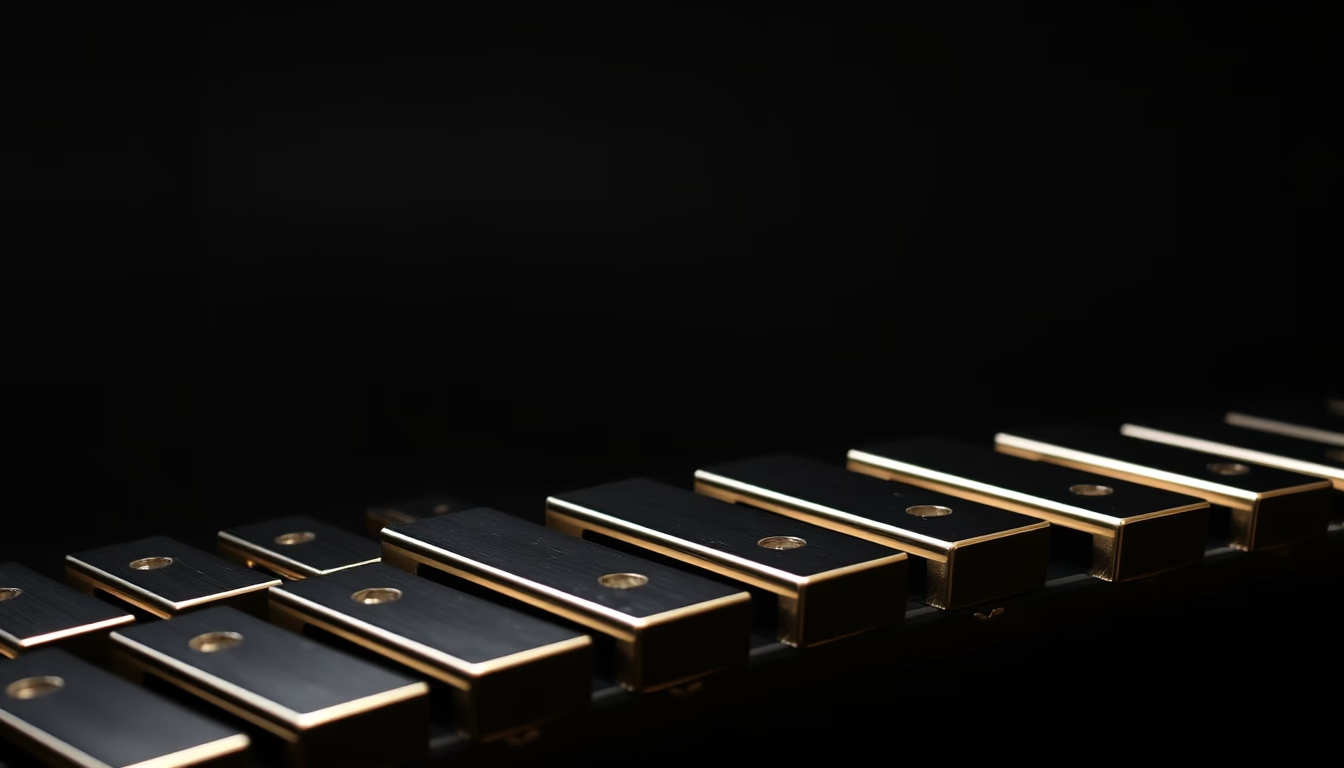
The marimba is a percussion instrument consisting of tuned wooden bars (typically rosewood or padauk) arranged like a keyboard. Each bar is struck with mallets that have heads of rubber, yarn, or felt, producing a rich, resonant sound. Beneath the bars, metal resonator tubes amplify the sound, giving the marimba its characteristic timbre: full, soft, and sustained. Although similar to the xylophone, the marimba has wider and longer bars, a lower register, and longer resonators. While the xylophone has a dry, metallic sound, the marimba is more mellow and melodic.
Originating in West and Central Africa, the marimba arrived in the Americas with the slave trade. In Central America, especially Guatemala and Mexico, it became a national instrument. The Guatemalan diatonic marimba is a UNESCO Intangible Cultural Heritage. In Brazil, it gained prominence in choro and contemporary classical music. In the symphony orchestra, it is increasingly used by composers such as Ney Rosauro, who created important works for the repertoire. In jazz, greats like Lionel Hampton and Gary Burton popularized the instrument.
Interestingly, the modern concert marimba was developed in the United States in the early 20th century, with the addition of a sustain mechanism (like a pedal). Mallets can be made of different materials and hardness, allowing for ethereal sounds to percussive attacks. Performers often use up to four mallets (two in each hand) to play chords and complex lines. The repertoire includes solo pieces, concertos with orchestra, and chamber music participation.
Frequently Asked Questions
What is the difference between a marimba and a xylophone?
The marimba has wider and longer bars, a lower register, and longer resonators, producing a fuller, softer sound. The xylophone has narrower bars, a higher register, and a drier, more metallic sound.
Where did the marimba originate?
The marimba originated in West and Central Africa. It was brought to the Americas by enslaved Africans, becoming especially important in Central America (Guatemala, Mexico) and Brazil.
How many mallets does a marimbist use?
A marimbist can use two to four mallets. Using four mallets (two in each hand) is common for playing chords and complex passages. Advanced techniques may involve up to six mallets.
Direct URL
https://pub-c7d6a6ea828543ac903a74a341ccb2e1.r2.dev/imagens/marimba-xylophone-fine-art-photography-p4.avifHow to credit
Include a visible link back to UtilizAí. Copy one of the snippets below:
<a href="https://xn--utiliza-eza.com/en/midia/imagens/marimba-xylophone-fine-art-photography-p4">Marimba xylophone</a> by <a href="https://xn--utiliza-eza.com">UtilizAí</a>, licensed under <a href="https://creativecommons.org/licenses/by/4.0/">CC BY 4.0</a>.
[Marimba xylophone](https://xn--utiliza-eza.com/en/midia/imagens/marimba-xylophone-fine-art-photography-p4) by [UtilizAí](https://xn--utiliza-eza.com), CC BY 4.0
License: CC-BY-4.0