Mandolin antique wooden
1344×768 · AVIF · CC BY 4.0
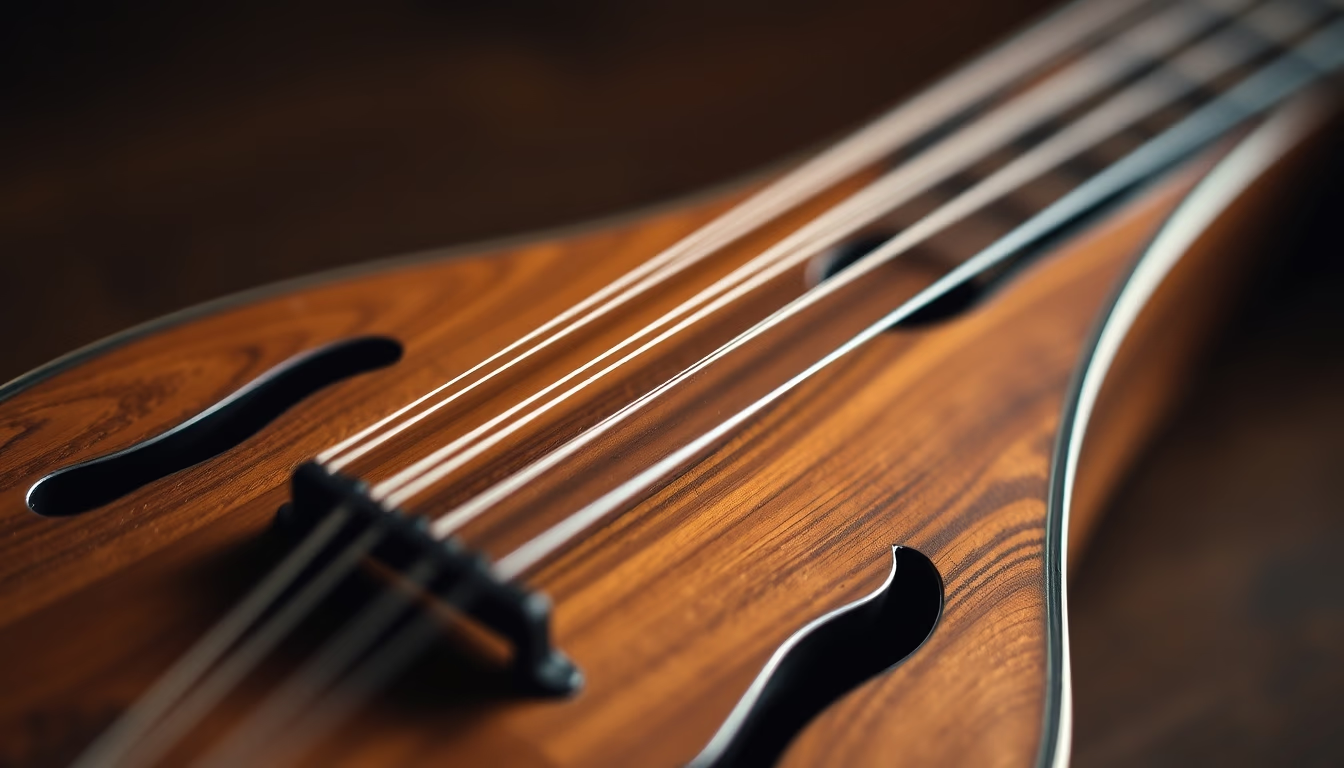
The antique wooden mandolin is a plucked string instrument, with origins in the 16th century and a characteristic almond-shaped body.
About this subject
The mandolin is a plucked string instrument, popular in folk and classical music. Its modern form was developed in Italy during the 16th century, evolving from the lute. The almond-shaped body is typically made from woods such as maple, spruce, and ebony, producing a bright and penetrating sound. The strings are traditionally metal, arranged in pairs (courses) tuned in unison. The instrument is played with a pick, enabling fast and ornamented passages.
During the Baroque period, the mandolin was used in works by composers such as Vivaldi and Handel. In the 19th century, it became a symbol of Neapolitan music, with the famous song 'Funiculì, Funiculà' associated with it. In the United States, it gained prominence in bluegrass and country music, with artists like Bill Monroe popularizing the carved-top Gibson-style mandolin.
Handcrafting an antique mandolin involves luthier techniques that have remained largely unchanged for centuries. The choice of wood directly affects the timbre: the soundboard is usually spruce for greater resonance, while the back and sides use maple for sound reflection. The neck features metal frets and is slightly curved to facilitate chords.
Interesting fact: the mandolin has a close relative called the 'mandola,' tuned a fifth lower. Sheet music for mandolin is written in treble clef, but the actual sound is one octave higher than notated. Well-preserved antique instruments can be worth tens of thousands of dollars in the collectors' market.
Frequently Asked Questions
What is the difference between a mandolin and a guitar?
The mandolin has double strings (courses) and a smaller almond-shaped body, while the guitar has single strings and a larger body. The mandolin is tuned like a violin (G, D, A, E) and sounds higher.
Is the mandolin difficult to learn?
Yes, it requires coordination in both hands for fast picking and precise finger placement, but it is accessible with practice. Many beginners start with simple folk songs.
What wood is used in antique mandolins?
The best antique mandolins use European spruce (Picea abies) for the soundboard, flamed maple (Acer pseudoplatanus) for the back and sides, and ebony (Diospyros ebenum) for the neck for durability.
Direct URL
https://pub-c7d6a6ea828543ac903a74a341ccb2e1.r2.dev/imagens/mandolin-antique-wooden-macro-closeup-p5.avifHow to credit
Include a visible link back to UtilizAí. Copy one of the snippets below:
<a href="https://xn--utiliza-eza.com/en/midia/imagens/mandolin-antique-wooden-macro-closeup-p5">Mandolin antique wooden</a> by <a href="https://xn--utiliza-eza.com">UtilizAí</a>, licensed under <a href="https://creativecommons.org/licenses/by/4.0/">CC BY 4.0</a>.
[Mandolin antique wooden](https://xn--utiliza-eza.com/en/midia/imagens/mandolin-antique-wooden-macro-closeup-p5) by [UtilizAí](https://xn--utiliza-eza.com), CC BY 4.0
License: CC-BY-4.0