Louvre pyramid glass
1344×768 · AVIF · CC BY 4.0
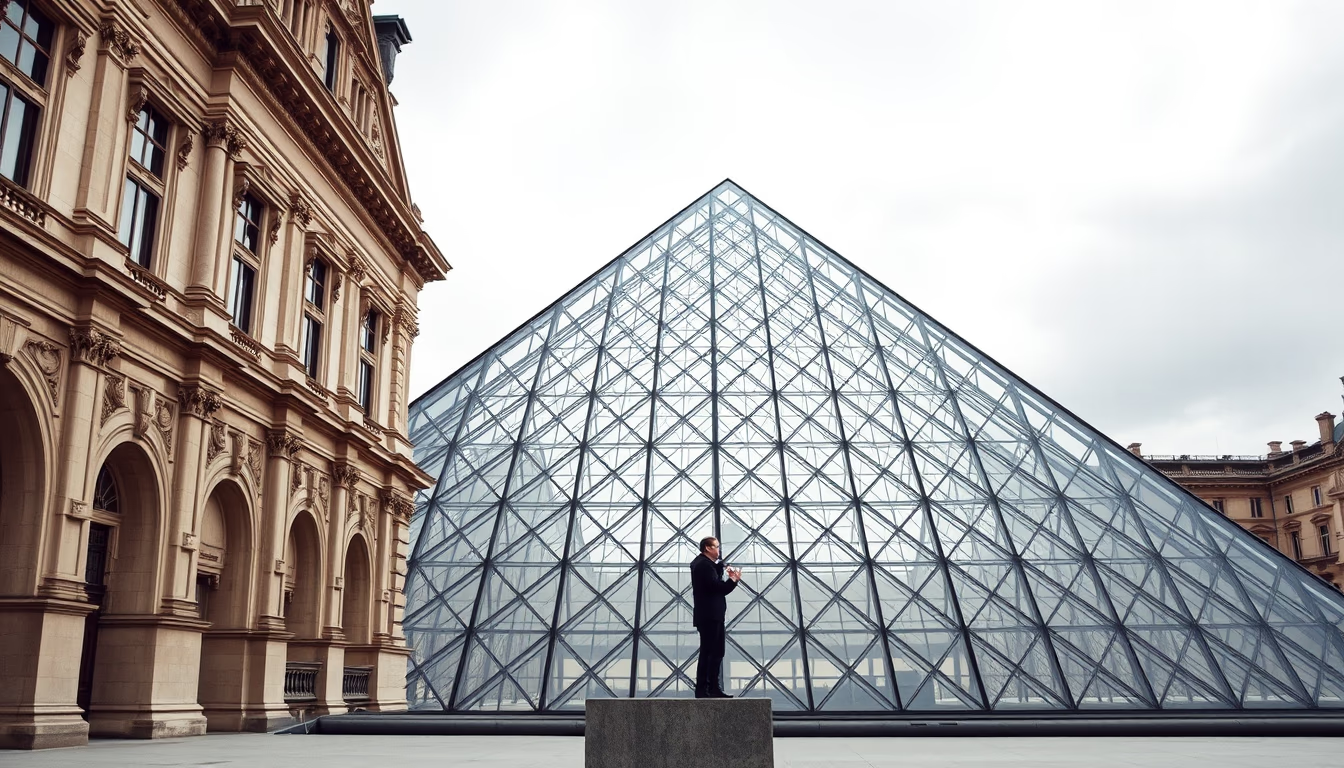
The Louvre Pyramid, inaugurated in 1989, is a glass and metal architectural landmark serving as the main entrance to the Louvre Museum in Paris.
About this subject
The Louvre Pyramid is an iconic structure located in the Cour Napoléon of the Louvre Museum in Paris. Designed by Chinese-American architect Ieoh Ming Pei, it was inaugurated on March 30, 1989, as part of the Grand Louvre project to modernize and expand the museum. The main pyramid stands 21.6 meters high and 35 meters on each side, composed of 673 double-laminated glass panels (603 rhombus and 70 triangular shapes) supported by a steel and aluminum framework.
The choice of glass and metal sparked intense debate at the time. Critics argued that the modern design clashed with the Renaissance style of the palace. However, the pyramid quickly became a symbol of Paris and one of the most photographed landmarks in the world. It allows natural light into the underground lobby, solving illumination and visitor flow issues, with over 10 million visitors annually.
Interestingly, the Louvre Pyramid has no direct connection to Egyptian pyramids, although Pei was inspired by the geometric form. The slope of 51 degrees matches that of the Great Pyramid of Giza, a subtle homage. The structure recently underwent restoration for cleaning and panel replacement, maintaining its original transparency.
In addition to the main pyramid, three smaller pyramids serve as skylights. At night, 95 projectors illuminate the ensemble, creating a dramatic effect. The pyramid is more than an entrance: it is an icon of contemporary architecture and a testament to the union of ancient and modern art.
Frequently Asked Questions
Why was the Louvre Pyramid built?
The pyramid was built as the new main entrance to the Louvre Museum, improving visitor flow and bringing natural light into the underground lobby, as part of the Grand Louvre project started in the 1980s.
How many glass panels make up the Louvre Pyramid?
The main pyramid has 673 double-laminated glass panels: 603 rhombus and 70 triangular shapes. The glass was manufactured by the French company Saint-Gobain.
Who was the architect of the Louvre Pyramid?
The architect was Ieoh Ming Pei, a Chinese-American known for projects such as the Bank of China Tower in Hong Kong and the East Building of the National Gallery of Art in Washington.
Direct URL
https://pub-c7d6a6ea828543ac903a74a341ccb2e1.r2.dev/imagens/louvre-pyramid-glass-architectural-photography-p2.avifHow to credit
Include a visible link back to UtilizAí. Copy one of the snippets below:
<a href="https://xn--utiliza-eza.com/en/midia/imagens/louvre-pyramid-glass-architectural-photography-p2">Louvre pyramid glass</a> by <a href="https://xn--utiliza-eza.com">UtilizAí</a>, licensed under <a href="https://creativecommons.org/licenses/by/4.0/">CC BY 4.0</a>.
[Louvre pyramid glass](https://xn--utiliza-eza.com/en/midia/imagens/louvre-pyramid-glass-architectural-photography-p2) by [UtilizAí](https://xn--utiliza-eza.com), CC BY 4.0
License: CC-BY-4.0