Loch ness scotland
1344×768 · AVIF · CC BY 4.0
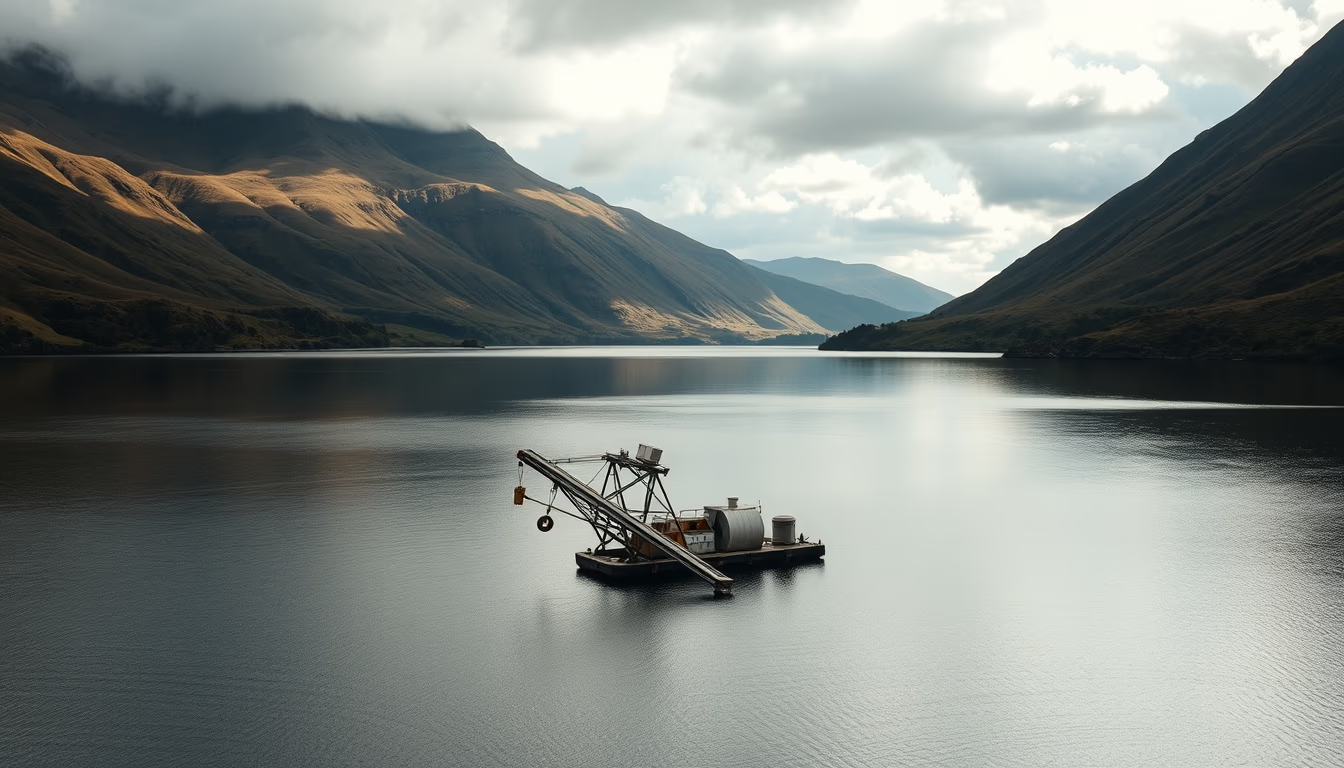
Loch Ness in Scotland is one of the world's most famous lakes, known for the legendary monster Nessie and its deep, mysterious waters.
About this subject
Loch Ness is a large, deep freshwater lake in the Scottish Highlands, part of the Caledonian Canal system. It stretches approximately 37 kilometers and reaches a maximum depth of 230 meters, making it the second deepest loch in Scotland. Its immense depth and dark, peaty waters create an ideal setting for legends. The loch's worldwide fame primarily stems from the alleged monster Nessie, a creature said to inhabit the lake since the 6th century. The first modern sighting was reported in 1933, and since then hundreds of claims and scientific expeditions have attempted to prove its existence. Although most evidence is inconclusive, the myth drives local tourism and has inspired countless films, books, and TV shows.
Geologically, Loch Ness is a glacial lake formed during the last Ice Age. Its watershed is fed by several rivers, including the River Ness, which flows into the North Sea. The region has a temperate oceanic climate with frequent rain and fog, adding to the mysterious atmosphere. Biodiversity includes salmon, trout, and waterfowl, but no known species matches Nessie's descriptions. Sonar surveys and submersible dives have found no concrete evidence of large unknown animals.
The Loch Ness Monster myth has generated significant cultural and economic impact. Tourism brings millions of visitors annually, who explore the exhibition center at Drumnadrochit, take cruises, and attempt to spot the creature. The legend also fuels a souvenir and book industry. Despite scientific investigations, including environmental DNA analysis in 2018, the most accepted explanation is that sightings result from natural phenomena such as waves, logs, or seals, or outright hoaxes. Nonetheless, Nessie remains a Scottish cultural icon and one of the world's greatest unsolved mysteries.
Frequently Asked Questions
Does the Loch Ness Monster exist?
There is no conclusive scientific evidence proving the monster's existence. Most sightings have natural explanations such as waves, logs, or seals, but the legend endures in popular culture.
How deep is Loch Ness?
Loch Ness reaches a maximum depth of 230 meters and holds more water than all the lakes in England and Wales combined.
How can I visit Loch Ness?
You can visit the area from Inverness, with boat tours, exhibition centers at Drumnadrochit, and walking trails around the loch. The ruined Urquhart Castle offers panoramic views.
Direct URL
https://pub-c7d6a6ea828543ac903a74a341ccb2e1.r2.dev/imagens/loch-ness-scotland-magazine-editorial-p2.avifHow to credit
Include a visible link back to UtilizAí. Copy one of the snippets below:
<a href="https://xn--utiliza-eza.com/en/midia/imagens/loch-ness-scotland-magazine-editorial-p2">Loch ness scotland</a> by <a href="https://xn--utiliza-eza.com">UtilizAí</a>, licensed under <a href="https://creativecommons.org/licenses/by/4.0/">CC BY 4.0</a>.
[Loch ness scotland](https://xn--utiliza-eza.com/en/midia/imagens/loch-ness-scotland-magazine-editorial-p2) by [UtilizAí](https://xn--utiliza-eza.com), CC BY 4.0
License: CC-BY-4.0