Lidar sensor on car roof
1344×768 · AVIF · CC BY 4.0
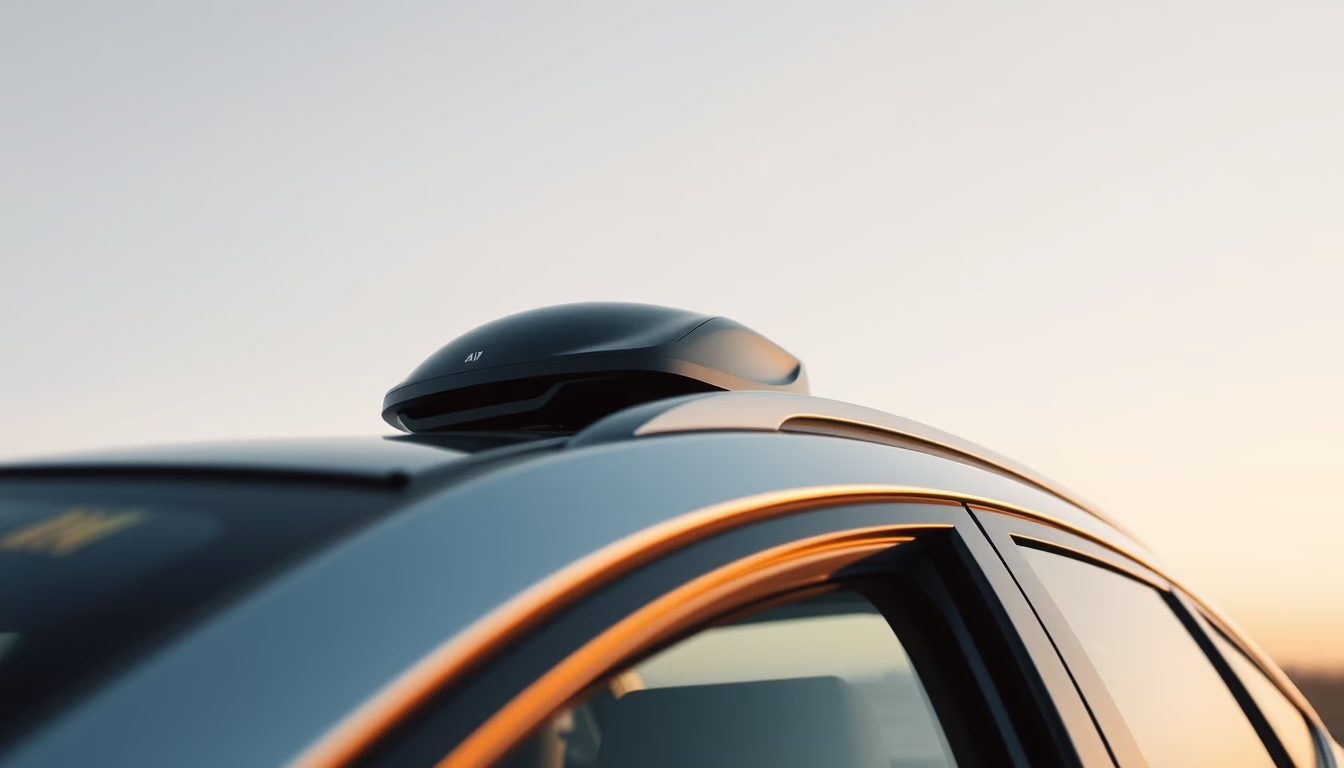
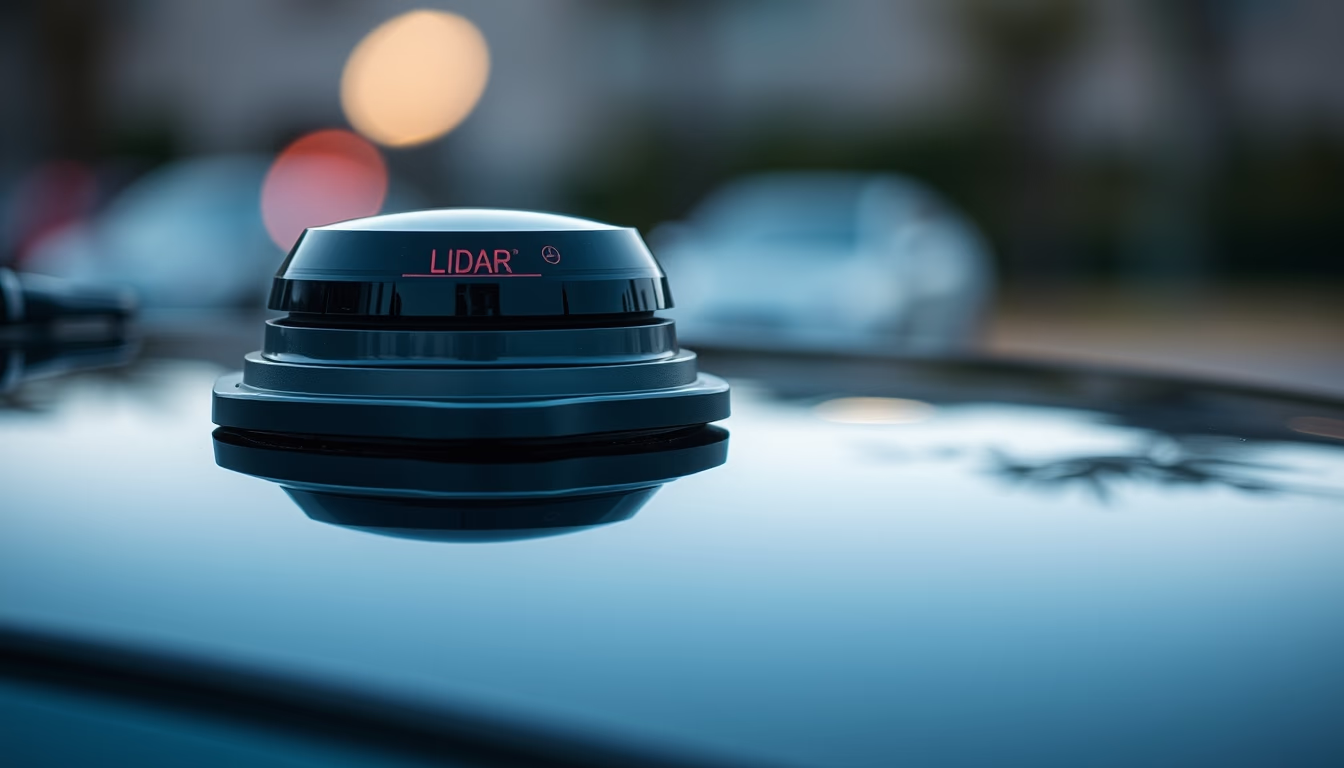
The lidar sensor mounted on the roof of autonomous vehicles is essential for 3D environmental mapping and safe navigation.
About this subject
Lidar, short for Light Detection and Ranging, is a remote sensing technology that uses laser pulses to measure distances with millimeter precision. In autonomous vehicles, the sensor is typically mounted on the roof to achieve a 360-degree field of view, capturing 3D point clouds that enable detection of obstacles, pedestrians, cyclists, and other vehicles. This configuration is critical for environmental perception, providing depth data independent of lighting conditions.
The history of lidar dates back to the 1960s when NASA developed it for lunar and terrestrial mapping. Its adoption for autonomous vehicles accelerated with the DARPA Grand Challenge in the 2000s, when companies like Velodyne and Waymo began using high-performance rotating sensors. Today, the technology has evolved into solid-state and chip-based sensors from firms such as Luminar and RoboSense, offering improved durability and lower costs. By 2026, lidar sensors are expected to become more compact and integrated, speeding up mass production of autonomous vehicles.
Lidar's importance lies in its ability to complement cameras and radar. While cameras are sensitive to lighting and radar provides velocity data, lidar delivers precise distance and shape measurements, essential for real-time decision-making. Challenges like high cost, complex calibration, and performance degradation in rain or fog persist but are being addressed through technological advances. The image depicts a typical test setup with multiple sensors on the roof, highlighting the development stage of autonomous driving systems.
Frequently Asked Questions
What does lidar stand for?
Lidar stands for Light Detection and Ranging, a remote sensing method that uses laser pulses to measure distances and create 3D maps of the environment.
Why is the lidar sensor mounted on the car roof?
The roof position provides an unobstructed 360-degree field of view, ideal for capturing comprehensive data about the vehicle's surroundings for autonomous driving.
What are the limitations of lidar in autonomous vehicles?
Main limitations include high cost, sensitivity to adverse weather like rain and fog, and the need for precise calibration.
Direct URL
https://pub-c7d6a6ea828543ac903a74a341ccb2e1.r2.dev/imagens/lidar-sensor-on-car-roof-documentary-photography-p2.avifHow to credit
Include a visible link back to UtilizAí. Copy one of the snippets below:
<a href="https://xn--utiliza-eza.com/en/midia/imagens/lidar-sensor-on-car-roof-documentary-photography-p2">Lidar sensor on car roof</a> by <a href="https://xn--utiliza-eza.com">UtilizAí</a>, licensed under <a href="https://creativecommons.org/licenses/by/4.0/">CC BY 4.0</a>.
[Lidar sensor on car roof](https://xn--utiliza-eza.com/en/midia/imagens/lidar-sensor-on-car-roof-documentary-photography-p2) by [UtilizAí](https://xn--utiliza-eza.com), CC BY 4.0
License: CC-BY-4.0