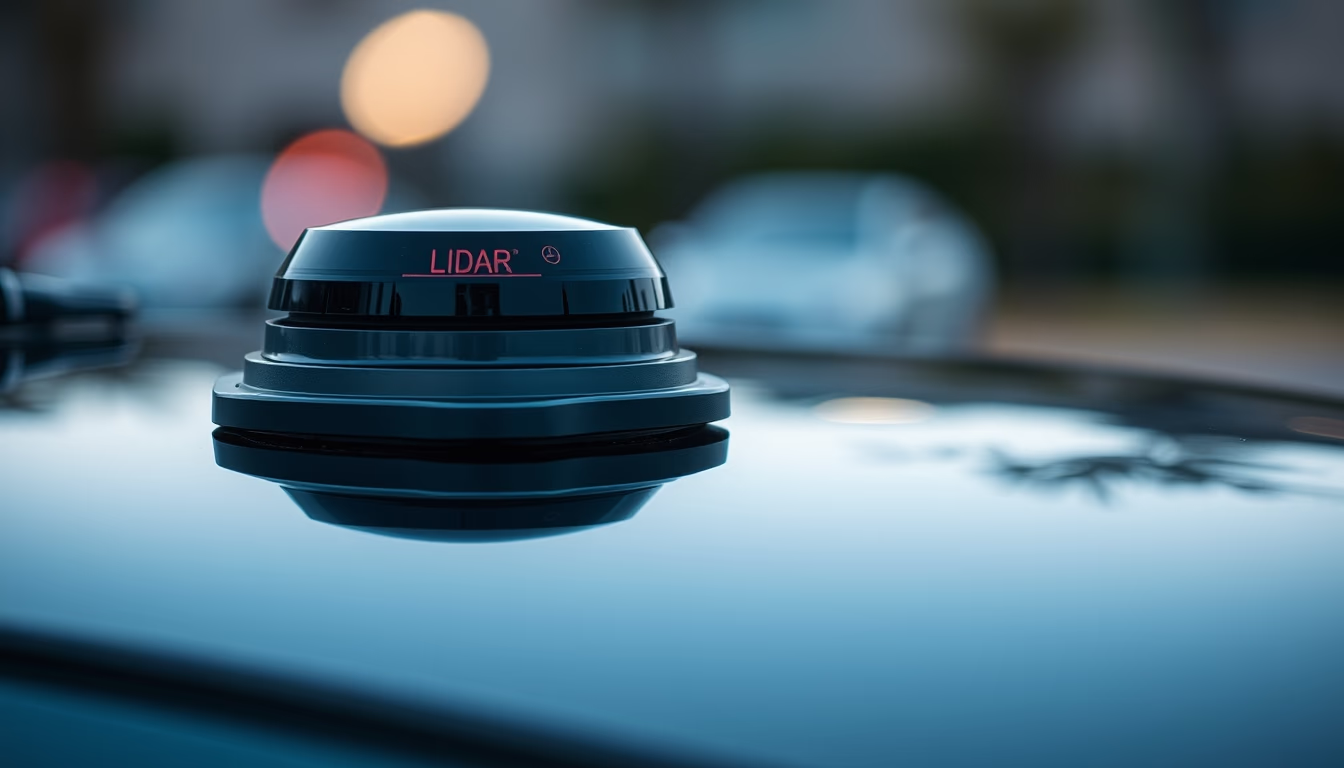
Lidar sensor on car roof
1344×768 · AVIF · CC BY 4.0
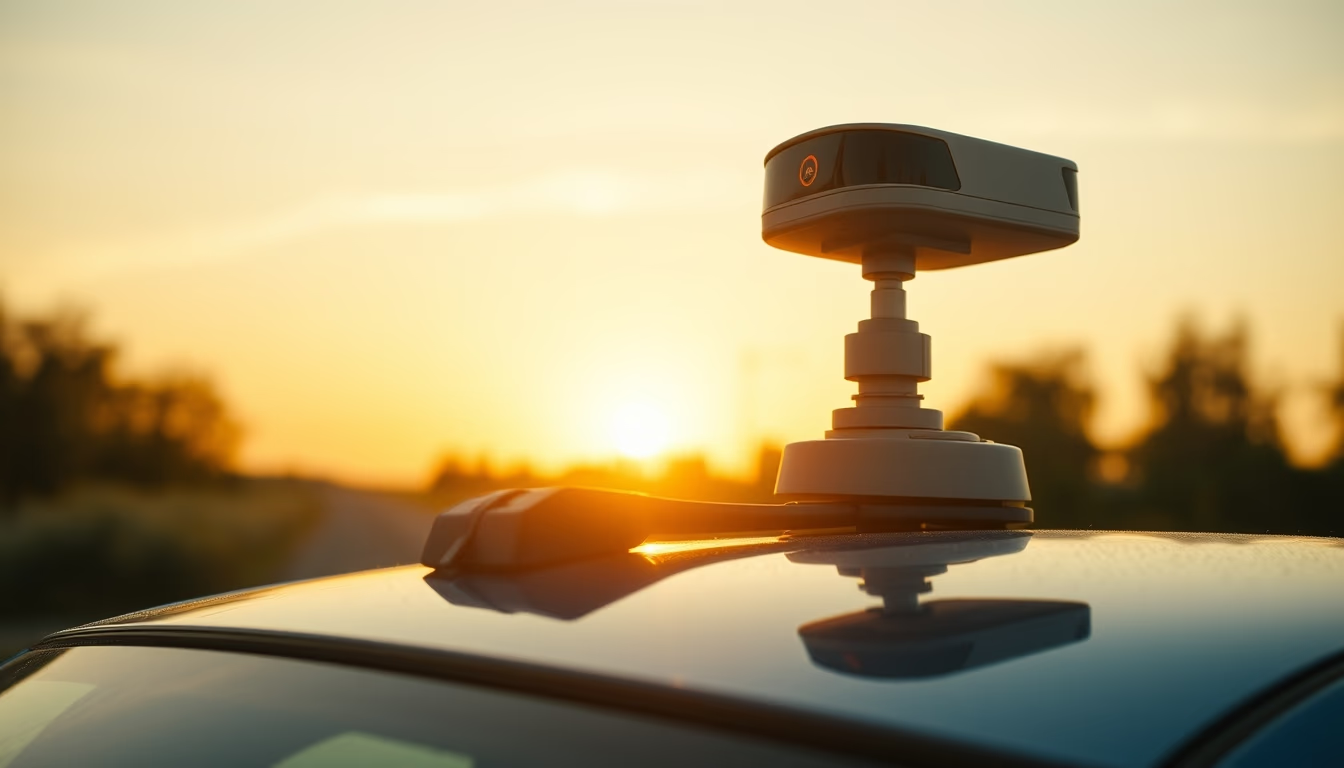
The lidar sensor mounted on the roof of autonomous vehicles is the key component for safe navigation, generating real-time 3D maps of the surroundings.
About this subject
Lidar (Light Detection and Ranging) is a sensor that emits laser pulses and measures their return time to create three-dimensional point clouds. Mounted on the roof, it provides an unobstructed 360-degree view, critical for autonomous vehicles to identify objects, pedestrians, cyclists, and traffic signs at distances up to 200 meters.
Companies like Waymo, Cruise, and Baidu Apollo use roof-mounted lidar arrays on their self-driving cars, often combining long-range sensors with cameras and radars. The elevated position reduces blind spots and improves detection around curves. By 2026, solid-state lidar technology is expected to become more affordable, replacing rotating mechanical systems with cheaper, more durable silicon chips.
Despite progress, challenges remain. Rain, fog, and dust can attenuate the laser signal, requiring sensor fusion with other technologies. The cost, once tens of thousands of dollars per unit, has dropped to a few thousand, but it is still high for consumer vehicles. The trend toward miniaturization and multi-sensor integration will make roof-mounted lidar a standard feature on robotaxi fleets and autonomous trucks by 2026.
Frequently Asked Questions
Why is lidar mounted on the roof of autonomous cars?
Roof mounting provides a 360-degree field of view with no obstructions, essential for accurately mapping the surroundings. It reduces blind spots and enables long-range detection even around curves.
What is the difference between mechanical and solid-state lidar?
Mechanical lidar uses a rotating system to scan the environment, making it more expensive and prone to wear. Solid-state lidar has no moving parts, using silicon chips to steer the laser beam, resulting in lower cost, higher durability, and smaller size.
Does lidar work in adverse weather such as rain or fog?
Lidar performance can be degraded by heavy rain, dense fog, or dust, which attenuate the laser signal. Therefore, autonomous vehicles combine lidar with cameras and radar to ensure redundancy and safety under all conditions.
Direct URL
https://pub-c7d6a6ea828543ac903a74a341ccb2e1.r2.dev/imagens/lidar-sensor-on-car-roof-cinematic-wide-shot-p3.avifHow to credit
Include a visible link back to UtilizAí. Copy one of the snippets below:
<a href="https://xn--utiliza-eza.com/en/midia/imagens/lidar-sensor-on-car-roof-cinematic-wide-shot-p3">Lidar sensor on car roof</a> by <a href="https://xn--utiliza-eza.com">UtilizAí</a>, licensed under <a href="https://creativecommons.org/licenses/by/4.0/">CC BY 4.0</a>.
[Lidar sensor on car roof](https://xn--utiliza-eza.com/en/midia/imagens/lidar-sensor-on-car-roof-cinematic-wide-shot-p3) by [UtilizAí](https://xn--utiliza-eza.com), CC BY 4.0
License: CC-BY-4.0